
- +91-9930498858Call / WhatsApp
- [email protected]Email Us
Leveraging 25+ years of precision forming experience, Ambani Metals pairs high-speed progressive draw tooling with custom sheet metal engineering. Discover our flagship export series manufactured under stringent ASTM, DIN, and ISO 9001:2015 quality frameworks.
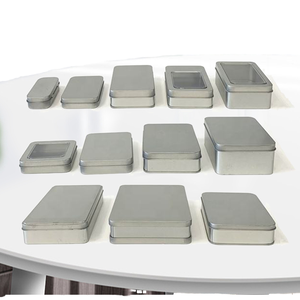
Precision-stamped sliding tinplate and aluminum enclosure with tight hemmed radii, rolled-edge safety rims, and high-durability integrated hinges.
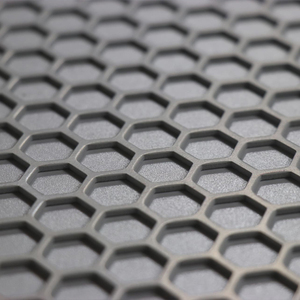
Continuous roll-formed and perforated architectural partitions with controlled open-area ratios, acoustic attenuation profiles, and powder-coated anodized finishes.
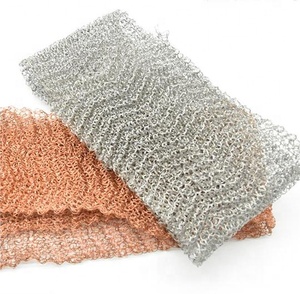
Gas-liquid filtration cylinder engineered from 0.25mm wire diameter knitted mesh, providing deep-bed impingement separation and shock absorption.
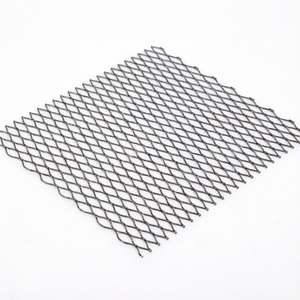
Heavy-duty diamond pattern expanded steel sheet hot-dip galvanized for extreme atmospheric weathering, anti-glare shielding, and perimeter barrier safety.

Deep-drawn base and sanitary flange housing 300/400 micron plain weave wire cloth for pharmaceutical extraction, beverage brewing, and fluid particulate filtration.
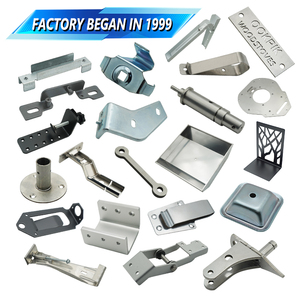
Multi-process OEM hardware combining CNC fiber laser cutting, precision stage stamping, robotic TIG/MIG welding, and tight bend radius compliance across alloy groups.
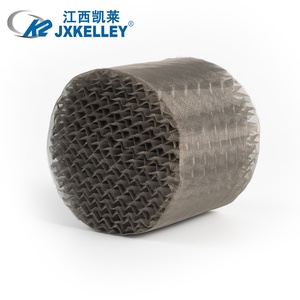
Precision-formed corrugated wire gauze packing optimized for low liquid holdup, minimal pressure drops, and superior mass transfer efficiency in vacuum fractionation columns.
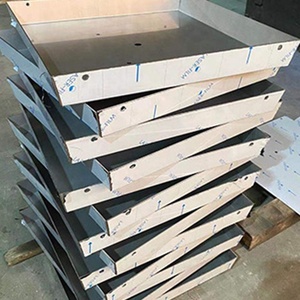
End-to-end heavy plate laser cutting, multi-axis hydraulic press brake bending, precision deep draw stamping, and surface electro-polishing for industrial assemblies.
Deep drawing is a critical cold-forming process wherein a flat sheet metal blank is radially drawn into an axisymmetric or prismatic forming die cavity through the mechanical action of a reciprocating punch. Unlike simple stamping or brake bending, deep drawing involves simultaneous radial tension and circumferential compression in the flange area. For global procurement officers and design engineers evaluating top China deep drawn parts suppliers and exporters, understanding the mechanical boundaries of plastic deformation is vital for cost mitigation, material efficiency, and structural integrity.
The foundational metric determining whether a metal cup can be produced in a single station without tearing is the Limiting Draw Ratio (LDR), defined mathematically as LDR = D_blank(max) / D_punch. In industrial deep drawing, theoretical LDR values typically range from 1.8 to 2.2 for conventional deep-drawing quality (DDQ) steels. Achieving high draw depths without fracture requires materials with elevated normal plastic anisotropy ratios (r-values) and balanced strain hardening exponents (n-values).
When the required component aspect ratio (depth-to-diameter ratio) exceeds 1:1, multi-stage reduction must be deployed. In progressive or transfer press tooling, the first draw typically achieves an initial reduction ratio of 40% to 45%, followed by successive redraw operations (30%, 20%, and 15% reductions). For austenitic stainless steels subject to aggressive strain hardening, inter-stage bright hydrogen annealing at 1050°C is integrated into the manufacturing line to recrystallize the austenitic microstructure, relieve residual hoop stresses, and prevent delayed cracking induced by stress corrosion cracking (SCC).
Precision deep drawn parts demand meticulous tooling engineering. The clearance (c) between the punch and die walls is typically set between 107% and 115% of nominal sheet thickness (c = 1.07t to 1.15t) for standard draws to accommodate natural sheet thickening at the rim. However, when cylindrical housings, solenoid shells, or sensor housings demand uniform wall thicknesses and razor-sharp outside diameter (OD) tolerances (±0.015mm), an "ironing" stage is engineered into the final stations.
Ironing deliberately forces the drawn metal cylinder through a die aperture narrower than the incoming wall thickness, converting circumferential compression into axial elongation. This eliminates wall taper, smoothens surface micro-roughness down to Ra 0.4 μm, and induces favorable compressive residual surface stresses that elevate fatigue endurance in dynamic automotive and hydraulic applications.
Frictional forces generated along the blankholder and draw die radius dictate the material flow vector. Insufficient blankholder force (BHF) immediately results in flange wrinkling due to compressive hoop instability, whereas excessive BHF raises tensile stress beyond the ultimate tensile strength (UTS) of the cup wall, causing localized necking and catastrophic bottom blowouts. Top Chinese exporters overcome this challenge by deploying CNC hydraulic cushions and multi-point servo-electric blankholders capable of dynamic variable force profiles throughout the downward stroke cycle.
Selecting the optimal alloy system requires balancing raw material cost, drawability, secondary finishing requirements, and end-use operating environment.
| Alloy Family | Primary Grades | Limiting Draw Ratio (LDR) | Work Hardening (n-value) | Key Processing Countermeasures | Target Applications |
|---|---|---|---|---|---|
| Austenitic SS | AISI 304, 304DDQ, 316L | 2.05 – 2.25 | 0.45 – 0.52 | Chlorinated paraffin / synthetic extreme-pressure (EP) lubes; inter-stage hydrogen annealing. | Chemical sensor shells, food strainers, mass transfer caps, solenoid tubes. |
| Cold Rolled Steel | SPCC, SPCD, DC04, DC06 | 2.10 – 2.30 | 0.20 – 0.24 | Pre-phosphated coils; nitrogen gas spring blankholders; minimal galling risk. | Automotive filter housings, hermetic compressor cans, battery enclosures. |
| Aluminum Alloys | 1050, 3003-O, 5052-O, 6061 | 1.85 – 2.05 | 0.25 – 0.32 | Generous die radii (≥6t); slow punch speeds; specialized poly-film draw coatings. | EV battery prismatic casings, EMI shielding cans, architectural corrugated nodes. |
| Copper & Brass | C11000 (ETP), C26000 (70/30) | 2.15 – 2.35 | 0.35 – 0.45 | Exceptional deep ductility ("cartridge brass"); intermediate stress-relief annealing at 450°C. | Electrical switchgear housings, thermal heat exchangers, RF shielding cans. |
| Nickel Alloys | Inconel 625, Hastelloy C-276 | 1.75 – 1.95 | 0.48 – 0.55 | Ultra-rigid carbide tooling dies, PVD TiAlN coating, low stroke frequencies (6-12 spm). | Nuclear rupture discs, aerospace fuel nozzles, severe acid tower internals. |
As original equipment manufacturers (OEMs) seek higher volumetric efficiency, reduced assembly counts, and aggressive decarbonization, the global procurement landscape for deep drawn metal components is shifting rapidly.
Global buyers are aggressively replacing multi-piece welded assemblies, impact extrusions, and subtractive CNC turnings with seamless deep drawn shells. This shift slashes raw material scrap by up to 60% while drastically reducing unit production cycle times.
The global EV transition has created monumental volume demands for precision cylindrical and prismatic battery cell casings (e.g., 4680 formats). These thin-walled nickel-plated steel cans require extreme roundness and burst pressure resistance.
Tier-1 procurement mandates now stipulate verified Scope 3 carbon footprint disclosures. Leading Chinese manufacturing clusters are adopting green-smelted low-carbon steel coils, closed-loop scrap recycling, and non-chlorinated biodegradable draw oils.
Simulation packages such as AutoForm and Dynaform have displaced physical trial-and-error die trials. Tooling designs simulate thinning, localized necking, and springback behavior before tool steels are hardened, truncating tooling lead times by 40%.
Modern Chinese stamping and deep-drawing facilities have transitioned from mechanical crank presses to integrated automated production centers. Below are the core technological frontiers driving export supremacy.
Unlike fixed-velocity flywheel presses, CNC servo presses allow infinite programmability of punch descent speed, bottom dwell time, and pulsation drawing. Pulsed drawing breaks boundary friction, enabling draw ratios once deemed impossible in exotic alloys.
Progressive draw dies are now equipped with piezoelectric force transducers, acoustic emission sensors, and high-speed laser triangulation sensors. These monitor real-time metal flow, identifying microscopic tearing or slug pulling instantaneously.
To eliminate galling and pickup during the severe drawing of stainless steels and titanium, Chinese toolmakers utilize DC53, SKD11, and tungsten carbide substrates coated with multilayered PVD (TiCN, AlCrN, or Diamond-Like Carbon DLC) treatments.
Precision deep drawing is unforgiving. Below is an engineering reference outlining defect mechanisms, root causes, and corrective countermeasures deployed on our shop floors.
| Observed Defect | Visual Characteristic | Primary Root Cause | Tooling & Process Remedy |
|---|---|---|---|
| Flange Wrinkling | Wavy, accordion-like folds along the outer flange perimeter. | Insufficient blankholder force (BHF) allowing tangential compressive stress to cause buckling. | Increase blankholder tonnage; apply draw beads to restrain material feed; verify die parallelisms. |
| Bottom Tearing (Cup Fracture) | Circumferential rupture at the punch profile radius or cup base. | Tensile draw stress exceeds UTS of sheet; draw radius too sharp; excessive blankholder pressure. | Enlarge punch and die entrance radii (≥4t); optimize drawing lubricant; decrease blankholder clamping force. |
| Earing (Scalloped Edge) | Wavy, cyclical peaks and valleys along the open cup rim. | Planar plastic anisotropy (Δr ≠ 0) and directional rolling grain orientation in sheet strip. | Procure cross-rolled or deep-drawing quality (DDQ) coils; integrate automated trim-die station. |
| Galling & Scuffing | Longitudinal scratch gouges on outer cup sidewalls; die pickup. | Direct metal-to-metal welding under severe contact pressure; lubricant film failure. | Polish draw die to mirror finish (Ra ≤ 0.1 μm); apply PVD TiCN coating; use EP chlorinated additives. |
| Orange Peel Effect | Rough, pebbled surface texture in heavily stretched zones. | Excessively coarse grain size in raw coil material prior to forming (ASTM grain size < 6). | Specify fine-grained raw material (ASTM 7 to 9); conduct incoming metallographic grain structure validation. |
Established as an industry leader since 1998, Ambani Metals bridges advanced European engineering design rigor with China's high-efficiency, agile industrial manufacturing supply chain.
Every single coil processed in our stamping bays is procured from premier tier-1 mills (including Baosteel, TISCO, and Jindal Stainless). All shipments are delivered accompanied by EN 10204 3.1 Inspection Certificates containing full chemical and mechanical heats.
We eliminate subcontractor delays by maintaining an exhaustive tooling center featuring high-speed CNC milling, Sodick wire EDM cutting, surface grinding, and vacuum heat treatment furnaces. Tooling design, modification, and maintenance happen on-site.
Exporting to over 20 countries worldwide—including the United States, Germany, UAE, Saudi Arabia, Australia, and Canada. Fully versed in export customs documentation, seaworthy vacuum moisture-barrier barrier packaging, and international freight handling.
Direct answers from our senior tooling and metallurgical engineers to assist procurement teams in making informed, risk-free sourcing decisions.
Submit your CAD models and process specifications today. Connect directly with our tooling engineers to discuss draw ratio optimization, material grade selection, and export quotation schedules.
Contact Us