
- +91-9930498858Call / WhatsApp
- [email protected]Email Us
Precision-manufactured mist eliminator pads, wire mesh filter internals, customized flame-arresting elements, and specialized industrial enclosures conforming to rigorous ASME and ISO quality frameworks.
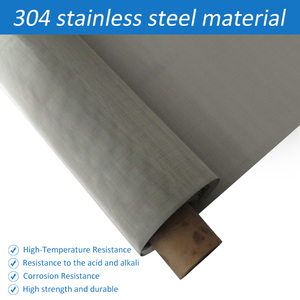
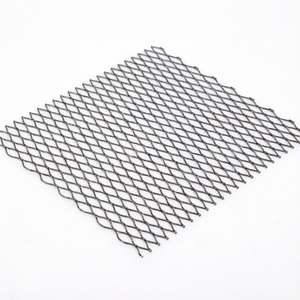
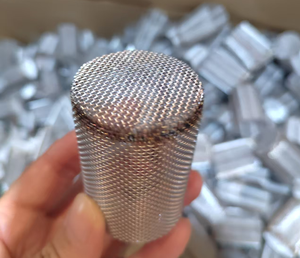
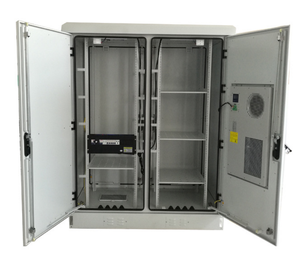
In modern chemical separation, petrochemical fractionating, and gas desulfurization, mist elimination is an indispensable hydrodynamic safeguard preventing liquid carryover, protecting rotating compressor impellers, and ensuring environmental compliance.
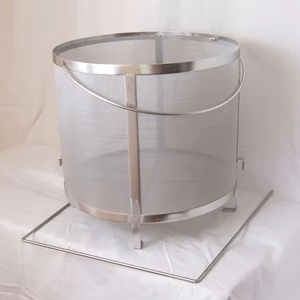
Manufactured by interlocking asymmetrical wire loops into multi-layered mattresses. Operates predominantly on inertial impaction where droplets down to 3–5 microns collide with high-surface-area wires, coalesce into larger drops, and drain downward via gravity.
Engineered zigzag parallel blade profiles with collection pockets. Ideal for handling viscous, fouling-prone liquors and heavy liquid loads where wire mesh pads are vulnerable to particulate blinding and caking.
Combines coarse impingement pre-filtration with sub-micron packed glass fiber beds. Relies on Brownian diffusion to trap aerosol mists sub-micron down to 0.1 microns in sulfuric acid and chlorine production.
| Separation Technology | Target Droplet Cut-Off (d50) | Design Gas Velocity (m/s) | Resistance to Fouling | Typical Applications |
|---|---|---|---|---|
| Standard SS316L Wire Mesh Pad | 3 – 8 μm | 1.5 – 3.2 m/s | Moderate (Risk of solids clogging) | Distillation knock-out drums, lube oil tanks, refinery scrubbers |
| Co-Knit Metal/PTFE Multi-Filament | 1 – 4 μm | 1.0 – 2.4 m/s | High (Anti-stick surface) | Fine chemical separation, aggressive chlor-alkali scrubbers |
| Pocketed Vane Blade Eliminator | 10 – 25 μm | 3.5 – 6.0 m/s | Superior (Handles high slurry solids) | Flue Gas Desulfurization (FGD), evaporators, marine scrubbers |
| Sub-Micron Fiberbed Candle Filter | 0.1 – 1.0 μm | 0.1 – 0.3 m/s | Low (Requires pre-cleaning stage) | Sulfuric acid oleum stacks, compressor lube mist capture |
International EPC buyers and operational procurement managers are evolving from basic spot-purchasing to total-cost-of-ownership (TCO) lifecycle specifications.
Standard catalog sizes are being replaced by Computational Fluid Dynamics (CFD) modeled pads. Chinese original manufacturers now routinely furnish velocity vector maps and inlet distribution models to resolve Maldistribution Risk before cutting alloy metal.
With rising sour crude refining and harsh carbon-capture amine solvents, procurement is migrating rapidly toward Super Duplex 2507, Hastelloy C-276, and titanium wire meshes co-knitted with fluoropolymers to combat extreme localized chloride pitting.
Downtime costs during plant turnaround can exceed $250,000 per day. Modern mist eliminators feature sectionalized, manway-accessible quick-release clamping lattices that allow complete internal re-trussing in under 12 hours without hot works.
Combining over two decades of mass transfer experience, deep drawing, weaving, and structural fabrication under one ISO 9001:2015 accredited operational complex.
Full 3.1 EN 10204 chemical test reports, ultrasonic testing, and heat-number traceability across all 304, 316L, and proprietary alloy feedstocks.
Complete wire knitting, progressive deep drawing, precision metal stamping, and automatic robotic TIG/plasma welding on unified factory lines.
Hydrostatic load resistance, wire density verification, PMI alloy confirmation, and dimensional coordinate validation before dispatch.
Heavy-duty heat-treated wooden encasements, vapor-corrosion inhibiting wrapping, tagged multi-lingual markings, and pre-cleared logistics documentation.
Direct technical and commercial answers addressing hydraulic sizing, material specification, export logistics, and plant installation.
The design velocity is determined using the classic Souders-Brown equation: V = K × [(ρL - ρV) / ρV]0.5, where ρL and ρV represent the liquid and vapor densities respectively, and K is the structural system capacity factor (typically 0.107 m/s or 0.35 ft/s for standard mesh services). Operating above the Souders-Brown velocity leads to re-entrainment where separated liquid is stripped back into the overhead flow, while operating significantly below causes poor collection efficiency due to inadequate inertial impaction.
Chevron vane separators should be selected when process gas carries heavy particulate loads, sticky polymers, or crystalline solids that would rapidly blind and foul dense wire mesh mattresses. Furthermore, vane packs are mandatory when vessel cross-sectional space is constrained and gas throughput must be maximized, as vane profiles maintain low pressure drops at linear velocities double those of conventional knitted pads.
Industrial distillation vessels, scrubbers, and flash drums feature manholes ranging between 18" (450 mm) and 24" (600 mm) inner diameter. All mist eliminators larger than 500 mm outer diameter are manufactured in segmented rectangular or arc sections (pie slices) typically between 300 mm and 400 mm in width. Each individual segment is reinforced with top and bottom flat bar grids, tagged according to installation layout drawings, and locked into place via tie-wires or J-bolts on internal support rings.
Every export shipment is backed by a comprehensive Quality Dossier: EN 10204 3.1 Material Test Certificates confirming steel chemistry, PMI (Positive Material Identification) spectroscopic logs, surface roughness inspection, dimensional tolerance records, ISPM-15 compliant phytosanitary certificates for export wood crates, and commercial sea/air logistics manifests.
To deliver a precision sizing and pricing proposal, please supply: vessel inside diameter (ID), operational pressure and temperature, gas volumetric or mass flow rate, vapor density, liquid density, liquid surface tension, desired target removal efficiency (e.g., 99% of >5 μm), preferred material grade, and vessel nozzle entry orientation.