
- +91-9930498858Call / WhatsApp
- [email protected]Email Us
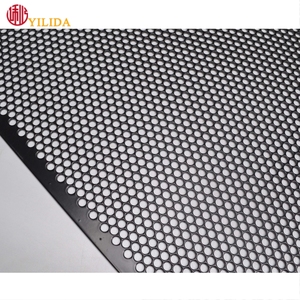
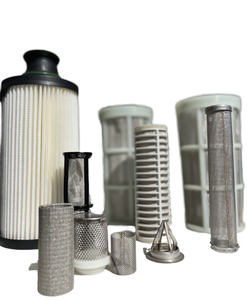
Explore our integrated portfolio spanning laser slotted metal tubes, sintered multi-layer screen cylinders, architectural perforated meshes, and high-rigidity industrial cabinets fabricated under zero-defect quality protocols.
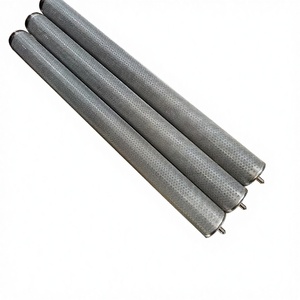
The mechanical performance of a slotted metal pipe is governed by the intricate relationship between hydraulic open area percentage, slot kerf profile geometry, and residual pipe body hoop strength. When machining thousands of micro-apertures through heavy-wall carbon steel (such as API J55, K55, N80, P110, or L80) or premium austenitic/duplex stainless alloys (AISI 304L, 316L, 904L, 2205, 2507, and Hastelloy C276), traditional mechanical milling causes severe thermal stress, work-hardening micro-fractures, and irregular burs that trigger accelerated flow turbulence.
Modern fabrication protocols leverage multi-axis automated CNC laser cutting systems operating under filtered nitrogen shielding. This ensures an oxide-free, burr-free edge finish with heat-affected zones (HAZ) strictly controlled below 0.05 mm. By tailoring the cross-sectional geometry of each aperture, engineering teams mitigate solids clogging and optimize fluid inflow:
Features uniform perpendicular slot walls across the full tube thickness. Highly economical for water intake wells, gravel-packed boreholes, and low-viscosity non-precipitating hydrocarbons where particulate sizing remains safely above the slot kerf width.
Engineered with an inward-tapering divergent angle (typically 4° to 8° relief angle). Sand grains that pass the narrow outer aperture escape inward without bridging or wedging, conferring superior self-cleaning anti-plugging capabilities in dynamic wells.
Mechanical stamp-formed bridge profiles that redirect axial flow tangentially around the pipe circumference. Ideal for geological formations with loose gravel pack beds, preventing sand jet impaction against the outer casing wall.
| Alloy / Steel Grade | Standard Slot Width Range | Open Area Efficiency | Tensile Strength Yield | Corrosion & H₂S Rating | Optimal Industry Application |
|---|---|---|---|---|---|
| API Spec 5CT J55 / K55 | 0.25 mm – 6.35 mm (±0.03 mm) | 2.5% – 7.8% | ≥ 379 MPa | Standard Service | Shallow oil, agricultural water boreholes, foundation dewatering |
| API Spec 5CT L80 / N80-1 | 0.20 mm – 4.00 mm (±0.02 mm) | 3.0% – 9.5% | ≥ 552 MPa | Controlled Sour CO₂ | Thermal SAGD steam injection, mid-depth hydrocarbon liners |
| AISI 304 / 304L Stainless | 0.15 mm – 3.00 mm (±0.015 mm) | 4.0% – 12.0% | ≥ 205 MPa | Chloride < 500 ppm | Food & beverage processing, wastewater treatment, mine dewatering |
| AISI 316L Stainless Steel | 0.12 mm – 3.00 mm (±0.012 mm) | 4.0% – 14.5% | ≥ 220 MPa | Acidic / Marine Enviro | Coastal desalination, chemical reactor screens, distillation column collectors |
| Duplex 2205 (UNS S32205) | 0.10 mm – 2.50 mm (±0.010 mm) | 3.5% – 11.0% | ≥ 450 MPa | Extreme Pitting / SCC | High-pressure deep geothermal, subsea oil and gas completions |
| Nickel Alloy Hastelloy C-276 | 0.10 mm – 2.00 mm (±0.008 mm) | 3.0% – 10.0% | ≥ 355 MPa | Wet Chlorine / Flue Gas | Flue gas desulfurization (FGD), high-temperature petrochemical cracking |
The global demand for high-performance slotted screen pipes is undergoing a major technological transformation. Supply chain directors and EPC project engineers are recalibrating procurement priorities based on five critical operational drivers:
Next-generation ultrafast fiber laser cutting technology now enables aperture slot widths down to 0.08 mm (80 microns). This shifts downhole completion strategies away from expensive gravel-pack treatments toward direct stand-alone screen (SAS) completions in ultra-fine unconsolidated formations.
Leading buyers require Finite Element Analysis (FEA) simulations verifying torsional, tensile, and burst/collapse limits prior to cutting. Cutting staggered staggered-pitch slot arrays preserves up to 88% of the native casing pipe collapse strength, essential for horizontal multilateral drilling.
With geothermal and carbon capture and storage (CCS) initiatives expanding rapidly, procurement contracts increasingly mandate UNS S31803/S32205 duplex or high-nickel alloys to combat supercritical carbon dioxide corrosion and hyper-thermal brine cracking over 30-year design cycles.
Backed by more than 25 years of engineering experience and supplying over 1,000 corporate clients across 20+ countries (including the UAE, Saudi Arabia, USA, Australia, and Canada), our facility delivers integrated precision manufacturing from raw steel stock to fully fabricated column internals, slotted screens, and certified assemblies.
Direct mill sourcing guarantees strict mechanical and chemical compliance, backed by EN 10204 3.1 / 3.2 Material Test Reports (MTR) for all heats.
Laser micro-slotting, punching, deep drawing, stamping, rolling, and automated TIG/submerged-arc welding under one synchronized roof.
Every slotted joint undergoes automated optical optical-comparator dimensional verification, acoustic wall-thickness checks, and hydro-testing.
Steel thread-protectors, desiccated internal preservation, vapor-corrosion inhibiting (VCI) wrapping, and certified ISPM-15 export wooden crating.
Staggered slot configurations distribute axial mechanical loads over an uninterrupted circumference segment, preserving up to 25% to 35% higher collapse and tensile resistance compared to inline layouts. For high-torque horizontal casing completions, our engineering team standardizes on staggered or spiral helical patterns to avert localized buckling under bending strain.
With modern high-speed multi-axis CNC laser cutting rigs and filtered inert assist gas, we achieve precise slot widths spanning 0.15 mm to 6.35 mm with a strict dimensional tolerance of ±0.015 mm (±15 microns). Optical vision inspection systems automatically reject any pipe joints exceeding designated deviation parameters.
Yes. We process both seamless (SMLS) and high-frequency electric resistance welded (ERW) mother pipes compliant with API 5CT, ASTM A312, and ASTM A358. Threading options include standard API round (STC/LTC), Buttress (BTC), or proprietary gas-tight premium flush and semi-flush metal-to-metal seal connections.
All export shipments can be paired with complete quality dossiers: Mill Test Certificates (EN 10204 3.1 or 3.2), slot width optical metrology logs, ultrasonic non-destructive testing (NDT) reports, tensile/collapse validation certificates, and third-party inspection sign-offs from SGS, Bureau Veritas, DNV, or Lloyd's Register.