
- +91-9930498858Call / WhatsApp
- [email protected]Email Us
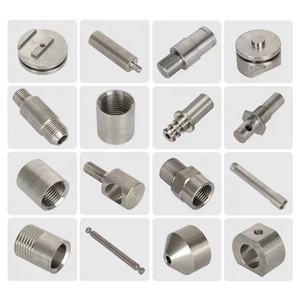
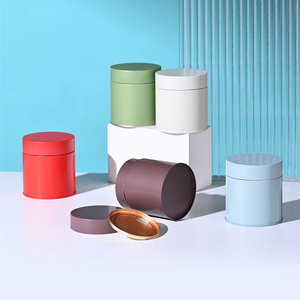
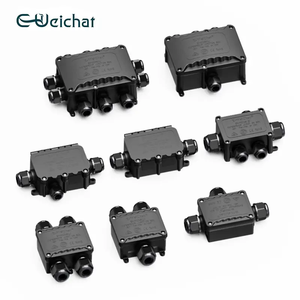
Explore our specialized components manufactured for petrochemical fractionators, scrubbers, acid absorption systems, and high-purity enclosures.
Years Engineering Pedigree
Satisfied Global Clients
Export Destined Countries
Certified Product Lines
Navigating hydrodynamic stability, pressure-drop optimization, and chemical corrosion in packed tower systems.
In chemical absorption, natural gas sweetening, petroleum refining, and acid concentration, packed towers stand as central unit operations. Among the spectrum of random packings, the Intalox Saddle (available in metal, ceramic, and specialty polymer formulations) has set the benchmark for low pressure drop, high mechanical loading integrity, and exceptional hydraulic capacity. Developed as an evolution beyond traditional Raschig and Pall rings, the Intalox saddle combines the aerodynamic geometry of an open arc with the boundary-layer disrupting qualities of a saddle curve. This architecture minimizes nesting and prevents premature flooding across turbulent gas-liquid contacting regimes.
From an operational standpoint, modern mass transfer processes demand high liquid turndown ratios coupled with broad operational flexibility. Traditional packings frequently suffer from stagnant liquid pools formed on flat surfaces, which drastically degrades the Effective Interfacial Area ($a_e$) and causes localized fouling or thermal degradation of heat-sensitive compounds. Intalox saddles resolve this challenge by incorporating scallop edges, longitudinal ribs, and perforated surfaces that promote continuous film renewal and micro-scale liquid droplet splitting. As vapor ascends through the packed bed, the smooth, non-concentric contours redirect gas flows without causing micro-vortices, directly mitigating tower resistance and minimizing fan or reboiler utility duty.
By eliminating internal horizontal flanges common in cylindrical rings, metal Intalox saddles increase bed void fraction to 96%–98.5%. The resulting hydrodynamic design reduces HETP (Height Equivalent to a Theoretical Plate) by up to 28% compared to traditional 50mm slotted rings in deep vacuum services and sour gas absorption.
The saddle shape provides high mechanical bed stability without inter-piece nesting. This geometric decoupling creates continuous void channels that expand hydraulic capacity up to 35% over traditional cylindrical packings.
Maintains dynamic film formation even under drastically reduced liquid irrigation rates ($< 0.5\ \text{m}^3/\text{m}^2\cdot\text{h}$), preventing column channeling and protecting process equilibrium in un-steady separation profiles.
Engineered in full ranges of AISI 304, 316L, Super Duplex, Hastelloy C-276, Monel 400, Nickel 200, and chemical-grade chemical ceramics for aggressive oxidizing, chloride-laden, or hot caustic environments.
Navigating global supply chain shifts, sustainability imperatives, and material innovations.
The global procurement market for mass transfer column internals is undergoing a fundamental structural transition driven by decarbonization targets, energy optimization revamps, and total cost of ownership (TCO) prioritization. When procurement executives source Intalox saddles and complementary column internals today, their technical evaluation models extend far beyond initial metric-ton purchase costs to embrace the following key market developments:
1. Carbon Capture Utilization and Storage (CCUS) Scaling: High-performance carbon capture facilities utilize large-diameter packed columns requiring advanced amine scrubbing. Because solvent regeneration requires significant steam power, chemical plant operators select metal Intalox packing geometries with minimal dry and wet pressure drop to drive down energy consumption across massive gas volumes.
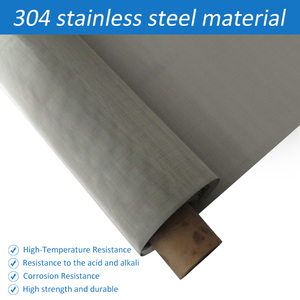
2. Transition to High-Integrity Metallurgy and Corrosion Defiance: Chemical processing plants are shifting away from short-lifespan polymers toward exotic alloys like Hastelloy, Monel, and Titanium wire mesh filters, demisters, and packing arrays. The avoidance of unplanned turnarounds outweighs the initial capital expenditure, prompting engineering teams to demand mill-origin test certification and PMI (Positive Material Identification) across all packed bed layers.
3. Single-Source Modular Supply: Global EPC contractors increasingly bypass fragmented component purchasing. Procuring Intalox saddles alongside internally formed crack-free perforated support plates, deep-drawn precision housings, liquid distributors, and high-efficiency demister pads from a verified single vendor minimizes dimensional stack-up errors during vessel assembly.
| Packing Type | Material Availability | Surface Area ($m^2/m^3$) | Void Fraction (%) | Primary Process Suitability |
|---|---|---|---|---|
| Metal Intalox Saddle | SS 304/316L, Duplex, Hastelloy | 110 – 260 | 96 – 98.5% | Vacuum distillation, high-capacity stripping, CCUS amine towers |
| Ceramic Intalox Saddle | Chemical Porcelain, Acid-Proof | 120 – 320 | 72 – 78% | Sulfuric acid drying, RTO regenerators, wet chlorine scrubbers |
| Pall Rings (Traditional) | Carbon Steel, SS Alloys, PP | 110 – 215 | 90 – 95% | Standard absorption revamps, water deaeration |
| Structured Gauze/Sheet | SS, Titanium, Inconel Wire Mesh | 250 – 500 | 93 – 97% | Heat-sensitive pharmaceuticals, multi-component fine fractionation |
Delivering engineering consistency, metallurgical precision, and international reliability since 1998.
From prime metal coil stock slitting to progressive stamping dies, deep drawing canisters, and automatic wire mesh looms, our centralized fabrication eliminates sub-tier contractor margins and schedule risks.
Full 3.1 chemical and mechanical test certificates (MTC), positive material inspection, precise optical micrometer sizing, and crack-free formed testing back every shipment delivered to your plant site.
Serving major energy and chemical hubs across the USA, UAE, Australia, Canada, Saudi Arabia, and Qatar with IPPC-certified seaworthy crating, rapid port clearance dispatch, and direct engineering access.
Expert answers addressing metallurgy choices, flow dynamics, manufacturing standards, and export logistics.
Intalox saddles feature an open, curved saddle shape that eliminates the flat end-walls of cylindrical rings. This structure provides higher bed voidage (up to 98%), lower aerodynamic drag, and avoids interlocking or nested packing problems. Upgrading a packed column from cylindrical rings to metal Intalox saddles routinely drops tower pressure drop by 20%–35% while permitting higher volumetric throughput before approaching the flood point.
For standard petrochemical fractionation, stainless steel grades 304L and 316L provide a reliable balance between corrosion resistance and initial cost. In services involving wet sour gas ($H_2S$), hydrochloric acid, or high brine concentrations, we manufacture packings and internals using Hastelloy C-276, Monel 400, or Titanium. Alternatively, for concentrated sulfuric or nitric acid duties, high-density vitrified ceramic Intalox saddles offer reliable chemical resistance.
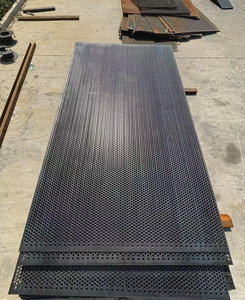
Random packing efficiency relies heavily on proper bed support. We fabricate integrally formed crack-free perforated screen plates and multi-beam support grids that feature up to 100% free cross-sectional passage. These prevent fluid holdup at the bed transition zone, eliminating local flooding at the column base while supporting operational bed heights exceeding 6 to 8 meters per bed section.
Every shipment is delivered with EN 10204 Type 3.1 Material Test Certificates confirming precise chemical composition and tensile mechanical performance. We also supply Positive Material Identification (PMI) logs, hydrostatic/visual dimensional inspection sheets, and fumigation-certified ISPM-15 wooden crating records to ensure seamless customs clearance across the Middle East, Europe, Australia, and the Americas.