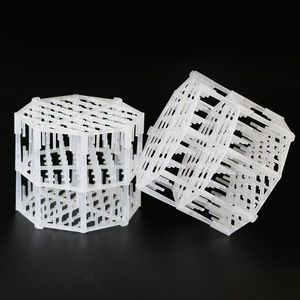
Cooling Tower Plastic Spherical Filler
High-surface spherical hollow packing designed for scrubber absorption, stripping towers, and wet cooling circulation.

Engineered for maximum specific surface area, lowest pressure drop per theoretical stage, superior chemical inertness, and industrial plant reliability.
High-surface spherical hollow packing designed for scrubber absorption, stripping towers, and wet cooling circulation.
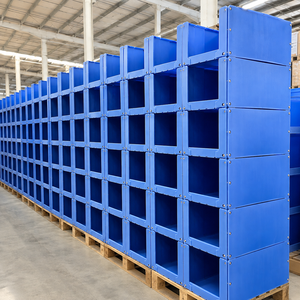
Corrosion-proof, heavy-duty warehouse picking systems designed for chemical parts handling, accessories, and cleanroom organization.
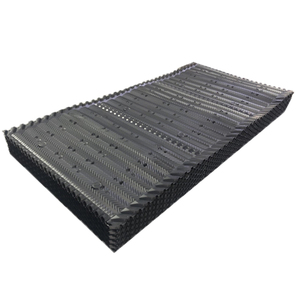
Engineered film and cross-fluted counterflow fill packing optimized for BAC cooling towers, foul-resistant heat exchange, and minimal drift.
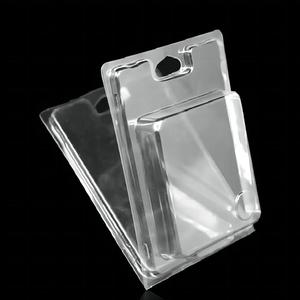
High-precision protective thermoformed packaging solutions for delicate laboratory packing elements, nozzles, and instruments.
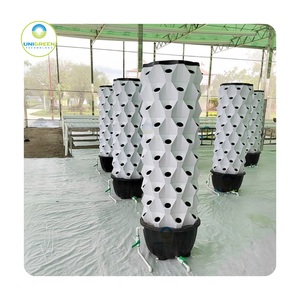
Food-grade ABS/PP vertical columnar distribution setup utilizing multi-stage liquid percolation and uniform nutrient spray dynamics.
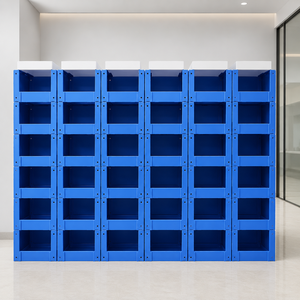
Ultra-durable, moisture-proof polypropylene storage containers tailored for harsh chemical logistics, sorting plants, and assembly yards.
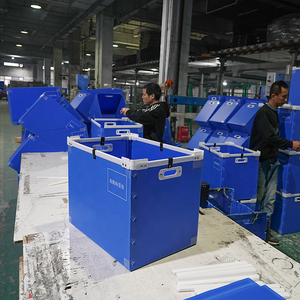
Space-saving, reusable, and acid-resistant turnover boxes engineered for chemical hardware handling, plant turnarounds, and export safety.
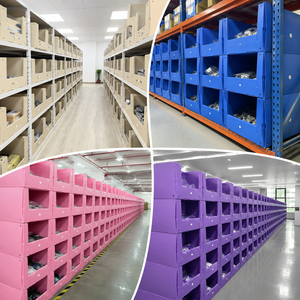
2-12mm heavy gauge modular partitioned bins engineered for maintenance workshops, hardware spares, and heavy tooling inventory.
In modern chemical processing, wastewater scrubbing, chlor-alkali production, and petrochemical distillation, the separation efficiency of packed columns depends heavily on the hydraulic and kinetic design of the packing elements. While metallic tower packings (such as stainless steel 304, 316L, Hastelloy, Monel, and Inconel) excel under extreme thermal conditions, engineering plastic tower packings have revolutionized chemical separation under corrosive, acidic, and high-chloride environments. As an ISO-certified manufacturer exporting across the United States, Canada, Australia, UAE, Saudi Arabia, and greater global markets since 1998, we provide deep-level insights into selecting, deploying, and maintaining high-performance plastic mass transfer components.
Plastic tower packings, fabricated primarily from Polypropylene (PP), Polyethylene (PE), Polyvinyl Chloride (PVC), Chlorinated Polyvinyl Chloride (CPVC), Polyvinylidene Fluoride (PVDF), and Reinforced Polypropylene (RPP), combine low bulk density with exceptional chemical inertness. Unlike conventional metallic internals that suffer from pitting corrosion and localized stress cracking in halogenated or wet acidic vapor systems, precision-engineered thermoplastic media provide sustained structural integrity. This prevents heavy metals contamination in high-purity pharmaceutical Active Pharmaceutical Ingredient (API) lines and microelectronics-grade chemical production.
Encompassing Pall Rings, Heilex Rings, Tellerette Rings, Conjugate Rings, and Hollow Floating Balls. These components provide an open-structure matrix, minimizing liquid holdup and gas flow bypass while offering superior fouling resistance in particulate-laden gas scrubber systems.
Configured in cross-corrugated sheets with specific surface areas from 125 m²/m³ up to 500 m²/m³. Plastic structured media provide a predetermined geometric pathway that yields exceptionally low pressure drop per theoretical plate (NTSM), ideal for vacuum systems and thermal debottlenecking.
Engineered film packings, drift eliminators, liquid distributors, support plates, and bed limiters constructed from flame-retardant PVC and copolymer polypropylene. Designed to eliminate channeling, hydraulic flooding, and entrainment wash-off in demanding cooling towers.
Selecting the appropriate resin grade requires analyzing process conditions, including continuous operating temperature, localized chemical concentration, oxidative potential, and mechanical compression within deep packed beds. Below is our engineering specification reference developed over 25 years of fabrication and international technical service:
| Polymer Material | Continuous Operating Temp | Chemical Resistance Profile | Mechanical Tensile Modulus | Typical Industrial Column Application |
|---|---|---|---|---|
| PP (Polypropylene) | -10°C to 100°C | Excellent resistance to inorganic acids, bases, and aqueous salts. Attacked by strong oxidizers. | Moderate / High Ductility | Flue gas desulfurization (FGD), air pollution scrubbers, municipal wastewater aerators. |
| RPP (Reinforced PP) | 0°C to 125°C | Enhanced thermal creep resistance with glass fiber reinforcing; resistant to caustic fluids. | High / Rigid Structure | Stripping columns, acid gas absorption towers operating near boiling points. |
| PVC (Polyvinyl Chloride) | -15°C to 60°C | Flame retardant (self-extinguishing); exceptional resistance to chlorine, acids, and aliphatic hydrocarbons. | High Rigidity | BAC and industrial cooling towers, potable water chlorination contact towers. |
| CPVC (Chlorinated PVC) | -20°C to 95°C | Superior chlorine and chlor-alkali compatibility at elevated working temperatures. | Very High | Bleach plants, hot brine dechlorination towers, caustic scrubber towers. |
| PVDF (Fluoropolymer) | -30°C to 150°C | Near-universal chemical resistance (UV, bromine, concentrated sulfuric and hydrofluoric acid). | Superior Creep Resistance | Semiconductor ultra-pure chemical purification, nuclear waste treatment, HF scrubbing. |
When engineering mass transfer revamp solutions or building greenfield distillation columns, process engineers must balance capacity, capital expenditure, and energy consumption. Sieve trays, fixed valve trays, floating valve trays, and bubble cap trays remain critical in high-pressure fractionators and heavy fouling slurries where positive liquid sealing is mandatory. However, when vacuum operations, limited column headroom, or low hydraulic head-loss are paramount, plastic packings provide distinct advantages:
1. Minimizing Pressure Drop (ΔP): Plastic structured packings feature void fractions consistently exceeding 92% to 96%. Compared to bubble cap and valve trays, structured plastic beds slash column base pressures dramatically. This reduces reboiler duty, eliminates thermal degradation of heat-sensitive compounds, and optimizes energy efficiency.
2. Liquid Redistribution and Wetting Characteristics: Unlike metals that naturally have high surface energy, polymers exhibit varying contact angles with aqueous solutions. Through precision surface texturing—such as grooving, micro-perforations, and engineered surface modifications—our plastic packings form continuous thin liquid films rather than droplet rivulets, maintaining high mass transfer coefficients across varied liquid loadings.
3. Capacity Revamps (Debottlenecking): Replacing standard sieve trays with high-efficiency plastic packing typically expands column hydraulic throughput by 30% to 50% without altering the existing pressure vessel shell or nozzle orientations.
Procurement directors and engineering EPC contractors are shifting from short-term purchase considerations to comprehensive Life Cycle Cost (LCC) and total environmental impact frameworks. Over the next decade, international supply chains in North America, Europe, the Middle East, and the Asia-Pacific region will be driven by four key procurement vectors:
Decarbonization and Circular Polymeric Feedstocks: EPC contractors increasingly require virgin-grade certified post-industrial circular polymers. Sourcing high-performance random packing molded from verified closed-loop recycled PP/HDPE reduces Scope 3 supply chain carbon emissions while maintaining stringent physical properties and creep rupture resistance.
Transition toward PFAS-Free Fluoropolymers: As regulatory oversight around polyfluoroalkyl substances increases globally, engineering R&D is focused on advanced non-fluorinated copolymer alternatives that deliver fluoropolymer-level chemical resistance up to 130°C without long-term regulatory liabilities.
Comprehensive Digital Documentation & Traceability: Modern project tenders demand verifiable resin origin certificates, melt flow index (MFI) verification, automated batch dimensional reporting, and full raw material certification for every packing lot before port clearance.
Mass transfer equipment design is advancing beyond traditional empirical models toward rigorous multi-physics Computational Fluid Dynamics (CFD) and molecular material design:
CFD-Guided Third-Generation Geometries: Conventional cylindrical Pall rings and simple Berl saddles are transitioning to optimized geometries featuring aerodynamic curving, multi-directional flow channels, and staggered inner fingers. These geometries disperse descending liquid evenly while allowing ascending vapors to sweep through without generating localized eddy drag or stagnant liquid pools.
Plasma Surface Engineering: Polyolefins inherently exhibit low surface energy, which can inhibit thin-film formation in highly aqueous systems. Modern manufacturing employs in-line atmospheric cold-plasma treatments and nano-roughening to lower wetting contact angles permanently, boosting mass transfer kinetics without altering base polymer chemical resistance.
Smart Tower Packing & In-Bed Wireless Sensor Nodes: Industrial IoT is entering packed towers. Advanced column installations incorporate encapsulated, chemically inert sensor elements directly inside packed beds to transmit real-time ΔP, localized liquid maldistribution, temperature gradients, and fouling buildup directly to plant DCS platforms.
Connect directly with our senior mass transfer and chemical engineering specialists. Submit your column drawings, hydraulic operating datasheets, or revamp specifications for detailed hydraulic modeling and a fast competitive quotation.
Get CatalogFounded in 1998, our engineering and manufacturing organization has grown into a premier global exporter of mass transfer solutions, column internals, alloy wire mesh, and precision fabricated sheet metal components. Serving EPC contractors, national oil companies, chemical conglomerates, and OEM equipment fabricators across 20+ countries, we base our partnerships on verifiable engineering rigor, transparent manufacturing, and responsive delivery.
100% prime virgin polymers and certified metal alloys with full raw material test certificates and lot traceability.
High-tonnage injection molding, extrusion, precision metal stamping, deep drawing, and automated weaving under one roof.
Comprehensive in-house testing: dimensional laser profiling, crush resistance tests, hydrostatic evaluations, and third-party inspection support.
Standardized export packaging in ISPM-15 compliant wooden cases, reinforced woven bags, and consolidated international container shipments.
Clear, technical answers to common queries raised by plant managers, chemical engineers, and international procurement professionals.
Standard homopolymer Polypropylene (PP) operates safely in continuous services up to 100°C (212°F). Reinforced Polypropylene (RPP) extends continuous operation to approximately 120°C (248°F). For high-temperature acidic services, Polyvinylidene Fluoride (PVDF) handles continuous operations up to 150°C (302°F) without significant thermal deformation or creep collapse.
Plastic packing is ideal for handling wet chlorine, hydrochloric acid (HCl), hydrofluoric acid (HF), concentrated halides, or strong caustic solutions where stainless steels (304, 316L) suffer severe pitting, stress corrosion cracking, or high replacement costs. Plastics are also preferred when weight savings are required on offshore platform towers or tall scrubbing structures.
Plastic packings feature lower compressive moduli than metals. For deep column beds exceeding 4 to 6 meters, engineers specify intermediate bed support plates and redistributors to divide the total vertical load. Additionally, using glass-reinforced polypropylene (RPP) or thickening the element wall structure prevents low-tier plastic deformation under hydraulic downforce.
To accurately size tower packing and evaluate hydraulic flooding margins, our process engineers need: internal column diameter, total packed height, vapor and liquid mass flow rates, operating pressure and temperature, chemical composition, system viscosity, surface tension, and separation efficiency goals (such as HETP or required NTSM).
Our plastic random packings are packed into high-strength, UV-resistant polypropylene woven jumbo bags (typically 1 cubic meter per bag) or double-wall corrugated export master cartons shrink-wrapped onto fumigated heat-treated pallets. Plastic structured packings are strapped into protective modules and crated inside ISPM-15 compliant seaworthy wooden cases.
Yes. A packed column operates at peak performance only when liquid is distributed evenly across the top cross-sectional area. We design and manufacture matching trough distributors, deck spray distributors, bed limiters, and anti-migration support grids in compatible plastics (PP, PVC, PVDF) and high alloys to provide a complete internal package.
Explore our complete product portfolio: Plastic Random Packings, Structured Distillation Media, Column Internals, and Industrial Corrugated Warehousing Solutions. Our engineering team responds to all technical enquiries within 24 hours.
Get Catalog