Absorption Column Internals Manufacturers & Suppliers for the New Zealand Market
Precision-engineered column trays, structured packing, random packing, and fluid distributors compliant with AS/NZS standards for dairy, geothermal, bioprocessing, and chemical manufacturing.
Engineered Mass Transfer & Column Internals Portfolio
Providing precision mass transfer hardware, structured packing matrices, random packing rings, and high-tolerance sheet metal fabrications tailored for demanding operational conditions across New Zealand.
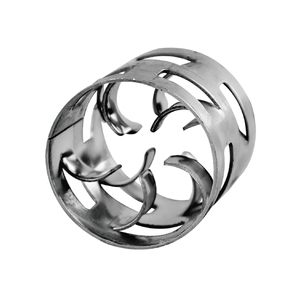
Engineered cylindrical packing featuring inward-bent lips to optimize interfacial area, minimize pressure drop, and provide high resistance to corrosive media in gas scrubbing and stripping applications.
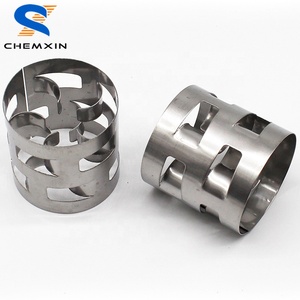
Marine-grade stainless steel Pall rings designed for volatile organic compound (VOC) recovery and high-throughput gas absorption, certified for elevated sanitary and industrial standards.
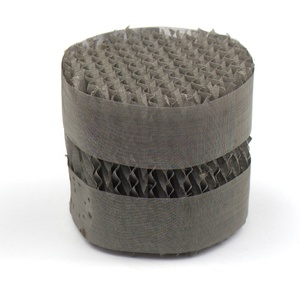
High-efficiency corrugated wire gauze structured packing engineered specifically for vacuum separation, heat-sensitive active pharmaceutical ingredients (APIs), and fine bio-ethanol refining.
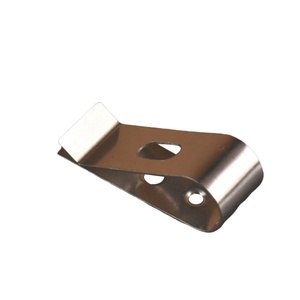
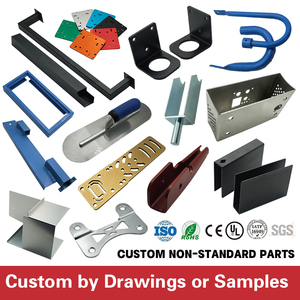
Custom-stamped tray valves, beam clamps, retaining clips, support brackets, and washer assemblies manufactured with high repeatability to handle intense mechanical pulsation.
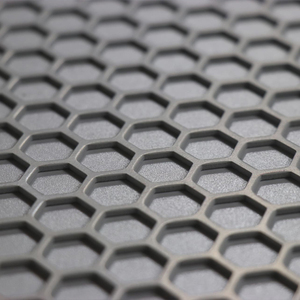
Fiber laser cut and pressed bed limiters, packing support plates, and vapour distributors constructed from specialty alloy plates to resist sagging and catastrophic bed displacement.
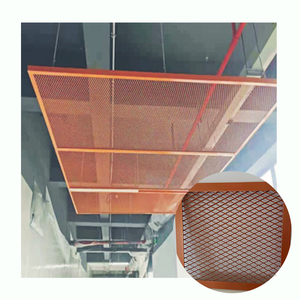
Structural expanded metal elements serving as rigid impingement mist eliminators, droplet coalescers, and multi-layer protective screening for raw bio-gas absorption towers.
Hydrodynamically formed corrugated baffle plates and downcomer aprons designed to direct liquid streams smoothly, minimize foaming, and eliminate entrainment in high-liquid-load vessels.
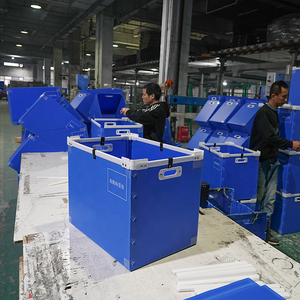
Engineered stackable packaging and on-site distribution containers designed to simplify rapid, damage-free loading of tower packing during critical maintenance turnarounds.
Localized Application Scenarios in New Zealand's Industrial Ecosystem
The deployment of absorption column internals across New Zealand demands an intimate understanding of distinct environmental and chemical operating profiles. From the heavy dairy processing infrastructure in the Waikato, Taranaki, and Canterbury plains to geothermal energy extraction in the Taupo Volcanic Zone, standard catalog hardware consistently falls short. Ambani Metals delivers customized chemical mass transfer hardware engineered directly to combat the following localized operational stresses:
Dairy Spray Drying & Clean-in-Place (CIP) Evaporation Systems: In New Zealand's world-leading milk powder and whey protein isolation sectors, absorption scrubbers clean vent gases to recover entrained powders and prevent atmospheric odor emissions. Column internals—particularly structured packing and sieve downcomer trays—must withstand harsh alternating 1.5% to 2.0% nitric acid and sodium hydroxide CIP washing cycles at temperatures up to 85°C. We supply electropolished SS316L internals fabricated with crevice-free continuous seam welds, preventing bacterial entrapment and conforming to stringent MPI (Ministry for Primary Industries) food-safety standards.
Geothermal Steam Gas Extraction & H2S Scrubbing: Across Rotorua, Wairakei, and Ngawha geothermal power stations, non-condensable gas (NCG) extraction towers must scrub high concentrations of hydrogen sulfide (H2S), carbon dioxide (CO2), and chloride-laden steam. Exposure to these gases causes severe sulfide stress corrosion cracking (SSCC) and pitting in standard 304 steels. Ambani Metals delivers specialized bubble cap trays, demisters, and random packing made from high-molybdenum Duplex 2205, Hastelloy C-276, and Titanium Grade 2, completely impervious to low-pH condensate and aggressive sulfur deposits.
Agricultural Fertilizer & Sulfuric Acid Production: Major fertilizer production facilities near Tauranga and Dunedin rely on absorption and drying towers to strip sulfur trioxide (SO3) into concentrated sulfuric acid (98.5%). These units operate under extreme thermal conditions where ordinary distributor troughs buckle or experience acid erosion. Our high-silicon stainless steel alloys and cast alloy distributors provide uniform acid irrigation, preventing hot spots and preserving overall plant thermal efficiency.
Pulp, Paper, and Biorefining Off-Gas Stripping: Forestry and paper mills located around the Central North Island utilize absorption columns for chlorine dioxide (ClO2) bleaching wash towers and TRS (Total Reduced Sulfur) control. We design heavy-duty vane collector trays and fouling-resistant fixed valve trays engineered to handle suspended fiber carry-over without plugging downcomers or creating excessive bed pressure drop.
Technical Selection Matrix: Mass Transfer Internals Performance Profile
Selecting the correct mass transfer device requires balancing pressure drop, turn-down ratio, operating cost, and fouling resistance. The engineering table below outlines typical operational benchmarks used by our process design team when modeling column hydraulics:
Equipment Type
Optimal Hydraulic Service
Turn-down Ratio
Pressure Drop (ΔP)
Fouling Tolerance
Typical NZ Industry Application
Structured Wire Gauze Packing
Deep vacuum distillation, high-purity separations
Up to 10:1
Ultra-Low (0.1–0.5 mbar/stage)
Low (Clean vapour only)
Essential oil distillation, API pharma purification
Corrugated Sheet Metal Packing
Moderate vacuum to atmospheric absorption
High (~5:1)
Low (0.3–1.0 mbar/stage)
Moderate
Bio-ethanol dehydration, CO2 capture scrubbers
Random Packing (Pall / Raschig)
High liquid-to-gas ratio, atmospheric scrubbers
Good (~3:1)
Low to Medium
High (Self-cleaning channels)
Geothermal H2S stripping, acid gas absorbers
Fixed Valve Trays
Continuous separation with moderate fouling risk
3:1 to 4:1
Moderate (3.0–6.0 mbar/tray)
High (No moving parts)
Dairy effluent stripping, refinery fractionators
Bubble Cap Trays
Extremely low liquid flow rates, chemical reactions
> 10:1
High (6.0–12.0 mbar/tray)
Moderate to Low
Batch recovery, carbonation columns
*Values are indicative and vary based on column diameter, foaming index, vapor-liquid traffic, and weir loading. Contact our engineers for process simulation support.
New Zealand Market Trends: Decarbonization, Bioprocessing & Seismic Engineering
The industrial separation sector in New Zealand is experiencing a rapid technological transition driven by national sustainability frameworks and geographical constraints. Plant operators upgrading their mass transfer columns are focusing on three primary engineering frontiers:
Point-Source Carbon Capture (CCUS)
Under New Zealand's Zero Carbon Act and emissions trading schemes, cement kilns, dairy heat plants, and waste-to-energy facilities are implementing amine-based CO2 absorption towers. These processes require ultra-low-pressure-drop structured packing and specialized anti-foaming multi-beam support plates to minimize parasitic energy loads on reboilers.
Circular Biorefining & Solvent Recovery
A shift toward green solvents and wood waste-derived biochemicals has created demand for flexible column internals capable of high vacuum operation. High-efficiency wire mesh gauze packing enables clean separation of high-boiling esters and bio-terpenes without thermal degradation, offering superior stage efficiency within compact column heights.
Seismic Hardening (NZS 1170.5 Compliance)
New Zealand sits on the Pacific Ring of Fire, requiring column internals to withstand intense seismic ground acceleration. Unlike standard loose drop-in trays, our column internals feature heavy-gauge mechanical clamping, interlocking support rings, and positive fastener lockings designed to prevent structural failure and packing collapse during earthquake events.
Why New Zealand EPCs & Industrial Facilities Partner With Us
Combining 25+ years of Indian manufacturing craftsmanship with strict global quality governance, end-to-end metallurgical traceability, and customized logistics support.
Direct Mill Sourcing & Traceability
All stainless steels (SS304/L, SS316/L) and exotic alloys (Hastelloy, Monel, Inconel, Titanium) are sourced from reputable primary steel mills. Every shipment includes certified EN 10204 3.1 Material Test Reports (MTRs) with complete heat number traceability.
Integrated In-House Fabrication
From sheet metal cutting, CNC stamping, deep drawing, and wire mesh weaving to final manual assembly and hydraulic testing—all operations are performed under one roof. This minimizes subcontracting overhead and gives us direct control over lead times.
Third-Party Inspection Verified
We routinely accommodate third-party inspection agencies (SGS, Bureau Veritas, Lloyd's Register, TÜV) at our facility for positive material identification (PMI), dye penetrant weld testing, and dimensional verification before export dispatch.
Rugged Ocean-Ready Packaging
Equipment is packaged in heavy-gauge, ISPM-15 compliant heat-treated timber crates with moisture-barrier wrapping and shock cushioning. Every component is metal-tagged to match installation schematics, ensuring fast turnaround installation at Ports of Auckland, Tauranga, or Lyttelton.
Frequently Asked Questions by New Zealand Procurement Teams
Clear, direct answers regarding material compliance, seismic considerations, engineering simulations, and shipping logistics.
How do your column internals comply with New Zealand seismic and structural regulations?
Our engineers review the mechanical loading against relevant AS/NZS seismic codes, specifically AS/NZS 1200 and NZS 1170.5. To counter lateral and vertical seismic acceleration, we provide reinforced support rings, positive tray-bolting assemblies with mechanical locking devices (Nord-Lock or split-pin retainers), and heavy-duty downcomer stiffeners that prevent buckling under dynamic sloshing loads.
Can your company manufacture directly from an existing process data sheet or third-party legacy drawings?
Yes. We routinely fabricate exact drop-in replacements for brownfield revamps where original vendor drawings exist (such as Sulzer, Koch-Glitsch, or Raschig designs). Alternatively, if you only have a process data sheet specifying vapor and liquid flow rates, operational pressures, temperatures, and physical properties, our in-house engineering team can perform complete hydraulic sizing and deliver detailed fabrication drawings.
What surface finishes and documentation are supplied for food-grade dairy and pharmaceutical columns?
For dairy processing (Fonterra, Open Country Dairy specifications) and pharmaceutical installations, we supply column internals manufactured from low-carbon SS316L. We offer mechanical polishing down to Ra < 0.4 μm as well as electropolishing to passivate all contact surfaces. Shipments are accompanied by 3.1 Material Test Certificates, Passivation Reports, Roughness (Ra) Test Certificates, and Welder Performance Qualification records.
What is the typical delivery schedule from your manufacturing plants to New Zealand ports?
Standard fabrication lead times for complete column sets range from 3 to 6 weeks, depending on column diameter and metallurgy. Ocean freight transit to Port of Tauranga or Ports of Auckland typically takes 24 to 32 days via direct sea routes. For urgent plant shutdowns or breakdown revamps, emergency manufactured trays and replacement packings can be packed in lightweight crates and air-freighted directly to Auckland or Christchurch International Airports within 5 to 7 days.
Which liquid distributor design is ideal for high-pressure or foaming absorption towers?
For systems prone to foaming or wide liquid flow variations, we recommend gravity-fed deck-type trough distributors with bottom or side-discharge orifices and vapor chimneys, or pressurized pipe-arm perforated distributors fitted with wide-angle splash baffles. These designs maintain an even irrigation density (minimum 100 to 150 drip points per square meter) while preventing high kinetic energy jetting that initiates liquid foaming.
Need Hydraulic Sizing or a Fast Quote for Your Column?
Send your process data sheet, column diameter, or legacy drawings directly to our engineering team.