
- +91-9930498858Call / WhatsApp
- [email protected]Email Us
Explore our manufactured industrial wire mesh, structured mass transfer components, precision stamped casings, and deep drawn assemblies designed to exceed international ASTM and DIN specifications.
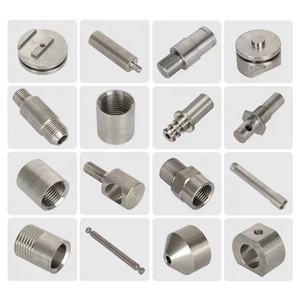
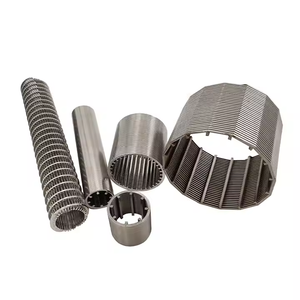
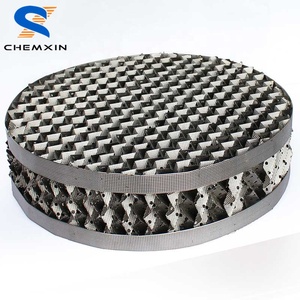
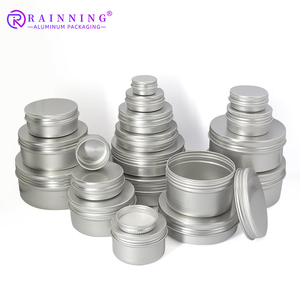
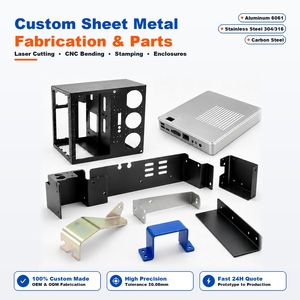
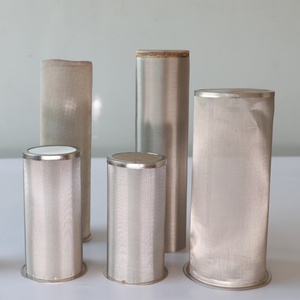
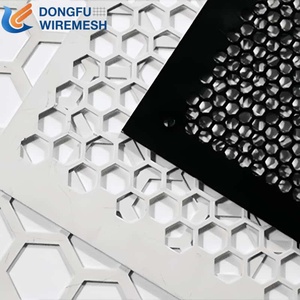
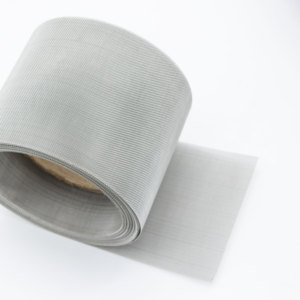
As India accelerates its manufacturing prowess under advanced metallurgic corridors across Gujarat (Jamnagar, Ahmedabad) and Maharashtra (Mumbai, Pune), brass wire mesh factories and suppliers in India have evolved far beyond standard weaving workshops into globally certified technical hubs. Historically recognized for non-sparking safety screens and basic sieving applications, contemporary Indian producers deploy state-of-the-art rapier and shuttleless automatic weaving looms capable of maintaining micrometric tolerances on aperture sizes, wire gauges, and mesh squareness.
Brass—fundamentally an alloy of copper (Cu) and zinc (Zn)—derives its engineering significance from superior electrical and thermal conductivity, spark resistance, excellent machinability, and anti-biofouling characteristics. Indian manufacturing plants typically classify their brass wire mesh output into three primary alloy grades: CuZn30 (Cartridge Brass / 70:30), CuZn35 (65:35), and CuZn37 (Common Brass / 63:37). Under strict metallurgical controls, virgin cathode copper and high-grade zinc ingots are induction-melted and drawn through progressive polycrystalline diamond (PCD) dies to achieve tensile strengths ranging from 380 N/mm² to 550 N/mm² with uniform elongation, ensuring zero embrittlement during twilled and plain Dutch weaving cycles.
| Alloy Grade | Composition Ratio | Tensile Strength (MPa) | Conductivity (% IACS) | Primary Industrial Use-Case |
|---|---|---|---|---|
| C26000 (Cartridge Brass) | 70% Cu / 30% Zn | 340 – 460 | 28% | Deep drawing parts, high-ductility micro-filter cloth |
| C27000 (Yellow Brass) | 65% Cu / 35% Zn | 380 – 520 | 27% | Standard industrial sieves, EMI/RFI screening cages |
| C28000 (Muntz Metal) | 60% Cu / 40% Zn | 420 – 560 | 28% | High-wear structural filtering, marine intake screens |
| Phosphor Bronze (C51000) | 95% Cu / 5% Sn / 0.2% P | 450 – 620 | 15% | Continuous movement shaker screens, paper mill wire cloth |
In contrast to standard austenitic stainless steels (such as SS304 or SS316L), brass wire cloth provides critical chemical passivity against specific organic chemicals, crude hydrocarbon streams containing negligible hydrogen sulfide, and marine saltwater environments where galvanic balance and fouling resistance are crucial. At Ambani Metals, every production batch undergo rigorous automated optical inspection (AOI) to eliminate broken picks, reed marks, warp tension inconsistencies, and irregular mesh pitch, guaranteeing predictable separation factors down to 25 microns for the chemical processing, aerospace, pharmaceutical, and electronic sectors.
Precision-drawn copper-zinc mesh plays an indispensable, cross-functional role across heavy manufacturing, infrastructure, and electronic protection.
Because brass possesses exceptional non-sparking properties, refineries along the Jamnagar and Dahej petrochemical belts utilize coarse-to-medium brass woven wire mesh in flame arrestor assemblies, ventilation breather valves, and vapor recovery lines handling volatile hydrocarbon vapors.
With India's burgeoning semiconductor and aerospace electronic manufacturing corridor in Bengaluru and Noida, fine brass mesh (100 to 250 mesh) is integrated into Faraday cages, shielded server enclosures, and medical imaging facilities (MRI suites) to suppress high-frequency electromagnetic interference.
In accordance with Indian Pharmacopoeia (IP) and US FDA handling guidelines for inert chemical blending, high-precision plain weave brass sieves deliver static dissipation during powder fluidization, preventing dust explosions while maintaining precise grading of excipients.
Commercial high-rises and luxury resorts throughout Mumbai, Delhi-NCR, and Goa utilize crimped and corrugated brass wire mesh as decorative partitions, elevator cab enclosures, and solar louvers. The metal's natural tendency to develop a stately antique patina delivers distinct architectural aesthetics.
In the expansive sugar manufacturing units across Uttar Pradesh and Maharashtra, specialized brass backing screens and slotted centrifugal filters withstand alkaline lime clarifying solutions, mechanical vibrations, and high rotation velocities without clogging.
Coastal plants along Gujarat, Tamil Nadu, and international desalination facilities in the Middle East employ brass and phosphor bronze wire screening grids on suction lines. The continuous release of copper ions naturally suppresses micro-algae growth and barnacle encrustation.
The Indian brass wire cloth market is experiencing a profound transformation accelerated by three distinct macroeconomic factors: domestic infrastructure modernization (Make in India), rigorous global supply-chain diversification (China + 1 procurement strategy), and sustainability-driven scrap recycling standards.
1. Precision Sintering & Diffusion Bonding Integration: Industrial filtration operators are increasingly transitioning from simple single-layer woven brass screens to composite multi-layer sintered brass elements. By heat-treating multiple layers of woven brass gauze without binder flux under protective hydrogen atmosphere furnaces, domestic manufacturers yield porous filter cylinders with structural integrity exceeding 15 bar collapse pressure.
2. Adoption of Zero-Defect Optical Sorting Technology: With aerospace and electronics assemblers requiring PPM-level rejection guarantees, leading Indian suppliers have integrated high-speed CCD sensor lines. This automated inline quality check quantifies open area consistency, detecting micron-level aperture deviations in real-time across continuous 30-meter roll outputs.
3. Closed-Loop Alloy Recyclability & Circular Supply Chains: Given copper and zinc volatility on the London Metal Exchange (LME) and Multi Commodity Exchange (MCX), factories operating direct extrusion and wire-drawing infrastructure have instituted closed-loop return scrap programs. Plant off-cuts, punched perforated disc scrap, and turnings are refined back to pristine alloy ingots, providing substantial price stability and ESG validation for export customers across Europe, Australia, and the Middle East.
Decades of metallurgic expertise, integrated tooling lines, and turnkey export operations engineered to eliminate project risk.
Every shipment is accompanied by comprehensive EN 10204 3.1 Mill Test Certificates (MTC), spectrographic chemical assays, and mechanical tensile test reports referencing batch heat numbers from certified mills.
From initial wire drawing and heavy CNC rapier weaving to secondary processes—including slitting, circular blank punching, ultrasonic degreasing, deep drawing, and calendering—all production stages reside under our direct factory roof.
Serving over 20 export destinations including the USA, UAE, Australia, and Germany, our packaging incorporates moisture-proof barrier foil, bubble wrap, edge protectors, and IPPC-stamped ISPM-15 treated wooden crating to prevent tarnishing in transit.
Direct technical answers addressing mesh specifications, alloy choices, quality standards, and export logistics.