- +91-9930498858Call / WhatsApp
- [email protected]Email Us
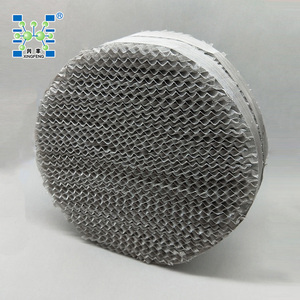
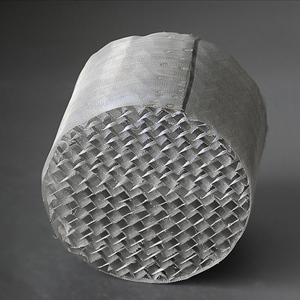
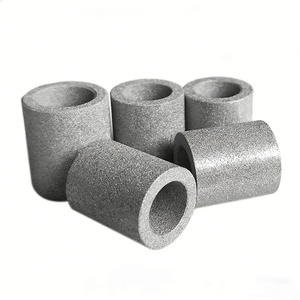
From precision sintered filters to high-efficiency wire gauze structured packing, our integrated production lines supply French engineering contractors (EPC) and plant revamps with fully certified column internals.
A comprehensive metallurgical and material science breakdown for French process engineers, revamping distillation, absorption, and desorption columns under extreme chemical stress.
In modern mass transfer unit operations across European chemical infrastructure, column packing materials serve as the primary interfacial boundary governing vapor-liquid hydraulic equilibrium. While austenitic stainless steels (AISI 304, 316L) and specialty nickel alloys (Hastelloy C-276, Monel 400, Inconel 625) offer mechanical ductility and predictable machining characteristics, their corrosion resistance sharply drops when subjected to oxidizing hot mineral acids, moist halogens, and aggressive scrubbing liquors. For French chemical platforms navigating rigorous safety margins, CE certified ceramic tower packings—manufactured from dense chemical-grade porcelain and acid-resistant stoneware—represent the thermodynamic benchmark for chemical inertness, high crushing resistance, and superior wettability.
Our engineered ceramic random and structured packings are synthesized via high-pressure vacuum de-airing pug extrusion, precision automated molding, and vitrification in computerized tunnel kilns firing at temperatures between 1,280°C and 1,350°C. This controlled ceramic sintering converts raw kaolinite, feldspathic flux, and silica minerals into a dense crystalline mullite (3Al2O3·2SiO2) matrix surrounded by a chemically inert vitreous phase. The resulting ceramic bodies display water absorption rates below 0.5%, acid resistance surpassing 99.8% (according to DIN EN 993-16 and ASTM C515 standards), and an operating thermal threshold reaching 1,100°C without structural spalling or micro-cracking.
Unlike metallic surfaces that depend upon mechanical etching, micro-perforations, or chemical pickling to induce liquid spreading, industrial ceramics possess intrinsically high polar surface energy. In aqueous systems, foul gases, and concentrated acid duties, ceramic tower packings achieve uniform liquid film distribution at liquid loads as low as 0.5 m³/(m²·h), preventing local dry spots, premature channeling, and gas slip through the bed.
To satisfy specific French chemical, nuclear fuel reprocessing, and environmental scrubbing protocols, we manufacture ceramic mass transfer components across three distinct geometric classes:
1. Ceramic Intalox Saddles (Super Saddles): Engineered with an aerodynamic, scalloped arc geometry, Intalox saddles combine the benefits of ring and saddle shapes. The interlocking design creates continuous open channels that minimize wall flow, lower pressure drop (ΔP) by 25% compared to standard cylindrical Raschig rings, and drastically enhance the gas-liquid surface contact area.
2. Ceramic Cascade Mini Rings (CMR): Featuring a low aspect ratio (height-to-diameter ratio of 1:3), Cascade rings orient themselves predominantly on their edge within the packed bed. This orientation maximizes voidage, promotes rapid droplet detachment, suppresses stagnant liquid hold-up, and improves flooding velocity by up to 20% in high-pressure absorption towers.
3. Ceramic Structured Packing & Honeycomb Monoliths: Built from corrugated sheets of micro-grooved ceramic plates, ceramic structured packings provide precisely calculated hydraulic flow angles (30° and 45° inclinations). They deliver theoretical plate efficiencies (HETP) down to 250–350 mm in high-vacuum rectification, stripping of heat-sensitive agrochemical intermediates, and regenerative thermal oxidizers (RTO).
From the Vallée de la Chimie in Auvergne-Rhône-Alpes to the Normandy petrochemical estuary, our certified packing solutions resolve localized operational challenges.
Home to world-class specialty chemical syntheses, polymer production, and battery material R&D. Ceramic Intalox saddles and high-alumina inert balls (Al2O3 99%) provide critical chemical resistance in chlorine drying towers, concentrated hydrochloric acid (HCl) synthesis, and alkylation fractionators.
France's prime refining and base chemical axis along the Seine corridor requires robust acid absorption and hydrocarbon separation. Our CE certified packings replace degrading metallic trays in sour water strippers, sulfuric acid alkylation plants, and Claus sulfur recovery thermal reaction chambers.
France’s nuclear cycle requires extreme standards for off-gas scrubbing and nitric acid (HNO3) distillation. Dense ceramic Raschig rings and engineered stoneware column internals ensure uncompromised radiation tolerance and zero dissolution when exposed to boiling, highly concentrated radio-acidic liquors.
How evolving French environmental governance and decarbonization subsidies dictate industrial purchasing standards.
French facilities classified under Installations Classées pour la Protection de l'Environnement (ICPE) operate under stringent emission limits for volatile organic compounds (VOC) and acid fogs. Low-pressure drop ceramic structured packings enhance wet scrubber scrubbing efficiency up to 99.7% while curtailing fan electrical loads.
Under the French national investment plan "France 2030", chemical producers are subsidized to modernize aging distillation columns. Upgrading from old bubble cap trays to high-efficiency ceramic Cascade rings slashes steam consumption by 18–28% via enhanced vapor-liquid contact dynamics.
Major carbon capture and storage test beds in Dunkirk and Fos-sur-Mer utilize amine-based and non-aqueous solvent absorption. Ceramic packings prevent solvent degradation, resist trace SOx impurities, and deliver vast specific surface areas essential for rapid CO2 mass transfer kinetics.
Our complete ceramic packing spectrum fully complies with Regulation (EC) No 1907/2006 (REACH). Kiln-fired under strict controls, our products are completely free from restricted SVHC chemicals (Substances of Very High Concern) and release zero leaching ions into high-purity pharmaceutical water systems.
Empirical hydraulic test metrics under atmospheric standard conditions, calculated in accordance with ISO & VDI 2761 guidelines.
| Packing Type & Geometry | Nominal Size (mm) | Specific Surface Area (m²/m³) | Void Fraction (ε %) | Bulk Density (kg/m³) | Dry Packing Factor Fp (m&sup-1;) | Primary Industrial Use in France |
|---|---|---|---|---|---|---|
| Ceramic Intalox Saddle | 25 (1") | 255 | 73.0% | 580 | 210 | Sulfuric acid drying & absorption (Normandy) |
| Ceramic Intalox Saddle | 50 (2") | 115 | 78.5% | 490 | 98 | Fume gas scrubbing, municipal incinerators |
| Ceramic Cascade Mini Ring | 38 (1.5") | 165 | 75.2% | 530 | 135 | NOx off-gas recovery & nuclear reprocessing |
| Ceramic Cascade Mini Ring | 50 (2") | 120 | 79.0% | 480 | 88 | Bio-refining & industrial organic solvent stripping |
| Ceramic Raschig Ring | 25 (1") | 190 | 70.0% | 650 | 280 | High-temperature catalyst support & dirty scrubbers |
| Ceramic Honeycomb Monolith | 150×150 cell | 620 | 68.0% | 610 | 45 | Regenerative thermal oxidizers (RTO) & VOC control |
*All ceramic packing batches undergo rigorous hydrostatic crush strength testing (>9.5 kN piece break threshold) and acid boiling weight loss testing (<0.15% in concentrated boiling sulfuric acid, ASTM C279).
Leveraging over 25 years of engineering heritage since 1998, we deliver reliable quality control from raw material formulation to final container dispatch.
Every ceramic batch is mixed, extruded, dried, and sintered in our automated facilities. We control raw material chemistries with precision spectrometers to guarantee consistent wall thickness, high mechanical crush resistance, and zero internal porosity.
Quality assurance is reinforced by complete documentation. Every shipment to France is accompanied by certified laboratory testing sheets covering chemical composition (SiO2, Al2O3, Fe2O3), bulk density, Mohs hardness, and acid leaching resistance.
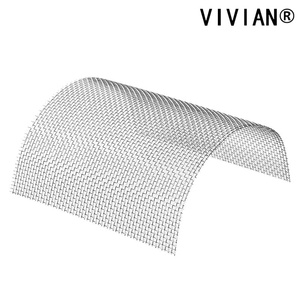
Beyond ceramic random packings, we manufacture complete column packages including ceramic and alloy support plates, liquid distributors, bed limiters, and wire gauze mist eliminators, preventing flow maldistribution across the entire tower.
Clear, technically rigorous answers covering compliance, logistics, customs clearance, and hydraulic design.
Whether you require bulk containers of CE-certified ceramic Intalox saddles for a sulfuric acid plant in Normandy or custom high-alumina support balls for a refinery in Lyon, our engineering team provides complete technical datasheets, hydraulic calculations, and competitive FOB/CIF quotation terms.