
- +91-9930498858Call / WhatsApp
- [email protected]Email Us
Manufactured to rigorous metallurgical standards, our wire mesh discs, spot-welded cylinder screens, and deep-drawn alloy casings withstand backpressures exceeding 350 bar in high-throughput polymer lines.
In high-pressure continuous extrusion, melt contamination directly induces die lip buildup, parison instability, film pinholes, and premature screw degradation. Implementing CE-certified filtration media ensures mechanical equilibrium between particle retention and differential pressure (ΔP).
Engineered by consolidating coarse drainage mesh (10 to 40 mesh) with high-density intermediate layers and ultra-fine micron filtration cloth (down to 15 microns). Multi-point resistance spot welding prevents edge delamination and wire migration inside the breaker plate under extreme melt surges reaching 35 MPa.
Characterized by tightly spaced, thicker warp wires driven close together with thinner weft wires. This orientation provides immense mechanical tensile strength along the machine direction, delivering uninterrupted melt throughput in automated continuous screen changers and high-load elastomer strainers.
Encapsulated in stamped aluminum, copper, or stainless steel channel frames. The malleable rim forms a micro-tight hydraulic seal against the breaker plate surface, eliminating polymer melt bypass around the circumference—crucial for medical-grade tubing, optical sheet, and zero-defect monofilaments.
A rigorous metallurgical comparison designed to guide Sri Lankan plant managers and extrusion process engineers in selecting the correct weave architecture for specific polymer melt viscosities.
| Weave Architecture | Common Mesh Counts | Aperture Rating (μm) | Burst Resistance (ΔP) | Flow Permeability | Primary Industrial Fit in Sri Lanka |
|---|---|---|---|---|---|
| Plain Square Weave (SS304/SS316) | 10 Mesh to 200 Mesh | 2,000 μm – 75 μm | Low – Moderate (≤ 100 bar) | Very High (Open Area 30%–55%) | Agricultural irrigation pipes, conduit profiles, coarse virgin PE/PP pelletizing. |
| Twill Square Weave | 150 Mesh to 400 Mesh | 100 μm – 38 μm | Moderate (≤ 160 bar) | Moderate (Open Area 25%–38%) | Standard masterbatch compounding, Raffia tape lines, woven sack extrusion. |
| Dutch Weave (Plain / Twill) | 24×110 to 325×2300 | 120 μm down to 2 μm | High (≤ 280 bar) | Controlled / High Separation | Flexible food packaging film, BOPP lines, optical grade polycarbonate sheet. |
| Reverse Plain Dutch (RDW/PZ) | 48×10 to 132×16 | 300 μm – 70 μm | Very High (≤ 350 bar) | High Velocity Retention | Continuous ribbon belt screen changers for post-consumer recycled (PCR) plastics. |
| Multi-Layer Sintered Laminate | 3 to 7 Composite Layers | 5 μm – 100 μm | Maximum (> 400 bar) | Uniform Pore Distribution | Corrosive fluoropolymer (PTFE), natural rubber straining, medical catheter extrusion. |
From the industrial free trade zones of the Western Province to agricultural sectors in the dry zones, our extruder screen meshes provide robust process stability tailored to Sri Lanka's domestic and export production realities.
Supplying multi-layer stainless steel mesh packs (80/120/150/60 mesh) to flexible packaging and blown film converters in Biyagama, Katunayake FTZ, and Kelaniya. Minimizes gel defects and carbon specks in food-contact flexible laminates and barrier pouches.
Sri Lanka's world-leading solid tire, latex, and technical rubber sectors (Horana, Kalutara, Avissawella) demand high-torque hydraulic rubber strainers. We supply reinforced SS304/SS316 coarse mesh screens designed to trap unvulcanized clumps and sand particulates.
Extrusion plants catering to dry-zone irrigation in Kurunegala, Anuradhapura, and Southern regional hubs depend on our heavy-gauge spot-welded disc packs to ensure consistent melt flow during rigid PVC and HDPE pipe fabrication.
Addressing Sri Lanka's circular economy mandates, post-consumer PET flake and polyolefin recyclers utilize our continuous reverse Dutch weave belt rolls to process contaminated wash grind without catastrophic screen blowouts.
Strategic analysis of macroeconomic adjustments, regulatory shifts, and technical upgrades impacting polymer and rubber processing operations throughout the island.
The Central Environmental Authority (CEA) of Sri Lanka continues to restrict specific single-use polymers, forcing domestic film converters to pivot toward heavier-gauge reusables, biodegradable compounds (PLA/PBAT), and post-consumer recycled (PCR) resin blends. These alternative resins exhibit non-linear rheology and higher un-melted gel frequencies, necessitating transition from simple square mesh to graded 5-layer sintered or spot-welded filter packs with gradual compaction gradients.
Given historic foreign exchange fluctuations and import clearance duties at the Port of Colombo, Sri Lankan manufacturers are abandoning low-grade uncertified wire cloth that requires daily replacement. Plant operators increasingly procure CE-certified, ultrasonically degreased SS316L sintered mesh discs that can undergo thermal pyrolysis or ultrasonic cleaning for multiple duty cycles, effectively cutting annual consumable spend by up to 38%.
Leading packaging exporters within BOI export processing zones are retrofitting legacy manual breaker plates with hydraulic slide-plate or auto-continuous ribbon screen changers. These high-speed continuous lines rely heavily on precise dimensioning and clean laser-cut selvage edges—standards rigorously maintained by Ambani Metals to guarantee jam-free indexing across continuous 24/7 manufacturing cycles.
Combining metallurgical expertise, precision deep-drawing capabilities, and an international export logistics framework tailored for smooth transit into Colombo and South Asia.
Every roll and disc pack ships with verified EN 10204 3.1 Material Test Certificates. Positive Material Identification (PMI) guarantees true virgin AISI 304, 316L, or specialty Hastelloy/Monel chemistry.
Prior to packaging, all extruder screens undergo multistage automated ultrasonic baths. Completely eliminates industrial lubricants, weaving drawing oils, and particulates that could cause carbon fouling.
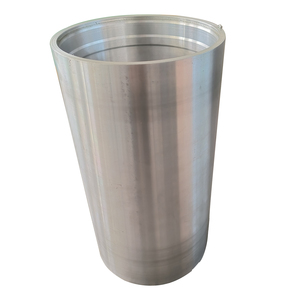
Equipped with progressive stamping, laser cutting, and deep drawing capacity. We produce custom cylindrical screens, breaker plates, support tubes, and rimmed circular discs tailored to any extruder throat.
Air-freight ready for urgent breakdowns and consolidated sea-freight containers targeting the Port of Colombo. Seaworthy barrier packaging with VCI rust-inhibiting liners prevents tropical oxidation during ocean transit.
Comprehensive engineering and commercial responses to critical inquiries faced by factory sourcing agents, import managers, and production chiefs.
Industrial stainless steel extruder screen mesh and spot-welded packs are typically declared under HS Code 7314.14 (Woven cloth of stainless steel) or HS Code 8477.90 (Parts of machinery for working plastics or rubber). The appropriate selection depends on whether you import continuous wire rolls or finished, stamped machine-specific components. We furnish exact commercial invoices, packing lists, and Certificates of Origin to facilitate smooth customs clearance through Sri Lanka Customs at the Port of Colombo or Bandaranaike International Airport (CMB).
Processing PCR polyolefins (regrind HDPE/PP) presents significant contamination challenges, including paper labels, dirt, aluminum residues, and cross-polymers. A single fine mesh will blind rapidly, causing melt pressure to spike dangerously. We recommend a graded 4-layer or 5-layer spot-welded configuration—such as 20 / 60 / 100 / 40 / 20 Mesh. The outer coarse 20 mesh layers serve as a mechanical buffer against breaker plate deflection, the 60 mesh captures bulk grit, the 100 mesh traps micro-particulates and un-melted gels, while the 40 mesh provides balanced backpressure distribution.
Although wire mesh discs are static elements, they operate inside high-pressure fluid systems governed by the EU Machinery Directive (2006/42/EC) and Pressure Equipment Directive (PED 2014/68/EU). A poorly manufactured screen pack that ruptures at 300 bar can cause structural blowback, blow out breaker plate seals, damage extruder screws, or eject molten resin through barrel vents. CE certification verifies that our alloy chemistry, burst tensile yield, and weld integrity meet international safety thresholds under dynamic thermal cycles reaching 350°C.
Yes. Rubber compounding imposes substantially higher shear viscosities and mechanical drag compared to thermoplastic extrusion. For unvulcanized natural rubber and tire tread compounds, we supply heavy-gauge plain Dutch weave and reinforced high-tensile stainless steel wire cloth (such as 30 mesh × 0.40mm wire or 40 mesh × 0.35mm wire) designed to withstand the immense torsional resistance generated by rubber straining screws without tearing or wire displacement.
Due to our manufacturing presence in close proximity to major Indian maritime hubs (Nhava Sheva/JNPT), sea freight transit time to the Port of Colombo is remarkably rapid—typically just 3 to 5 days ocean voyage. For critical plant shutdowns or custom trial disc dimensions, we provide emergency air dispatch arriving at Bandaranaike International Airport (CMB) within 48 to 72 hours from PO confirmation.
In high melt-flow index polymers (e.g., PP for non-woven fabrics or LDPE for lamination), molten polymer can escape around the unsealed periphery of raw-cut disc packs where the wire tips contact the breaker plate counterbore. Our rimmed packs feature an annular channel border stamped from aluminum or copper. As the die head bolts are torqued down, the softer rim yields slightly, creating a true hermetic metallic seal that forces 100% of the polymer melt through the calibrated mesh aperture.
Whether you require standard spot-welded circular packs, continuous ribbon rolls, or custom breaker plate assemblies, our application engineers review your polymer data sheet to recommend the ideal mesh architecture.