
- +91-9930498858Call / WhatsApp
- [email protected]Email Us
Engineered for Turkish environmental scrubbers, petrochemical stripping columns, cooling water circuits, and automated warehouse logistics.
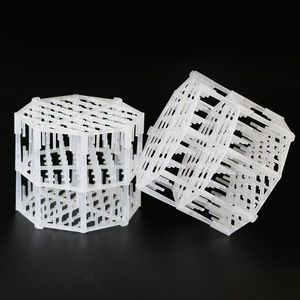
Engineered multi-aspect spherical hollow fillers designed for maximum liquid dispersion, low hydrodynamic resistance, and bio-growth suppression in wet cooling systems.
Inquire Now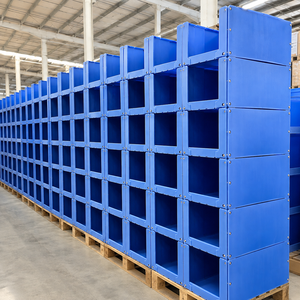
Oil-resistant, impact-modified polypropylene modular picking bins configured for high-density automotive spare parts storage and organized plant component handling.
Inquire Now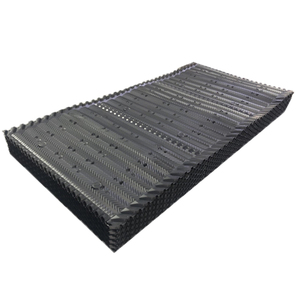
Thermoformed cross-fluted film fills offering exceptional thermodynamic thermal transfer rates, strict anti-clogging geometries, and durability in saline processing waters.
Inquire Now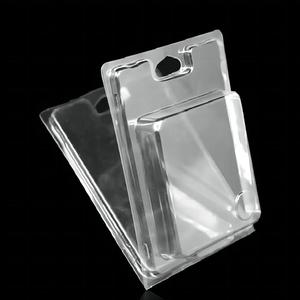
High-clarity, thermoformed industrial component packaging engineered to protect precision mechanical seals, valves, and tower sensors throughout maritime transit.
Inquire Now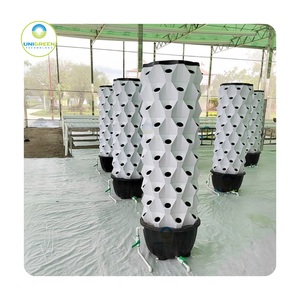
Vertical aerodynamic nutrient distribution columns constructed with non-leaching, UV-inhibited polymers built for industrial commercial greenhouses in Mediterranean climates.
Inquire Now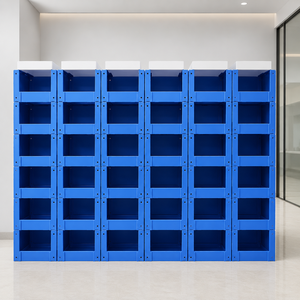
Ergonomic open-front storage bins engineered from extruded twin-wall PP sheets, designed to handle chemical plant maintenance parts and packing inventories.
Inquire Now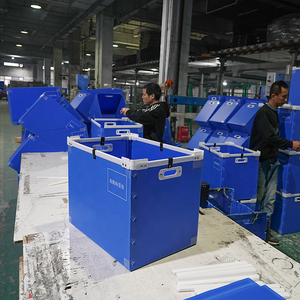
Foldable returnable transit packaging designed for cross-border shipping, providing weather resistance, chemical inertness, and 100% material recyclability.
Inquire Now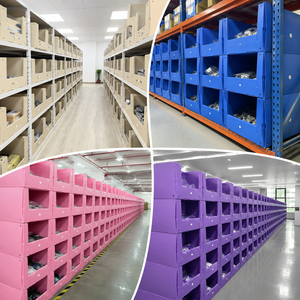
Reinforced compartmentalized hardware storage bins featuring adjustable dividers, tailored for instrumentation maintenance in chemical refining workshops.
Inquire NowA rigorous examination of polymer morphology, hydrodynamic boundary conditions, and chemical resistance parameters governing plastic random and structured packing selections in modern industrial columns.
In chemical engineering processes where mass transfer between liquid and vapor phases governs plant efficiency, selecting the appropriate packed bed configuration represents the critical determinant between operational stability and catastrophic column flooding. For chemical processing, petrochemical manufacturing, and thermal utility plants across Turkey—spanning from the petrochemical complexes of TÜPRAŞ in Kocaeli and Aliağa to the heavy industrial clusters around the Marmara Sea—plastic tower packing has established itself as the premier choice over metallic alloys and ceramics when dealing with corrosive, acidic, or moderately thermal liquid-gas interactions.
Unlike carbon or austenitic stainless steels, engineered thermoplastic polymers (PP, RPP, PVDF, CPVC, and HDPE) are immune to electrolytic galvanic oxidation and pitting corrosion induced by chloride-laden wash waters or aggressive acid scrubbers. Furthermore, when compared with brittle ceramic Raschig rings or saddle bodies, plastic packings yield a significantly lower bulk density, dramatically minimizing total column dead-weight, reducing structural foundation loads, and preventing breakage during rapid hydraulic upsets or column re-bedding operations.
The table below illustrates the physical, thermal, and fluid dynamic characteristics of virgin-grade polymer compounds utilized in our CE-certified tower packing lines supplied to Turkish EPC contractors:
| Polymer Formulation | Specific Gravity (g/cm³) | Continuous Operating Temp (°C) | Tensile Yield Strength (MPa) | Chemical Resistance Threshold | Typical Turkish Process Unit Deployment |
|---|---|---|---|---|---|
| Virgin Polypropylene (PP) | 0.90 – 0.91 | -10 to +105 | 31 – 35 | Non-oxidizing acids, alkalis, aqueous inorganic salts | General scrubbers, degassing towers, agricultural fertilizer synthesis |
| Reinforced Polypropylene (RPP) | 0.96 – 1.05 | -5 to +135 | 42 – 55 | Resistant to mechanical creep at elevated temperatures | High-load acid recovery columns, hot condensate stripping (Gebze) |
| Polyvinylidene Fluoride (PVDF) | 1.76 – 1.78 | -30 to +150 | 50 – 62 | Halogens, wet chlorine ($Cl_2$), concentrated nitric & sulfuric acids | Chlor-alkali facilities, advanced petrochemical revamps (Aliağa) |
| Chlorinated PVC (CPVC) | 1.50 – 1.55 | 0 to +95 | 50 – 58 | Strong mineral acids, caustic soda solutions up to 50% | Pickling fume extractors, steel galvanizing facilities (İskenderun) |
| High-Density Polyethylene (HDPE) | 0.94 – 0.96 | -40 to +80 | 22 – 28 | Cryogenic impact resistance, solvent wash cycles | Municipal biogas scrubbers, thermal desalination degassing (Mersin) |
The geometric area per unit volume ($m^2/m^3$) determines vapor-liquid contacting efficacy. Our spherical fillers, Pall rings, and Tellerette configurations provide elevated geometric contact surfaces without creating stagnation zones that harbor particulate fouling or biological slime accumulation.
By engineering ultra-high open void percentages (typically 90% to 94%), gas velocities can be scaled considerably before reaching the loading and flooding limits. This minimizes operating pressure drop ($\Delta P$), cutting blower energy consumption by up to 28% in continuous Turkish exhaust scrubbers.
Surface micro-texturing on injection-molded plastics facilitates immediate liquid film formation rather than droplet channelization. This maximizes the effective interfacial area ($a_e$) across fluctuating liquid-to-gas ($L/G$) volumetric operating ratios.
Engineered to withstand the operational rigors, regulatory frameworks, and environmental profiles of Turkey's premier chemical, metallurgical, and maritime infrastructure hubs.
Primary Deployment: Acid gas neutralization columns, volatile organic compound (VOC) recovery towers, and surface treatment exhaust scrubbers in automotive component manufacturing plants.
Operating Conditions: Continuous contact with gaseous $HCl$, $HF$, and dilute sulfuric mist under oscillating thermal loads from 20°C to 85°C.
Primary Deployment: Sour water degassing, amine regeneration contactors, stripping columns, and quench towers adjacent to major refinery units and chlor-alkali complexes.
Operating Conditions: Hydrocarbon-saturated vapors, high-salinity brines, and hydrogen sulfide ($H_2S$) scrubbing requiring PVDF and fortified RPP internals.
Primary Deployment: Wet flue gas desulfurization (FGD) absorbers, pickling bath fume extractors, and coke oven byproduct recovery installations.
Operating Conditions: Severe particulate abrasion, sulfur dioxide ($SO_2$) absorption, and heavy calcium scaling tendencies counteracted by non-stick plastic spherical geometries.
Primary Deployment: Seawater cooling tower fills, industrial wastewater strip towers, phosphate fertilizer absorption systems, and logistics packaging distribution.
Operating Conditions: High ambient humidity, hypersaline marine process waters, and intense ultraviolet exposure managed via UV-stabilized virgin polymer formulations.
How Turkey's harmonization with EU environmental directives and the drive toward circular chemical processes are transforming plant design specifications.
With Turkey's manufacturing sectors heavily export-dependent on European markets, compliance with the Carbon Border Adjustment Mechanism (CBAM) has accelerated. Process plants are aggressively replacing high-pressure-drop, energy-intensive column trays with CE-marked low-resistance plastic random packings to cut scope 2 electrical blower consumption.
Turkish environmental authorities (Ministry of Environment, Urbanization and Climate Change) have heightened wastewater recycling mandates around the Marmara Sea Basin. Industrial water treatment facilities increasingly implement multi-stage air stripping and packed bio-reactors, requiring fouling-resistant polymer packing media capable of continuous bio-film renewal.
Turkish plant maintenance directors are systematically executing column revamps, substituting expensive Hastelloy or titanium trays with cost-effective, corrosion-impervious plastic packing arrays. Paired with custom PP internal distributors and bed limiters, this yields significant capital savings while tripling unit operating lifespans.
Built upon a 25-year manufacturing heritage, rigorous CE quality conformity, and precision mass transfer tooling.
Over two and a half decades of specialized column internals, mass transfer components, and custom polymer molding serving demanding sectors globally.
All polymer batches are formulated exclusively from 100% prime virgin resins, accompanied by comprehensive Melt Flow Rate (MFR) and tensile test certificates.
Equipped with advanced precision CNC machining centers and high-tonnage injection presses, enabling custom tailored geometries and prompt tool alterations.
Full CE certification alignment providing smooth customs entry under the EU-Turkey Customs Union without clearing delays or secondary regulatory audits.
Reliable freight consolidation with fast sea routes docking directly into Port of Ambarlı (Istanbul), Port of Mersin, and Port of Aliağa (İzmir).
Our dedicated engineering specialists deliver complete HETP assessments, packing height calculations, and flooding rate calculations per project data sheet.
Comprehensive engineering, regulatory, and logistics answers addressing import requirements and operational mechanics.
Every commercial consignment exported to Turkey includes an official CE Declaration of Conformity (DoC), authentic raw material mill test certificates (demonstrating purity and melt flow characteristics), EN 10204 3.1 certification where applicable, and comprehensive Quality Inspection Reports confirming dimensional tolerances, wall thickness uniformity, and weight criteria. This paperwork guarantees swift clearance through Turkish customs offices via the TAREKS inspection system without technical detention.
Our engineering division cross-checks the client's process data sheet—specifically operating temperature envelopes, operating pressures, stream chemical constituents, pH fluctuations, and solvent concentrations—against ASTM chemical immersion criteria. In sulfur recovery units (SRU) or wet chlorine environments, we typically designate high-crystalline PVDF or glass-reinforced polypropylene (RPP), preventing plasticizer leaching, polymer embrittlement, and premature bed compression.
We routinely route shipments via direct containerized sea freight to Turkey's principal maritime terminals: Ambarlı (Istanbul), Gemlik (Bursa), Alsancak / Aliağa (İzmir), and Mersin. Standard ocean transit typically ranges from 18 to 26 days depending on line routing. Standard sizes of random packing (such as 25mm, 38mm, and 50mm PP rings or spherical fillers) are dispatched within 7 to 12 business days from production order confirmation.
Yes. A fully functional mass transfer packed bed requires dynamic hydraulic coordination between the packing media and supporting internals. We manufacture and supply matching thermoplastic support plates (providing greater than 100% free area relative to the bed), liquid distributors (trough, ladder, or multi-orifice pan types), bed limiters, and mesh demister pads in PP, PVC, and PVDF configurations built strictly to column shop drawings.
For installations utilizing saline cooling waters in coastal locations like Aliağa or Mersin, bio-growth and mineral encrustation represent persistent failure modes. Our cooling tower fills and spherical packings can be compounded with specialized non-toxic antimicrobial additives and UV-stabilizers. Furthermore, their continuous smooth-curve aerodynamic geometry eliminates dead corners, providing continuous fluid self-scouring that impedes bio-film anchorage.
Engage directly with our mass transfer technical team. We evaluate your process data sheet, column dimensions, and vapor-liquid loadings to recommend the ideal CE-certified packing profile, HETP optimization, and hydrodynamic layout.
Inquire Now