
- +91-9930498858Call / WhatsApp
- [email protected]Email Us
Engineered to rigorous ISO and EN specifications, our crimped wire meshes and precision mechanical sub-components provide extended service life within heavy screening, solvent processing, and specialty architectural façades.
Analyzing metallurgical durability, crimp-profile kinematics, and structural separation efficiencies in high-stress Benelux environments.
The Grand Duchy of Luxembourg represents one of Western Europe’s most technologically exacting manufacturing and engineering hubs. With an economy anchored in precision engineering, primary metal processing across the Esch-sur-Alzette basin, chemical manufacturing in Bettembourg, and cutting-edge architectural projects across Kirchberg, the procurement of crimped wire mesh demands uncompromising structural integrity. Sourcing woven industrial cloth from China no longer relies on rudimentary spot purchases; it requires absolute metallurgical alignment with Eurocode 3 (EN 1993), precise dimensional tolerance control, and complete traceability back to the melting heat number.
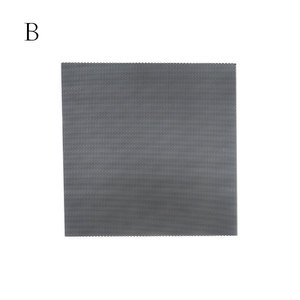
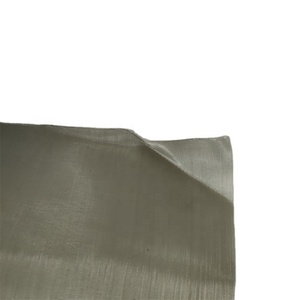
As premier Chinese exporters and ISO-certified manufacturers serving the Luxembourgish sector, we provide engineered woven solutions capable of resolving common failure modes associated with standard commercial wire meshes. Traditional plain-weave wire cloths frequently suffer from aperture displacement when subjected to abrasive aggregate pounding or cyclic hydraulic turbulence. Our heavy industrial crimped meshes utilize rigorous pre-crimping mechanical operations—including intermediate crimping, lock crimping, and flat-top configurations—ensuring exceptional mechanical interlocking and rigid dimensional stability even under high dynamic loads.
Our tooling shapes high-tensile wire rods with micron-level crimp depths prior to shuttle weaving. Lock-Crimped and Flat-Top Crimped meshes offer an entirely flat working plane, which eliminates localized friction hotspots, prevents aperture deformation under heavy gravel impacts, and reduces material back-drag by up to 34% compared to standard double-crimped configurations.
Beyond commercial AISI 304 and 316, our export lines supply high-molybdenum austenitic stainless steels (316L, 317L), duplex alloys (2205), and superalloys (Hastelloy C-276, Monel 400, Inconel 625). These materials are specifically selected to resist chloride-induced stress corrosion cracking (SCC) and aggressive acid vapors found in Luxembourg's chemical processing facilities.
Each delivery entering Luxembourg is backed by documented EN 10204 Type 3.1 Material Test Certificates, spectral alloy analysis, precise wire diameter verification, and square-mesh aperture validation under ISO 9044 and ISO 4783 standards. This guarantees turnkey integration into existing screening equipment without onsite re-machining.
From metallurgical recycling along the southern rail corridors to modern architectural façades in Luxembourg City, discover how our custom crimped wire mesh fulfills demanding requirements.
Luxembourg remains a vital leader in European circular economy initiatives, reprocessing hundreds of thousands of tons of electric arc furnace (EAF) slag and demolition aggregate annually. Our high-carbon manganese 65Mn and spring steel crimped screens provide the superior abrasion resistance necessary to sift sharp, dense slag without premature wire snapping.
From the banking headquarters on the Kirchberg Plateau to transit centers in Cloche d'Or, contemporary Luxembourgish architecture prioritizes industrial elegance, natural ventilation, and daylight control. Our architectural woven crimped panels, manufactured from electropolished AISI 316 stainless steel or architectural brass, offer rigid fall-protection and modern aesthetic appeal.
Specialty chemical reactors, vapor distillation systems, and municipal water purification installations throughout the Alzette valley require reliable particulate screening and demister support. Our SUS316L and Hastelloy crimped wire meshes provide rigid structural support beds for structured and random packings, preventing packing collapse while ensuring minimal hydraulic pressure drop.
| Mesh Specification Category | Common Materials | Weave Profile | Luxembourg Field Application | Service Life Expectancy |
|---|---|---|---|---|
| Heavy Quarry Vibrating Screen | High Carbon Steel (65Mn), Spring Steel | Double Crimp / Lock Crimp | Slag screening, quarry grading, gravel recovery | 800 - 1,400 Operating Hours |
| Corrosion-Resistant Fluid Grid | SS 304, 316L, 904L, Alloy 20 | Intermediate Crimp | Distillation column supports, chemical beds | 8 - 12 Operational Years |
| Architectural Enclosure Panel | SS 316, Brass, Phosphor Bronze | Flat-Top / Specialty Crimp | Acoustic cladding, safety balustrades, sunscreens | 25+ Years (Zero Maintenance) |
| Extreme Thermal Mesh | Inconel 600/625, Hastelloy C-276 | Lock Crimp / Dutch Inter-Crimp | Automotive heat-treat fixtures, incinerators | High Cycle / Cyclic Thermal Resistance |
Strategic procurement approaches are shifting toward resource optimization, green manufacturing, and predictable supply chains.
Three primary industry dynamics are reshaping how industrial engineers in Luxembourg source heavy wire mesh from global manufacturing facilities:
Under European Union "Fit for 55" policies and national circular economy directives, industrial facilities in Luxembourg must document the embodied carbon footprint of their structural components. Our facilities employ closed-loop wire drawing and annealing methods, generating traceable carbon metric datasheets to assist our Luxembourgish partners in reaching their sustainability and ESG compliance goals.
Local operations managers increasingly weigh initial mesh acquisition costs against unscheduled plant downtime. Standardizing on precision lock-crimped meshes featuring high-tensile Chinese spring steels (tensile strength >1400 N/mm²) yields a substantially lower Total Cost of Ownership by minimizing screen changeouts during heavy sorting shifts.
Given Luxembourg’s strategic location as an inland logistics corridor bounded by Belgium, France, and Germany, predictability in delivery is critical. By maintaining streamlined shipping schedules via Antwerp, Rotterdam, and multimodal rail to the Bettembourg Intermodal Terminal, our logistics network mitigates supply delays through organized sea-freight and expedited routing.
Direct technical and logistical answers to support industrial buyers, project engineers, and import specialists.
For abrasive aggregates, crushed glass, and heavy steel slag, Lock Crimp or Flat-Top Crimp with 65Mn high-carbon steel is strongly recommended. Unlike conventional double-crimp meshes where wire knuckles can wear down quickly under sliding abrasion, flat-top configurations provide a smooth horizontal screening surface. This spreads out friction evenly, stabilizes mesh apertures, and delivers up to 30% longer service life.
Every industrial wire mesh consignment is accompanied by complete documentation, including EN 10204 Type 3.1 Material Test Certificates, chemical analysis, physical tensile strength verification, and strict dimensional inspection protocols. We ensure full adherence to EU REACH and RoHS environmental standards. Packaging strictly conforms to ISPM-15 heat-treated fumigated wooden-crate standards for swift customs processing.
Full container load (FCL) and less-than-container load (LCL) shipments depart regularly from major Chinese ports (Shanghai, Ningbo, Qingdao) destined for Antwerp or Rotterdam. From there, cargo is routed by bonded barge or highway transport straight to your receiving dock in Luxembourg (e.g., Clervaux, Wiltz, Esch-sur-Alzette, or Bettembourg). Typical maritime transit averages 28 to 35 days, with optional air-freight available for urgent plant-revamp needs.
Yes. We manufacture customized screening screens equipped with diverse hooked-edge profiles, including standard 45° to 90° hooks, U-shaped wrapped hems, and reinforced galvanized or stainless steel shrouds. Edge hook geometry is tailored precisely to your equipment's tensioning rails (compatible with Metso, Sandvik, Binder, and custom European screen boxes).
Yes. Beyond standard austenitic grades 304 and 316L, our specialized weaving operations produce high-integrity meshes in Nickel 200, Monel 400, Hastelloy C-276, Inconel 625, and high-purity Titanium Grade 2. These specialty meshes are widely used throughout industrial filtration columns, electrolytic separation baths, and demanding chemical recovery units.
Combining 25+ years of metallurgical expertise with advanced tooling, custom fabrication, and dedicated export operations.
We source raw wire coils exclusively from tier-one steel producers with certified chemical composition and mechanical integrity. Heat-number traceability and thorough spectral verification guarantee zero scrap blending and complete alloy reliability across all production runs.
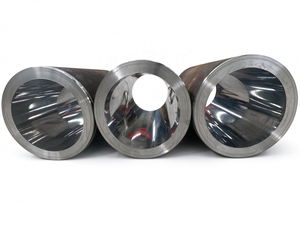
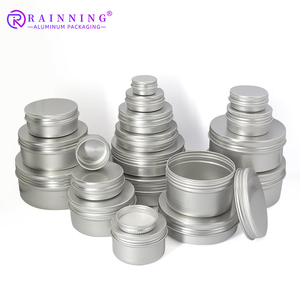
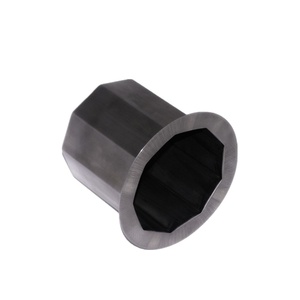
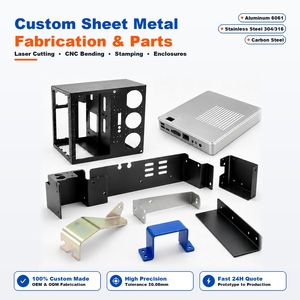
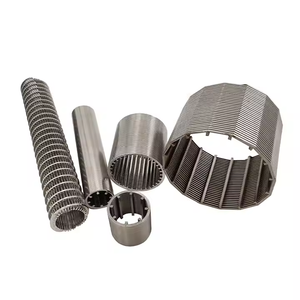
Operating beyond basic roll weaving, our facilities encompass deep drawing, CNC laser profiling, sheet metal stamping, hydraulic tube honing, and welded assemblies under one roof. We deliver turn-key mass transfer equipment, tailored demister packs, and precision components based on custom CAD/BIM blueprints.
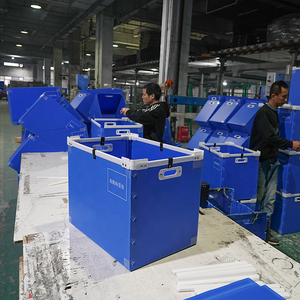
Exporting to over 20 nations across Western Europe, North America, and the Middle East, our logistics team coordinates sea, air, and multimodal transport. Shipments are packed in reinforced, moisture-barrier wooden cases with comprehensive customs documentation to ensure smooth European entry.
Share your technical specifications, CAD drawings, or process datasheets with our engineering specialists today. We provide detailed quotations, material analyses, and comprehensive product catalogs tailored to the Luxembourgish industrial sector.