- +91-9930498858Call / WhatsApp
- [email protected]Email Us
Manufactured under stringent ISO 9001:2015 quality frameworks, delivered seamlessly to Chicago, Rockford, Elgin, and Greater Midwest logistics hubs.
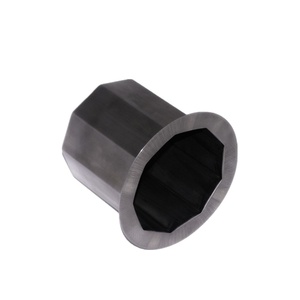
Deep drawn metal stamping represents one of the most efficient, dimensionally uniform manufacturing processes for turning flat planar sheet metal blanks into hollow, seamless, cylindrical, box-shaped, or irregular contoured enclosures. When the depth of the formed cavity exceeds the diameter or width of the blank profile, the process transitions from shallow cupping to true deep drawing. In critical components supplied to Chicago's industrial machinery and automotive tiers, controlling radical compressive stresses in the flange and extensive tensile stresses along the cup sidewall dictates whether the component yields flawless geometry or experiences wrinkling, ear-formation, or brittle wall tearing.
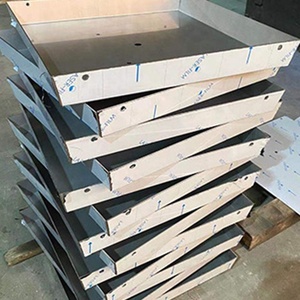
By leveraging multi-station transfer presses up to 800 metric tons and continuous servo-driven hydraulic draw equipment, our manufacturing facilities achieve seamless structural continuity without longitudinal welds. This creates leak-proof containment vessels, motor canisters, sensor housings, and fluid separation domes capable of enduring extreme cyclic pressures without stress localization.
Midwest procurement teams evaluating cold forming vs. automated multi-axis CNC turning or welded tube assemblies must weigh tooling capital expenses against recurring cycle times, structural reliability, and mass reduction.
| Evaluation Parameter | Progressive Deep Drawing | CNC Billet Machining | Rolled & Welded Tube Fabrication |
|---|---|---|---|
| Material Utilization | 85% – 95% (Near net-shape) | 15% – 35% (Massive chip swarf waste) | 70% – 80% (Trim & drop losses) |
| Cycle Time / Output | 15 to 60 parts/min automated | 2 to 15 minutes/part cycle | 5 to 20 minutes/part (TIG/Plasma) |
| Structural Integrity | Continuous fiber flow, strain hardened | Interrupts grain boundaries | Heat-affected zone (HAZ) prone to corrosion |
| Leak Integrity | 100% Seamless monolithic body | Seamless but micro-porosity risks | Requires 100% NDT x-ray or helium leak test |
| Economic Threshold | Best for runs > 2,500 units | Optimal for prototypes (< 200 units) | Low setup; prohibitive scaling labor |
From the industrial plants of Cook and Will counties to the advanced automation corridors of Rockford and Milwaukee, our deep drawn parts and separation media resolve acute structural and chemical hurdles.
Serving automotive supply ecosystems across Illinois, Michigan, and Indiana with seamless solenoid housings, high-pressure fuel rail cups, sensor dampening shells, and ABS braking accumulators engineered to endure rapid cycle pressures and harsh winter road brines.
Strategically deployed throughout Joliet and Lemont refineries. Our corrosion-resistant column trays, structured packings, demisters, and deep-drawn alloy enclosures withstand aggressive sulfur cracking, sour crude fractions, and heavy chemical synthesis.
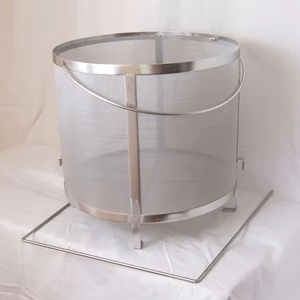
Wisconsin and Illinois food processing sectors rely on mirror-polished SUS316 deep drawn strainers, cavitation cups, and stainless basket strainers featuring zero crevices, preventing bacterial harboring while complying with stringent USDA 3-A sanitary standards.
Chicago’s power distribution manufacturers integrate our electromagnetic interference (EMI) shielded copper deep-drawn cans, battery safety containment cups, and silver-plated contact shells that eliminate arching in compact distribution enclosures.
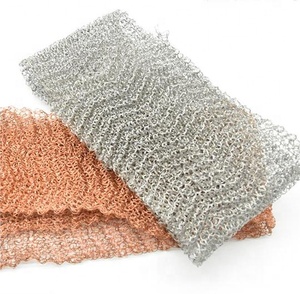
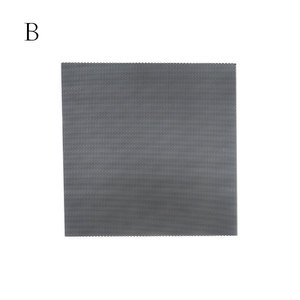
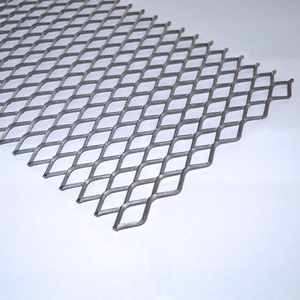
Engineered knitted wire mesh and expanded metals combined with deep drawn flanged end caps yield robust filter elements for wastewater treatment facilities and Chicago HVAC industrial scrubbers operating under continuous turbulent fluid flow.
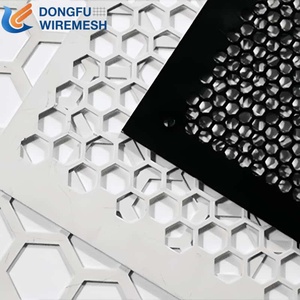
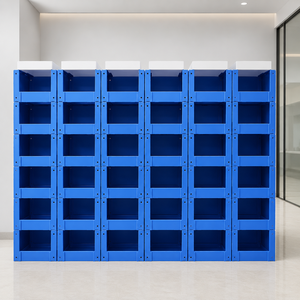
With the inland logistics hubs of O’Hare and Will County scaling micro-fulfillment, our high-density perforated panels, stamping chutes, and stackable modular handling bins eliminate downtime across complex robotic sorters.
Analyzing key structural shifts across Illinois tooling ecosystems and overseas procurement strategies.
Midwest OEMs increasingly maintain primary volume contracts with verified China stamping exporters while holding dynamic buffer stocks in Chicago 3PL warehouses. This delivers a 28–42% tooling and component cost reduction while mitigating supply chain disruption risks.
Electric mobility and industrial motor builders are systematically phasing out heavy, porous aluminum die castings in favor of lightweight, high-yield deep drawn steel shells. Deep drawing cuts total part mass by up to 35% without diminishing burst strength.
Procurement teams demand full material test reports (MTR) tied to heat numbers and low carbon-footprint electric arc furnace (EAF) mills. Certified scrap recycling within progressive die stamping cycles has become an essential prerequisite for Midwest sustainability reporting.
Combining 25 years of metallurgical heritage with world-class toolmaking, zero-defect quality systems, and seamless logistics to the US Midwest.
Internal CAD/CAM engineering, slow-feeding wire EDM, and CNC optical profile grinding. We design, validate, and maintain high-volume progressive transfer dies in-house, eliminating third-party markups and expediting T1 prototype samples.
Raw coils sourced exclusively from tier-one steel and alloy foundries. Every production batch is accompanied by certified mill test reports, positive material identification (PMI), optical emission spectrometry, and tensile/elongation validation.
Beyond deep drawing, our legacy fabrication encompasses industrial distillation trays, structured packings, and precision knitted/expanded wire mesh, enabling turnkey supply consolidation for complex filtration and fluid handling systems.
Full-service multimodal logistics: ocean freight through US West Coast rail ramps directly into Chicago rail yards (BNSF/UP) or direct inland waterways, with complete customs clearance, ISF filings, and door-to-door delivery on DDP terms.
Addressing international logistics, tooling amortization, metallurgical quality, and regulatory compliance.
We provide structured ocean and air logistics networks tailored for the US Midwest. Standard ocean freight from Qingdao/Shanghai to Chicago-area distribution points (via West Coast intermodal rail to Chicago BNSF/UP terminals) takes 22 to 28 days. For urgent line-down circumstances or prototype testing, air freight to Chicago O'Hare (ORD) arrives in 3 to 5 business days. We coordinate all customs clearance, Section 301 filings, and localized inland trucking under DDP (Delivered Duty Paid) Incoterms, delivering directly to your receiving dock.
All progressive dies, transfer tooling, and deep draw form punches are built in-house, cutting upfront tooling expenses by 40% to 60% compared to domestic Midwest tool shops. Tooling costs can be paid upfront or amortized over initial production volumes. The buyer retains full proprietary ownership of the tool design and hardware; tooling is cataloged, maintained, insured, and refurbished for the lifetime of your production program without additional maintenance fees.
Every shipment adheres to ISO 9001:2015 protocols, accompanied by comprehensive Level 3 PPAP (Production Part Approval Process) packages upon request. Deliverables include full dimensional inspection reports (CMM), EN 10204 3.1 chemical & mechanical mill test certificates, salt spray corrosion test data, plating/coating thickness verification, and capability studies (Cpk ≥ 1.67). We also accommodate third-party pre-shipment inspections (SGS, TUV, Bureau Veritas) at our facility.
Austenitic stainless steels (SUS304/316) undergo significant strain hardening during aggressive reduction steps. Our tooling engineers utilize finite element forming simulations (AutoForm/Dynaform) to balance draw radii and blank holder forces. Between consecutive reduction stages, parts undergo continuous protective atmosphere hydrogen bright annealing at 1,050°C to dissolve carbides, relieve residual internal stresses, and restore ductility—preventing delayed stress cracking and ensuring uniform sidewall thickness.
For initial DFM validation and prototype review, we utilize single-stage soft tooling or laser-cut and spun prototypes with low MOQs (50 to 500 units) to verify form, fit, and assembly function. For full production progressive hard tooling, typical batch MOQs range from 2,500 to 50,000 units depending on geometry and material alloy. Blanket annual purchase orders with scheduled monthly releases are standard practice for our Midwest enterprise clients.
Connect directly with our engineering division in China or speak with our export specialists serving Chicago, Elk Grove Village, Schaumburg, and the broader Great Lakes manufacturing region.