
- +91-9930498858Call / WhatsApp
- [email protected]Email Us
Browse our primary production matrices. Engineered in ISO 9001:2015 certified facilities to withstand aggressive sour hydrocarbons, hyper-saline subsea loads, and thermal shock.
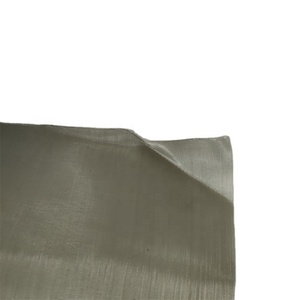
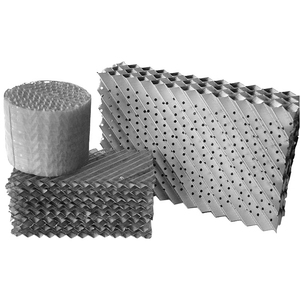
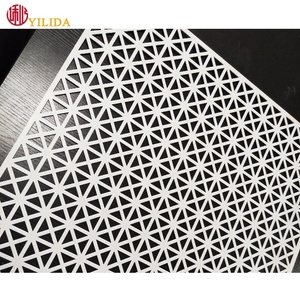
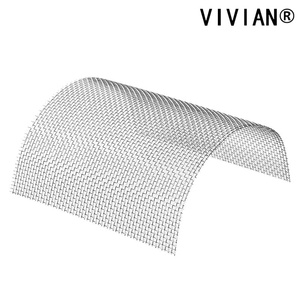
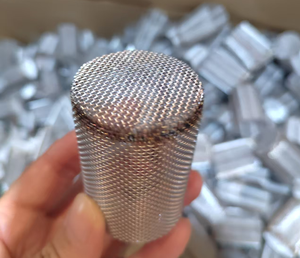
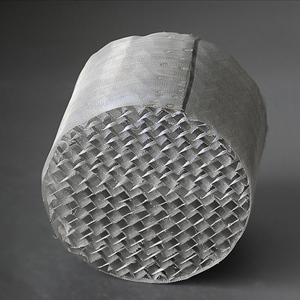
In process engineering, liquid clarification, and hydrocarbon refining across the State of Kuwait, the perforated filter core forms the uncompromised structural backbone of filtration systems. Serving as an internal skeleton for fine wire mesh wraps, sintering materials, or catalyst recovery filters, these perforated tubular cores undergo immense hydraulic stresses. Operating inside Kuwait's mega-complexes—such as the Mina Al-Ahmadi, Mina Abdullah, and Al-Zour refineries managed by Kuwait National Petroleum Company (KNPC) and Kuwait Integrated Petroleum Industries Company (KIPIC)—filtration units face an intense combination of high hydrostatic pressure, abrasive particulate loading, extreme sour gas (H2S and CO2) exposure, and ambient surface temperatures regularly exceeding 50°C.
Sourcing directly from experienced China wholesale manufacturers provides Kuwaiti procurement engineers, EPC contractors, and maintenance teams with an optimal balance of advanced metallurgical processing, scalable automated manufacturing, and rigorous quality certification. However, sourcing precision filter tubes for mission-critical installations requires deep technical due diligence into collapse pressure ratings, seam integrity, hole geometry, and metallurgical surface passivation.
Kuwait's geographic positioning along the Arabian Gulf presents unique fluid handling challenges characterized by high salinity, high ambient dust, and heavily sour crudes. Standard low-grade carbon steels or lower-alloyed stainless steels face rapid localized degradation via chloride-induced pitting, stress corrosion cracking (SCC), and hydrogen-induced cracking (HIC). As an experienced industrial manufacturer, our manufacturing process precisely matches the metallurgy to operational fluid properties:
A perforated filter core must deliver the highest possible percentage of Open Area (POA) to reduce clean pressure drop while maintaining adequate hoop strength and longitudinal stiffness to resist deformation when cakes build up on the media. Our automated CNC punching and spiral forming lines fabricate cores across four principal configurations:
1. Staggered 60-Degree Hole Arrays: Recognized as the industry standard for industrial filtration. By shifting the adjacent perforation rows by 60 degrees, mechanical stress distribution is equalized along both the circumferential and longitudinal axes. This geometry prevents localized stress concentrations under external hydrostatic loading, making it ideal for standard cartridge filter vessels.
2. Straight Line Perforations: Frequently deployed in specific backwash systems and hydraulic strainer bodies where internal flow distributors require axial alignment with fluid jets to ensure complete solids evacuation during flush cycles.
3. Spiral/Helical Welded Cores: For large-diameter filter bodies (exceeding 100mm O.D.) or installations handling elevated collapse pressures (>15 bar differential pressure), spiral perforated cores provide structural stability superior to longitudinal seams. The continuous spiral weld acts as an internal stiffening ring, ensuring continuous roundness tolerance (±0.2mm) across extended tube lengths up to 6 meters.
4. Longitudinal High-Frequency & TIG Seam-Welded Cores: Ideal for precision miniature to mid-diameter cores (from 15mm up to 89mm O.D.). Produced with automated pull-forming and continuous autogenous longitudinal TIG/plasma welding, ensuring 100% full-penetration welds without protruding internal weld beads that could otherwise damage internal element fittings.
Kuwait's capital-intensive projects require specialized filtration components engineered to comply strictly with Kuwait Petroleum Corporation (KPC) engineering standards and international ASME/ASTM frameworks. Key local application vectors include:
Downstream Refining & Clean Fuels Operations: At the Al-Zour Refinery, one of the world's largest grassroot installations, perforated filter tubes support particulate separation in atmospheric residue desulfurization (ARDS) units. These cores must sustain high operational temperatures, heavy asphaltene fouling, and frequent solvent back-flushing without seam separation or outer diameter expansion.
Thermal & Membrane Desalination Plants: With fresh water production relying heavily on Multi-Stage Flash (MSF) distillation and Seawater Reverse Osmosis (SWRO) along the Arabian Gulf coastline (Doha West, Doha East, Subiya, and Az-Zour stations), perforated strainer cores protect expensive spiral-wound RO membranes from suspended shell fragments, macro-marine growth, and abrasive silica sand particulates.
Upstream Produced Water Reinjection: Fields operated by Kuwait Oil Company (KOC) across North and West Kuwait require deep-well disposal and reinjection of produced formation water. Perforated cores lined with precision twill or Dutch weave stainless steel wire cloth filter out fine quartz sands, preventing downhole formation clogging and high-pressure injection pump impellor cavitation.
Gas Processing & Sweetening Units: In amine absorption towers, liquid hydrocarbon dropouts and iron sulfide particulates clog contactors. Heavy-duty SS 316L perforated filter cores function as core element supports inside vertical cartridge separators, ensuring gas stream purity prior to cryogenic fractionation.
Kuwait’s "New Kuwait Vision 2035" and substantial energy transition initiatives are transforming the requirements placed upon original component manufacturers and global supply partners:
Refinery Revamps and Asset Optimization: Instead of wholesale replacement of high-pressure filter housings, engineering operators prefer drop-in cartridge retrofits. Chinese manufacturers must deliver precision micro-tolerances (±0.1mm) on core lengths, end-cap roll swaging, and ring-joint grooves to integrate seamlessly into existing American- and European-sourced vessels.
Stringent Material Traceability & In-Country Value (ICV): EPC joint ventures operating in Kuwait demand full EN 10204 3.1 material test certification, heat number preservation, and digital traceability down to raw stainless steel melt suppliers. Chinese manufacturing partners capable of conducting third-party inspections (via BV, SGS, or TÜV Rheinland) prior to dispatch gain priority status in local vendor pre-qualification lists.
Rapid Lead Times for Refinery Turnarounds: Scheduled turnaround and inspection (T&I) outages at KNPC facilities require massive batches of replacement filter cores delivered within compressed timeframes. Direct factory wholesale eliminates trading layers, ensuring direct freight dispatch via direct sea routes to Shuwaikh and Shuaiba ports or rapid air cargo to Kuwait International Airport.
Combining 25+ years of production heritage with high-capacity CNC automation to supply Middle Eastern energy and industrial sectors.
Direct supply contracts with tier-1 mills ensure certified chemical compositions, fully traceable heat numbers, and consistent metallurgical grain structure.
Multi-axis automated CNC punching and laser tube perforating yield burr-free edges, uniform hole geometries, and tight pitch tolerances (±0.05mm).
Positive Material Identification (PMI), hydrostatic pressure bursting tests, roundness laser calibration, and pickling-passivation inspection per ASTM A380.
Heavy-duty fumigated wooden cases, custom internal foam bracing, moisture-proof desiccants, and plastic sleeve wrapping for safe transport to Kuwait ports.
Straightforward answers addressing design specifications, material compliance, logistics, and engineering standards.
Standard fabrication runs range from 12 to 20 business days depending on tooling complexity and alloy grade. Sea freight from Shanghai or Ningbo to Shuwaikh Port averages 18 to 24 days. For urgent plant shutdowns or emergency refinery turnarounds, express air-freight logistics deliver within 5 to 7 business days.
Yes. All production batches can be independently inspected by global agencies such as Bureau Veritas, SGS, DNV, or TÜV Rheinland prior to dispatch. We regularly supply EN 10204 Type 3.1 / 3.2 Material Test Reports, XRF chemical PMI certificates, dye-penetrant weld inspection logs, and dimensional verification reports.
We employ high-precision carbide tooling combined with automatic mechanical de-burring, internal spiral brushing, and optional electro-polishing or chemical pickling. This guarantees that all perforated hole margins, as well as the longitudinal/spiral weld seams, are smooth and free of flash that could puncture wire mesh wraps or membrane sleeves.
Please share your outer/inner diameter (OD/ID), total core length, wall thickness, hole diameter, pitch center-to-center distance, hole arrangement (staggered vs. straight), material alloy grade, and estimated batch volume. If end-fittings (flanges, threaded collars, or bypass caps) are needed, engineering CAD/PDF drawings should be attached.
Yes. Our precision sheet metal and machining workshops produce deep-drawn end caps, CNC-machined female/male BSP or NPT threaded connectors, bayonet pins, and blind closures. These can be integrated via precision circumferential orbital welding, providing a turn-key filtration cartridge core ready for media pleating.
Yes. Utilizing heavy hydraulic rolling and automated submerged arc or plasma welding, we produce perforated casing pipes up to 1,200mm in diameter with wall thicknesses up to 16mm. These assemblies are widely utilized as protective debris screens for coastal desalination intake channels and river-bed filtration installations.
Connect with our technical sales engineers to review hydraulic parameters, metallurgical specs, or custom tooling requirements.