
- +91-9930498858Call / WhatsApp
- [email protected]Email Us
Explore our high-performance separation hardware, random & structured packing, and precision stamped components engineered for seamless integration across European and British industrial facilities.
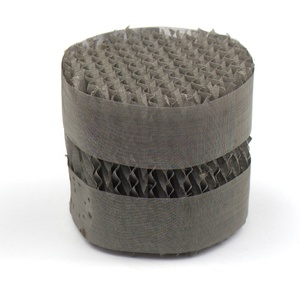
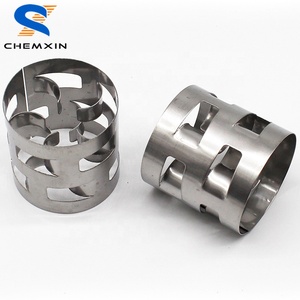

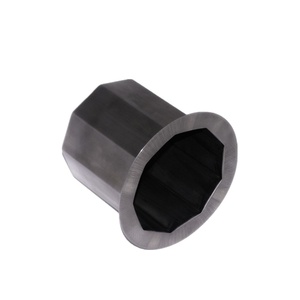
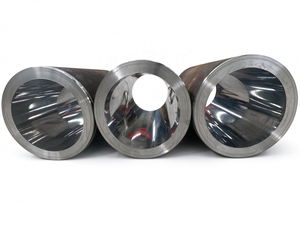
In complex petrochemical separation, natural gas sweetening, and refinery crude stabilization, the choice of fractionation tray internal directly determines process throughput, energy expenditure, and scheduled turnaround intervals. Fixed valve trays—distinguished by integral or caged non-moving vapor orifices extruded directly from the tray deck—represent an optimized compromise between the economical simplicity of sieve trays and the wide operational flexibility of movable floating valve trays. For United Kingdom operators navigating rigorous North Sea gas processing specifications and stringent industrial emissions guidelines, fixed valve technology delivers consistent hydraulic performance without the mechanical vulnerabilities associated with movable components.
Features directional vapor deflector profiles that shield orifices from vertical liquid weepage, converting vapor kinetic energy into horizontal thrust across the active deck to reduce hydraulic gradient.
Maintains consistent vapor froth regimes down to 3:1 and 3.5:1 turndown ratios, outperforming classic sieve trays (2:1 limit) and avoiding severe weeping at low vapor F-factor conditions.
With no moving disks, legs, or guides, mechanical fatigue, erosive thinning, and valve loss are entirely eliminated—crucial for offshore UK Continental Shelf (UKCS) unmanned platforms.
The aerodynamic interaction within a fixed valve unit creates a controlled jetting regime. Vapor exiting the valve opening impinges on the horizontal liquid cross-flow coming from the inlet downcomer. Because the valve opening is fixed, the vapor discharge coefficient remains stable across operational transients. At elevated vapor velocities (F-factors exceeding 2.2 m/s · (kg/m³)0.5), the lateral trajectory delays droplet entrainment toward the tray above, lowering the overall froth height and maximizing column capacity compared to standard round perforations.
UK asset managers frequently evaluate column revamp options to satisfy heightened Net Zero industrial requirements and reduce steam consumption. The following matrix illustrates the performance trade-offs across tray architectures and structured mass transfer elements:
| Internal Configuration | Typical Turndown | Dry Pressure Drop (ΔP) | Fouling / Coking Resistance | Relative Capital Cost | Recommended Process Service |
|---|---|---|---|---|---|
| Fixed Valve Tray (V-Grid / Trapezoidal) | 3.0:1 – 3.5:1 | Moderate (3.5 – 6.0 mbar/tray) | High (Self-Sweeping Deck) | Economical to Moderate | Refinery crude units, FCC debutanizers, sour gas amine strippers |
| Floating Valve Tray (Round / Cage) | 4.0:1 – 5.0:1 | Moderate (4.0 – 7.5 mbar/tray) | Low to Moderate (Prone to Sticking) | Moderate | Wide-boiling olefins, clean condensate splitters, chemical columns |
| Perforated Sieve Tray | Limited (~2.0:1) | Moderate (3.0 – 5.5 mbar/tray) | Moderate (Holes plug under salt scale) | Lowest | Clean, steady-state fractionators, utility stripper columns |
| Bubble Cap Tray | > 8.0:1 (Liquid Seal) | High (7.0 – 12.0 mbar/tray) | Low (Polymer deposition in caps) | High | Ultra-low liquid rates, batch wash columns, reactive distillation |
| Corrugated Sheet Structured Packing | 3.0:1 – 4.0:1 | Very Low (< 1.0 mbar/stage) | Poor (Easily blinded by solids) | High | Vacuum distillation, cryogenic air separation, amine absorbers |
For UK revamps where vessels cannot be easily enlarged due to strict space restrictions or offshore weight envelopes, retrofitting older sieve or valve trays with high-capacity fixed valve units delivers an immediate 15% to 25% capacity increase without altering column shell geometry or nozzle configurations.
The UK energy and process landscape is undergoing structural transformation, shifting toward integrated industrial decarbonization clusters while maximizing the operational efficiency of legacy refining and North Sea hydrocarbon assets. Fixed valve trays supplied by Ambani Metals are designed to address the specific metallurgical and hydraulic demands of these distinct regional ecosystems:
The epicenters of UK heavy chemical processing and industrial carbon capture. Fixed valve trays fabricated in SS316L and Hastelloy C-276 provide the fouling tolerance needed for syngas scrubbing, hydrogen purification trains, and CO2 amine capture strip towers subject to carbamate salt precipitation.
Critical Scottish petrochemical fractionation infrastructure requires trays capable of handling severe hydrocarbon fouling, cracked gas quenching, and polymerizable butadiene-rich streams where traditional moving valves seize within weeks of startup.
Offshore floating production (FPSO) units and coastal gas reception plants handle volatile condensate feeds, H2S-laden sour streams, and monoethylene glycol (MEG) recovery units where wave-induced motion mandates high hydraulic deck stability and zero moving parts.
Beyond hydrocarbons, our fixed valve trays serve the United Kingdom's expanding specialty biochemical and high-potency API pharmaceutical production facilities situated throughout Cheshire, Oxfordshire, and the East of England. For these clean-service yet thermally vulnerable solvent recovery operations, our electro-polished 316L stainless steel trays eliminate liquid hang-up, simplify clean-in-place (CIP) steam sanitization, and guarantee total chemical batch purity.
With the UK's legal commitment to achieve Net Zero greenhouse gas emissions by 2050 and the financial implications of the UK Emissions Trading Scheme (UK ETS), thermal efficiency in distillation columns has shifted from an operational preference to a regulatory imperative. Columns equipped with obsolete bubble caps or heavily weeping sieve trays waste substantial megawatt-hours of reboiler duty through vapor bypass, severe hydraulic back-mixing, and suboptimal stage efficiency.
Additionally, existing column shells across the UK are frequently repurposed for bio-ethanol distillation, sustainable aviation fuel (SAF) synthesis, and recycled solvent extraction. Fabricating fixed valve trays in pre-sectioned, manway-ready segments (configured for standard 18" and 24" manways) enables UK plant maintenance contractors to complete total internal replacements within tight 14-day turnaround windows without cutting vessel pressure boundaries.
Procuring mass transfer equipment for delivery into the United Kingdom requires strict adherence to international material testing and quality documentation. Ambani Metals complies fully with UK engineering procurement frameworks:
Every tray panel, downcomer apron, and support clamp is supplied with fully traceable mill test certificates validating chemical composition, heat numbers, and mechanical elongation.
Engineered to interface seamlessly with pressure vessels certified under UK Pressure Equipment (Safety) Regulations and the European Pressure Equipment Directive (PED 2014/68/EU).
Complete compliance for sour hydrocarbon environments, offering sour-gas tested Duplex 2205, Super Duplex 2507, Alloy C-276, and Monel 400 with guaranteed sulfide stress cracking immunity.
Operating since 1998, Ambani Metals has developed comprehensive in-house tooling, stamping, deep drawing, and precision assembly capabilities that eliminate intermediate subcontracting bottlenecks. Our state-of-the-art production lines handle sheet thicknesses from 0.8 mm to 6.0 mm with micron-level punching repeatability, ensuring uniform open areas and reproducible hydraulic performance across multi-tray installations.
In-house CNC turret stamping and die fabrication enable custom valve geometries, tailored pitch spacing, and rapid turnaround on proprietary deck layouts.
Dimensional laser scanning, non-destructive weld testing, dye penetrant checks, and trial assembly in shop jigs before export crating minimize on-site installation snags.
Seaworthy ISPM-15 heat-treated timber packing, humidity barrier bagging, and air/sea logistics direct to Felixstowe, Southampton, Immingham, and Grangemouth ports.
Our engineering division evaluates client hydraulic data sheets, advising on weir loadings, downcomer clearance, and froth stability before tooling fabrication.
Clear, technical responses addressing compliance, installation, fouling behavior, and turnaround logistics for UK projects.
Discuss your process parameters with our technical mass transfer engineers. We review hydraulic loading, turndown margins, and material specifications to deliver custom-manufactured fixed valve trays optimized for your operational targets.