- +91-9930498858Call / WhatsApp
- [email protected]Email Us
Browse our certified range of high-yield heavy-gauge stampings, anti-glare infrastructure sheets, IP-rated industrial enclosures, and separation internals engineered to tight tolerance limits.
Osaka has long represented the core engine of Western Japan’s heavy machinery, automotive assembly, and chemical infrastructure. Sourcing heavy-gauge stampings requires direct alignment with strict regional supply chains.
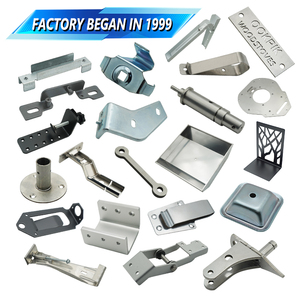
Within Osaka’s logistics corridor and neighboring Hyogo rail manufacturing clusters, heavy plate stampings (4mm to 14mm) serve as chassis suspension brackets, structural gussets, and bogie reinforcement plates. These parts demand high-tensile hot-rolled steel with controlled springback compensation to survive rigorous cyclic dynamic stress.
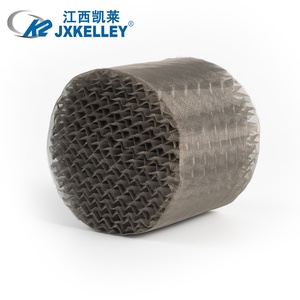
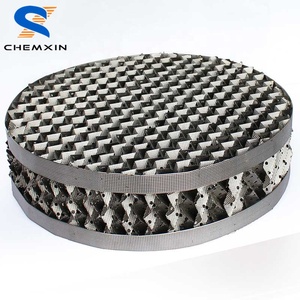
The coastal petrochemical complexes along Osaka Bay require heavy-gauge tower internals, support beams, distributor hold-downs, and thick-wall perforated filter tubes. Fabricated in SUS316L, Monel, and Hastelloy, these components must resist chloride stress corrosion while withstanding severe differential pressure shocks inside high-capacity fractionating towers.
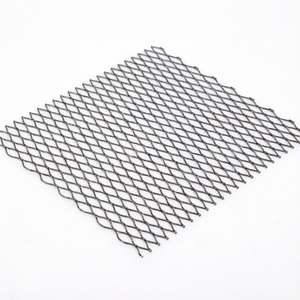
Reflecting Kansai's rigorous anti-seismic building codes, thick-gauge galvanized brackets, diamond-hole expanded highway safety screens, and perimeter enclosure systems are widely integrated into highway overpasses, harbor revetments, and automated electrical distribution substations requiring multi-decade outdoor durability.
Selecting between high-tonnage mechanical stamping, progressive cold forming, and CNC flame/laser cutting for high-volume thick components.
| Evaluation Metric | High-Tonnage Heavy Stamping | Progressive Die Stamping | CNC Laser / Flame Cutting |
|---|---|---|---|
| Typical Thickness Range | 4.0 mm – 16.0 mm (Steel / High-Tensile) | 1.0 mm – 6.0 mm (Coil-fed) | 3.0 mm – 32.0+ mm (Plate stock) |
| Dimensional Repeatability | High (±0.05 mm via hardened tool steel) | Extremely High (±0.02 mm) | Moderate (±0.15 mm thermal kerf shift) |
| Sheared Edge Integrity | Clean burnish depth up to 70% with fine blanking | Standard shear band; micro-burr minimal | Heat-affected zone (HAZ) requires post-grinding |
| Unit Economy at Scale | Superior for >5,000 pcs (Cycle: <3 sec) | Optimum for >25,000 pcs continuous run | Cost prohibitive for large continuous runs |
| Internal Grain Flow | Preserved along formed radius; high fatigue limit | Continuous strain-hardening control | Interrupted cut edges; potential notch initiation |
How Japanese tier suppliers and Osaka machine shops are modernizing their heavy stamping supply chain through automation, metallurgy, and lean sourcing networks.
To achieve decarbonization targets, Osaka heavy transport fabricators are pivoting from mild steels to 780 MPa and 980 MPa advanced high-strength steels (AHSS). Stamping these ultra-thick plates requires servo-press technology that precisely manages slide-motion speed, dwell times, and multi-stage bottom-dead-center hold to nullify severe springback defects.
Osaka procurement managers are aggressively eliminating transactional friction by favoring stamping houses that execute secondary operations in-house. Cold blanking combined under one roof with deep drawing, robotic weld-stud joining, CNC milling, and zinc-nickel plating minimizes logistic delays and ensures unified dimensional accountability.
While preserving domestic rapid-prototyping capabilities in Osaka, manufacturers are establishing long-term partnerships with certified Asian heavy-stamping factories to hedge regional labor shortages and stabilize volume component costs against fluctuating Yen exchange rates.
Integrating 25+ years of metallurgical forming expertise, precision toolmaking, and comprehensive material testing for demanding global environments.
All production originates from verified prime steel mills. Every stamped bracket, deep-drawn container, and column tray carries mill test certificates (MTC) matching EN 10204 3.1 standards with complete heat-number tracking.
In-house progressive and compound die engineering utilizing premium SKD11, SKH51, and carbide tooling inserts. We design tooling with precise relief contours that extend punch life even under 800+ ton continuous load cycles.
Quality assurance goes beyond visual inspection. We employ 3D Coordinate Measuring Machines (CMM), optical profile projectors, and hydraulic hydrostatic pressure verification for leak-critical process equipment and deep drawn cans.
Supplying heavy industrial components across Japan, North America, and the Middle East. Shipments are packed in reinforced, fumigated wooden cases lined with vapor corrosion inhibitor (VCI) films to prevent ocean-borne corrosion.
Direct answers to the most common inquiries regarding tooling cycles, material equivalence, tolerance adherence, and international shipping.
We provide comprehensive metallurgical cross-reference verification for standard Japanese grades including JIS G 3101 (SS400), JIS G 3131 (SPHC), and stainless varieties (SUS304, SUS316L). Every batch is accompanied by genuine chemical composition and mechanical strength certificates (tensile strength, yield point, and elongation) to ensure mechanical equivalence before forming begins.
Our manufacturing line incorporates mechanical and hydraulic presses ranging from 160 tons up to 1,200 tons. For heavy plate blanking, coin-embossing, and thick flange forming, high-tonnage knuckle-joint and hydraulic presses are utilized to deliver sustained bottom-dead-center tonnage, preventing edge tear and tool chatter.
On plates exceeding 5.0 mm, shear cut clearance is kept within strict tolerances (typically 7%–10% of sheet thickness depending on hardness). For critical sealing or structural surfaces, we utilize secondary automated vibratory deburring, shot blasting, or dedicated CNC shaving passes to ensure burr heights remain strictly under 0.05 mm.
Standard progressive or single-operation heavy stamping tooling requires 25 to 35 business days from 3D CAD approval to initial tryout. We provide 5 to 10 First Article Samples accompanied by complete CMM dimensional inspection reports and material test certs for engineering sign-off prior to volume production runs.
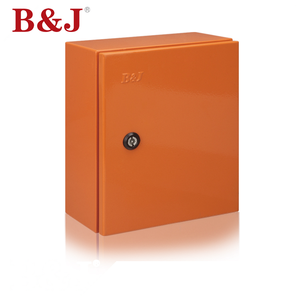
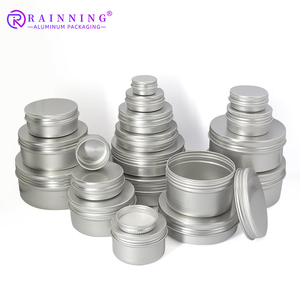
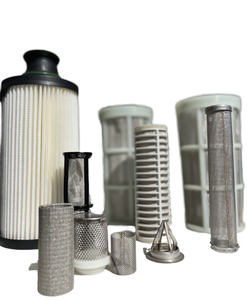
Yes. In addition to primary stamping presses, our shop floor integrates precision TIG/MIG welding, spot welding, deep drawing, and perforated sheet fabrication. We routinely deliver completed sub-assemblies—such as distillation column bubble-cap trays, filter baskets with welded perforated support cores, and powder-coated IP66 enclosures—fully assembled.
Consult with our senior tooling engineers to evaluate sheet thickness, die wear parameters, and cost-reduction opportunities for your heavy metal components.