- +91-9930498858Call / WhatsApp
- [email protected]Email Us
Manufactured according to rigorous ASTM, ISO, and DIN standards. Sourced directly from Ambani Metals' specialized production facilities with full metallurgical traceability for industrial procurement across Algeria.
Navigating Severe Corrosion, Hot Hydrocarbon Streams, and High Chlorides in North Africa's Toughest Industrial Operating Environments.
Algeria occupies an indispensable position in the Mediterranean energy matrix. As Africa’s leading natural gas producer and a strategic crude oil exporter, the operational integrity of infrastructure managed by public institutions like Sonatrach and international joint ventures depends fundamentally on materials science. Industrial filtration, mass separation, and catalytic processes throughout Hassi Messaoud, the Skikda refining hub, and the Arzew petrochemical complex are constantly exposed to hostile operating matrices. Standard austenitic stainless steels (such as AISI 304 or AISI 316L) routinely face accelerated operational failure under conditions involving hot concentrated chlorides, hydrogen sulfide (sour gas cracking), organic acids, and sodium hydroxide wash towers.
As an established, world-class nickel wire mesh manufacturer, Ambani Metals delivers engineered filtration, demisting, and catalyst containment solutions woven from high-nickel alloys: Nickel 200 (UNS N02200), Nickel 201 (UNS N02201), Monel 400 (UNS N04400), Inconel 600/625, and Hastelloy C-276. Our industrial wire mesh screens maintain dimensional aperture stability, mechanical tensile properties at temperatures exceeding 650°C, and total resistance to caustic stress corrosion cracking. This whitepaper details how specialized nickel metallurgy enables Algerian plant managers, procurement engineers, and EPC contractors to eradicate unscheduled downtime, comply with national environmental mandates, and drive maximum throughput.
Unlike standard chromium-nickel alloys that develop fragile chromium-depleted boundary zones, pure Nickel 200/201 establishes a dense, adherent, self-healing nickel-oxide film. This layer exhibits negligible corrosion rates (<0.002 mm/year) across boiling sodium hydroxide (NaOH) solutions up to 75% concentration, rendering it the benchmark alloy for alkaline scrubbing in gas-sweetening units.
Within the gas-processing installations of Hassi R'Mel, raw hydrocarbon streams arrive heavily saturated with corrosive acid gases (carbon dioxide and hydrogen sulfide), associated formation brines, and fine sand particulate. Demisting pads and separator inlet elements fitted with conventional wire mesh suffer from pitting corrosion, erosion-corrosion thinning, and sudden failure due to Sulfide Stress Cracking (SSC). By fabricating woven wire mesh screens using Monel 400 (67% Ni, 31% Cu) and Hastelloy C-276, Ambani Metals provides absolute structural resilience against sour conditions governed by NACE MR0175 / ISO 15156 standards.
| Alloy Designation | Nominal Composition | Key Chemical Resistance | Primary Algerian Industry Application |
|---|---|---|---|
| Nickel 200 / 201 | 99.6% Pure Nickel (Low C in 201) | Immune to caustic soda cracking, dry halogens | Alkaline scrubbers, caustic treatment units, chlor-alkali production |
| Monel 400 | 67% Ni - 31% Cu | Hydrofluoric acid, high-velocity seawater, brines | Seawater desalination plants, HF alkylation units (Arzew & Skikda) |
| Inconel 625 | 61% Ni - 21.5% Cr - 9% Mo - 3.6% Nb | Extreme pitting, crevice corrosion, sour wet gas | Offshore platforms, subsea manifolds, flare gas scrubbers |
| Hastelloy C-276 | 57% Ni - 16% Mo - 15.5% Cr - 4% W | Wet chlorine gas, hypochlorites, hot mixed acids | Hazardous waste incineration, sour-gas desulfurization plants |
Beyond chemical plants, the Algerian government's intensive investments in coastal reverse osmosis (SWRO) seawater desalination facilities—such as the Magtaa, Tipasa, and Cap Djinet mega-plants—have triggered massive requirements for reliable intake filtration screens. Intake seawater along the Mediterranean shelf contains aggressive microorganisms and high chloride ions. Under these conditions, wire mesh screens woven from pure nickel and nickel-copper alloys inhibit marine bio-fouling and completely withstand microbially induced corrosion (MIC), guaranteeing extended filtration cycles without mesh blinding or mechanical degradation.
Custom-engineered mesh configurations deployed across critical infrastructure sectors in North Africa.
In amine treating units and Merox processing units, our pure Nickel 200/201 and Monel mesh layers serve as high-efficiency demister pads and coalescing filter elements. They actively resist caustic wash entrainment, preventing downstream amine degradation and valve fouling in heavy hydrocarbon separation towers.
Operating across major Mediterranean desalination installations in Oran, Algiers, and Annaba. Monel 400 and Inconel 625 woven mesh filter screens deliver fine pre-filtration down to 10 microns, filtering aggressive littoral silt while remaining completely resistant to marine bio-fouling and pitting in hyper-saline discharge brines.
Aligned with Algeria's 2030 renewable hydrogen roadmap, our ultra-fine Nickel 200/201 wire mesh screens serve as gas-diffusion electrode substrates and current collectors in alkaline water electrolyzers (AWE), offering zero electrochemical dissolution and optimal conductivity across continuous operations.
Key economic and regulatory shifts impacting how high-performance materials are selected and imported.
Sonatrach and operating joint ventures have shifted technical mandates from traditional 24-month maintenance turnarounds to 48-to-60 month continuous campaigns. This policy has made low-grade stainless steels obsolete in aggressive units, driving demand for pure nickel and Hastelloy wire meshes that maintain tensile strength under high thermal stresses.
Algerian financial mechanisms require adherence to Bank of Algeria regulations, including Documented Letters of Credit (Crédit Documentaire / Credoc), Certificate of Conformity inspections, and pre-shipment quality verification. Ambani Metals delivers complete institutional compliance, preventing clearance delays at Port d'Alger and Port d'Oran.
Strict environmental rules for industrial emissions around urban centers like Algiers, Oran, and Skikda demand higher filtration efficiencies. Modern plants are replacing older chevron vanes with high-density multilayer knit and woven nickel mesh demisters capable of removing 99.9% of sub-micron liquid droplets from exhaust stacks.
Combining 25+ years of Indian manufacturing expertise with international export management.
Every roll of wire mesh arrives with complete EN 10204 3.1 Mill Test Certificates (MTC), complete heat chemical breakdowns, and mechanical test validations.
State-of-the-art XRF Positive Material Identification (PMI) guarantees zero alloy mix-ups. Automated optical vision checks verify precise aperture tolerances.
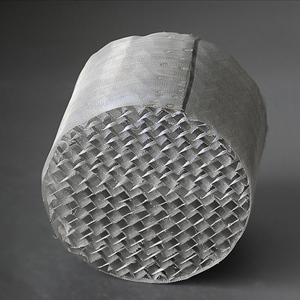
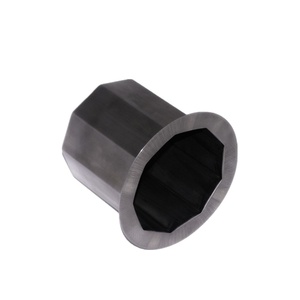
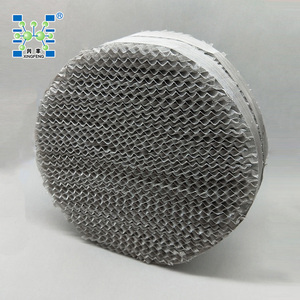
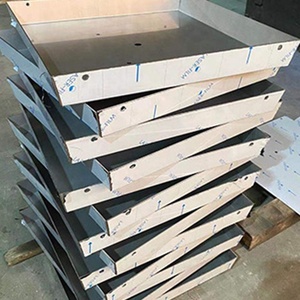
Beyond bulk mesh rolls, we engineer complete mass-transfer trays, column internals, deep-drawn filter cups, and laser-profiled custom hardware under one roof.
Treated seaworthy timber crates (ISPM-15 compliant) with internal desiccant and multi-layer vapor barrier films ensure corrosion-free sea and air delivery.
Addressing material selection, technical standards, testing criteria, and import logistics.
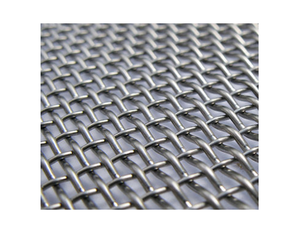
We manufacture Plain Weave, Twilled Weave, Plain Dutch Weave (PDW), and Twilled Dutch Weave (TDW). For high-pressure gas desulfurization and liquid fuel filtration in Skikda and Arzew, Twilled Dutch Weave is commonly selected. TDW combines heavy warp wires with ultra-fine shute wires driven tightly together, providing structural mechanical integrity, high bursting pressure resistance, and surface retention down to 2-3 microns absolute rating.
We enforce a 100% PMI (Positive Material Identification) verification policy using calibrated Niton Thermo Scientific handheld XRF analyzers on incoming raw wire spools and finished woven rolls. Every delivery to Algeria is accompanied by an EN 10204 3.1 certificate detailing the precise elemental breakdown (Ni, Cr, Mo, Fe, Cu, C) along with mechanical tensile properties. Third-party inspections via SGS, Bureau Veritas, or TÜV Rheinland can be hosted directly at our manufacturing works prior to dispatch.
Yes. Our in-house manufacturing capabilities include precision CNC fiber laser cutting, ultrasonic cutting, stamping, and circular deep drawing. We regularly manufacture pre-cut round filter discs, pleated cylinders, sintered multi-layer packings, and rectangular mesh panels bounded with stainless steel or Monel sheet edging, fabricated directly to match client construction drawings or OEM equipment dimensions.
Standard wire mesh specifications in stainless steel, Nickel 200, and Monel 400 are maintained in ready inventory for expedited fabrication, permitting dispatch within 10 to 18 days. Custom weave geometries or specialty alloys typically ship in 3 to 4 weeks. We arrange CFR or CIF shipping to major Algerian ports—principally Port d'Alger, Port d'Oran, and Port de Skikda—or airfreight delivery to Houari Boumediene Airport (ALG) for emergency turnaround requirements.
Yes. Our commercial export team possesses extensive experience handling trade transactions under Bank of Algeria circulars. We routinely execute contracts under Irrevocable Letters of Credit (Credoc), providing all compliant documentation: legalized commercial invoices, packing lists with detailed net/gross weights, certificates of origin, clean-on-board bills of lading, and independent certificates of conformity.
Connect directly with Ambani Metals' metallurgical engineers to discuss your mesh specifications, column drawings, or plant turnaround schedule.