- +91-9930498858Call / WhatsApp
- [email protected]Email Us
Engineered from premium virgin Polypropylene (PP), Polyvinyl Chloride (PVC), PVDF, and engineering grade thermoplastics. Tailored for low pressure drop, high geometric surface area, and severe chemical scrubbers across the Port of Hamburg and Central European process plants.
As Germany’s premier industrial maritime gateway and home to Europe's second-largest port cluster, Hamburg represents a critical epicenter for mass transfer and chemical separation technology. From the petrochemical refining complexes in Hamburg-Harburg and Moorburg along the Southern Elbe to the vast chemical parks spanning the Lower Elbe corridor toward Brunsbüttel, modern process plants operate under stringent environmental and thermodynamic constraints. Facility engineers are tasked with maximizing theoretical stage count efficiency ($NTS$) while drastically cutting energy consumption and adhering strictly to European Union Industrial Emissions Directive (IED 2010/75/EU) regulations and TA Luft (Technical Instructions on Air Quality Control).
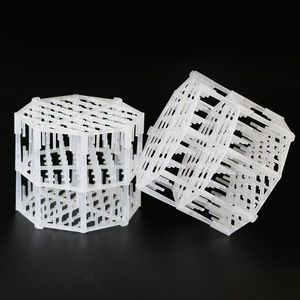
Plastic tower packing solutions—encompassing random dumping media (Pall Rings, Saddle Rings, Spherical Hollow Bio-packings) and structured corrugated grid packings—have evolved from secondary alternatives to preferred primary solutions over metallic internals. In acidic gas absorption, seawater flue gas desulfurization (FGD), wastewater stripping, and marine exhaust cleaning system (EGCS) scrubbers operating within the North Sea Emission Control Area (SECA), premium thermoplastic polymers provide unparalleled resistance to pitting, stress corrosion cracking, and biological scaling.
Selecting optimal column packings requires balancing effective interfacial area ($a$), void fraction ($\varepsilon$), dry bed pressure drop ($\Delta P_0$), and resistance to liquid holdup flooding under varying vapor-liquid loading rates.
Our injection-molded plastic packings provide void fractions exceeding 90% to 94%, significantly minimizing vapor velocity restrictions ($C_s$) and delaying loading point onset. This hydraulic headroom affords plant operators up to a 4:1 turndown ratio without risking premature entrainment or severe liquid pooling in vacuum and atmospheric towers.
We process homopolymer and copolymer PP, PVDF (polyvinylidene fluoride), PTFE, PVC, and glass-reinforced polymers. For chlorinated organics or bromine scrubbing, PVDF delivers continuous operation up to 140°C with total chemical inertness, preventing premature embrittlement, swelling, and hydraulic bed compaction.
By utilizing multi-bladed internal ribs, optimized wall-thickness profiles, and drip points, our packings ensure rapid surface renewal of liquid films. The Sherwood-Holloway and Onda model correlations confirm superior liquid dispersion with minimal dry wall channeling across column diameters ranging from 400 mm to over 6,000 mm.
Indicative hydraulic, thermal, and mechanical metrics for primary plastic mass transfer packings engineered for industrial installations.
| Packing Geometry | Primary Material | Specific Surface ($m^2/m^3$) | Void Fraction ($\%$) | Bulk Density ($kg/m^3$) | Max Continuous Temp | Primary Application Suitability |
|---|---|---|---|---|---|---|
| Plastic Pall Ring (50mm / 2") | PP / RPP | 110 – 125 | 90 – 92% | 60 – 72 | 100°C – 110°C | General absorption, ammonia stripping, degassing columns |
| Plastic Hollow Spherical Filler (38mm) | Virgin PP | 150 – 180 | 88 – 90% | 85 – 95 | 100°C | Waste gas towers, Elbe river cooling systems, water treatment |
| Plastic Tellerette / Rosette Ring | PVDF / PFA | 140 – 160 | 92 – 94% | 70 – 80 | 140°C | Wet chlorine, $SO_2$ scrubbers, flue gas denoxification |
| Intalox Saddle Ring (38mm) | PP / CPVC | 165 – 190 | 89 – 91% | 75 – 85 | 95°C – 105°C | Acid fractionation, demisting, vacuum separation |
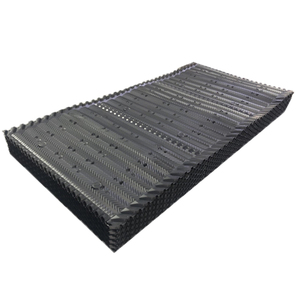
| BAC Cross-Flute Film Pack | Rigid PVC | 140 – 240 | 95 – 97% | 45 – 55 | 60°C (Fire Class B1) | HVAC cooling towers, power plant auxiliary heat rejection |
Our plastic tower packing solutions are deployed across vital infrastructure nodes in Northern Germany, addressing rigorous operational and environmental demands.
Meeting IMO MARPOL Annex VI Sulphur Cap regulations in the North Sea and Baltic Sea SECA zones requires high-efficiency open and closed-loop marine scrubbers. Our lightweight PP and PVDF random packings tolerate continuous rolling motion and high salt spray while desulfurizing marine diesel exhausts.
In the hydrocarbon processing plants of Hamburg-Harburg, column revamps demand low pressure drop random media for sour water stripping, amine gas sweetening, and VOC recovery. Our corrosion-resistant internals eliminate heavy metal oxidation and minimize shutdown cycles.
Thermal power plants and heavy manufacturers utilizing closed-circuit cooling systems near the River Elbe rely on anti-fouling structured PVC/PP fills. Our designs resist microbiological growth, silt deposition, and thermal degradation under continuous industrial duty.
Municipal thermal waste plants (MVR) across Hamburg utilize multistage wet gas scrubbers packed with Tellerettes and saddles to capture hydrogen chloride ($HCl$), hydrogen fluoride ($HF$), and particulate traces, ensuring full compliance with German 17. BImSchV emission mandates.
The chemical processing landscape across Germany and the broader DACH zone is undergoing a historic transformation driven by decarbonization, circular economy mandates, and energy conservation initiatives (Energiewende). Three distinct technological shifts dominate industrial procurement:
1. Decarbonization & Carbon Capture (CCUS): Post-combustion amine capture facilities require monumental absorption columns. The immense volumetric flow rates necessitate high-capacity plastic structured and random packing with minimal pressure drop per theoretical stage, directly cutting reboiler heat duties and fan power draw.
2. PFAS Elimination & Sustainable Fluoropolymer Engineering: Impending European Chemicals Agency (ECHA) regulations concerning per- and polyfluoroalkyl substances are prompting engineers to re-evaluate fluoropolymer usage. Our laboratory teams have engineered advanced ultra-high-density crosslinked polypropylenes and modified PVDF resins offering equivalent acidic longevity without non-compliant PFAS chemistry.
3. Circular Polymer Economics & Digital Batch Certification: EPC contractors and municipal utility consortia in Germany now demand rigorous lifecycle declarations (EPDs) and full traceability of raw polymers. Our computerized injection-molding production records batch-specific melt flow index (MFI), tensile yield, and resin lot numbers directly on shipping documentation.
From raw material synthesis to turnkey column internals, our vertically integrated plant delivers technical precision backed by 25+ years of international mass transfer leadership.
We design, cut, and calibrate our high-cavitation injection molds in-house. This gives us complete control over wall thickness uniformity, rib geometry, surface texturing, and flash elimination, ensuring that no premature fouling sites exist on finished packings.
We refuse substandard regrinds for mission-critical chemical duty. Every batch is extruded from 100% prime virgin resins sourced from premier petrochemical producers, accompanied by complete mill test certificates, RoHS, and EU REACH SVHC declarations.
With containerized break-bulk and FCL shipping lines regularly docking at the Port of Hamburg (Waltershof / CTA), our dedicated logistics team prepares complete export paperwork, seaworthy ISPM 15 fumigated pallet packaging, and smooth EU customs clearance.
Clear technical and commercial answers tailored to plant operators, process engineering consultants, and MRO procurement managers.
We evaluate chemical compatibility against ISO 175 and ASTM D543 immersion testing standards. For Hamburg facilities handling concentrated hydrochloric acid ($HCl$), sulfuric acid ($H_2SO_4$ up to 70%), or caustic soda ($NaOH$), we recommend stabilized Polypropylene or PVDF. We supply specific corrosion data charts and perform coupon testing upon request.
Yes. All polymer formulations, colorants, and anti-static stabilizers used in our factory comply strictly with EU Regulation (EC) No 1907/2006 (REACH) regarding Substances of Very High Concern (SVHC) and RoHS Directive 2011/65/EU. Complete chemical declaration files are supplied with quotation documentation.
Our engineering division provides preliminary hydraulic sizing reports calculating tower diameter checks, operating gas capacity factors ($F_s$), dry/wet pressure drop ($\Delta P$), liquid hold-up, and estimated Height Equivalent to a Theoretical Plate ($HETP$) based on your process stream inputs.
Standard random packings in Polypropylene (such as 25mm, 38mm, and 50mm Pall Rings) are held in continuous manufacturing inventory. Typical production turnaround for full container loads (FCL 40HQ) is 7–14 days, followed by scheduled maritime transit to Hamburg Container Terminal (CTA/CTB), providing reliable turnaround times for scheduled refinery revamps.
For municipal and heavy utility cooling towers requiring strict building code adherence, our PVC and modified PP film fills meet DIN 4102-1 Class B1 (low flammability) or UL94 V-0 self-extinguishing ratings. These formulations prevent flame propagation in dry draft zones during plant maintenance turnarounds.
Bed compression calculations must account for the plastic's creep modulus under elevated temperature. We engineer our random packings with reinforced internal struts and optimal wall thickness profiles. For packed bed heights exceeding 5 to 6 meters, we recommend intermediate support grids and redistributor trays to maintain uniform vapor flow.