
- +91-9930498858Call / WhatsApp
- [email protected]Email Us
Serving automotive, electronics, pharmaceutical, and energy OEMs across Greater Jakarta with micron-level dimensional repeat accuracy.

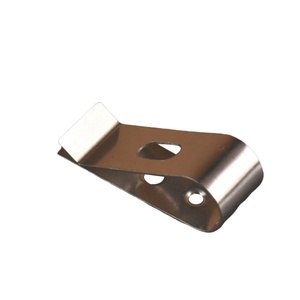
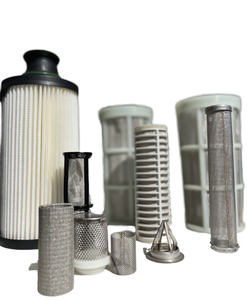
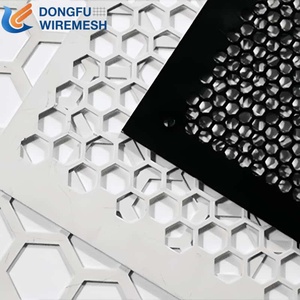
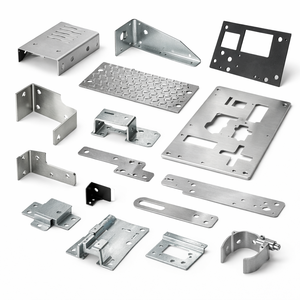
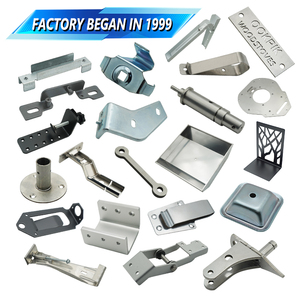
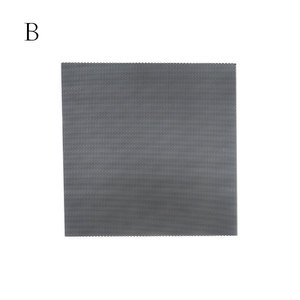
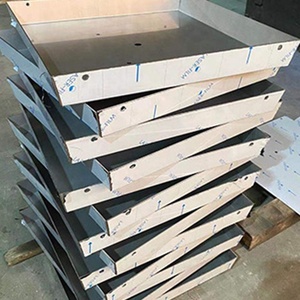
The industrial landscape of the Special Capital Region of Jakarta and its contiguous manufacturing belts—encompassing Bekasi, Cikarang, Karawang, and Tangerang (Jabodetabek)—is undergoing a massive structural transformation. Driven by the Indonesian government’s Making Indonesia 4.0 roadmap and intensive foreign direct investments (FDI) into automotive assemblies, two-wheeler e-mobility, electronics hardware, and process processing, procurement paradigms have escalated. Global OEMs no longer settle for conventional sheet metal bending; the mandate has pivoted decidedly toward high-speed progressive die stamping, deep-drawn precision components, and full material chemical traceability.
Jakarta’s port logistics hub at Tanjung Priok serves as the gateway for raw materials, yet domestic tier-1 and tier-2 assemblers frequently battle acute supply chain disruptions: erratic surface roughness, dimensional deviations from localized thermal expansion, and non-compliance with strict weldability standards. In response, our manufacturing workflow integrates computerized progressive stamping lines ranging from 25 to 600 metric tons, allowing cold-rolled coil, copper strip, austenitic stainless steel (SS304, SS316L), and architectural alloys to be formed at high cyclic velocities without compromising edge burr tolerances or tensile characteristics.
Furthermore, as Jakarta moves toward cleaner decentralized utilities and energy systems, there is an escalating requirement for filtration assemblies, high-pressure mass-transfer apparatus, and electrolytic porous plates. Whether deploying perforated core tubes for petrochemical refineries in offshore Java or deep drawing seamless aluminum motor casings for electric scooters navigating Sudirman corridors, precise stamping mitigates work-hardening defects through rigorous multi-station finite element analysis (FEA) stamping simulation.
| Stamping Classification | Material Specialization | Standard Dimensional Tolerance | Tooling Configuration | Primary Jakarta Industry Fit |
|---|---|---|---|---|
| High-Speed Progressive Die | Brass, Phosphor Bronze, SPCC, SS301/304 | ±0.005 mm to ±0.015 mm | Multi-station Tungsten Carbide Dies | Electronics, EV Terminals, Relays (Cikarang) |
| Hydraulic Deep Drawing | SS304L, SS316L, Deep Draw Quality Tinplate | ±0.025 mm (Wall Ironing control) | Single/Transfer Multi-draw Dies | Aerosol, Food Powder, Filter Shells (Karawang) |
| Precision Laser & Brake Stamping | High-strength structural steels, Al 5052/6061 | ±0.050 mm | Modular Stage Tools & Fiber Laser | Automotive Chassis, Brackets (Bekasi, Tangerang) |
| Micro-Perforation & Expanded Mesh | Nickel alloys, Titanium, SS316L, Copper | Hole Dia ±0.02 mm / Pitch ±0.03 mm | High-impact Perforating Presses | Separation Internals, EMI Shielding (Jakarta Ports) |
A critical consideration for purchasing managers in Jakarta’s tropical, maritime environment is galvanic and atmospheric corrosion. Airborne salinity from the Java Sea demands superior surface integrity. Our post-stamping treatments encompass continuous automated degreasing, ultrasonic electro-cleaning, nitric passivation, chemical blackening, and nickel-tin electroplating to ensure stamped terminals and architectural meshes pass standard 500-hour ASTM B117 salt spray testing.
Jakarta and Karawang host international vehicle assemblers. We supply multi-cavity progressive stamped stator laminations, battery pack copper connector buses, structural safety clips, and deep-drawn oil filter cartridges engineered to minimize weight while exceeding yield strengths.
For consumer goods manufacturers located in East Jakarta and Tangerang, we fabricate ultra-thin EMI/RFI shielding boxes, spring-action copper contact terminals, perforated acoustic heat sinks, and expanded speaker grilles manufactured from 0.4mm micro-gauges.
Serving petrochemical installations near Cilegon and processing plants along the Jakarta corridor, our stamped column valve trays, structured packing beds, and perforated tube strainers utilize SS316L, Monel, and Hastelloy to combat acidic fractionation challenges.
Combining 25+ years of metallurgical mastery with integrated tool-and-die infrastructure.
Equipped with state-of-the-art wire EDM, slow-speed wire cutting, and CNC machining centers, our engineering facility develops single, compound, and multi-stage progressive stamping dies in-house, cutting prototype cycle times by up to 40%.
Every sheet metal coil, stamped part, and assembled weldment includes EN 10204 3.1 Material Test Certificates (MTC). Quality assurance employs coordinate measuring machines (CMM), optical profile projectors, and non-destructive testing for zero-defect shipments.
Navigating customs, Form AK/Form D preferential tariffs, and Tanjung Priok import clearance, our dedicated global operations provide sea-worthy vacuum-sealed wooden case crating with silica packs to prevent oxidization during ocean transit.
Addressing core inquiries regarding tooling amortization, lead times, materials, and local compliance.
Tooling developed for our clients is treated as the client's proprietary intellectual asset. We handle ongoing maintenance, sharpening, and die calibration at zero additional charge throughout the contracted life cycle. Detailed 3D CAD/CAM designs and tooling lifecycle logs are maintained for complete transparency.
Yes. Our inventory covers materials compliant with JIS G3141 (SPCC/SPCD), JIS G4305 (SUS304/SUS316), and ASTM standards. We frequently supply equivalent mill-certified replacements to match precise Japanese automotive specifications prevalent in Cikarang industrial hubs.
Prototype laser-cut and soft-tool samples can typically be dispatched in 7 to 10 working days. Hard tooling for progressive stamping dies generally takes 20 to 35 calendar days depending on complex forming stages, followed immediately by First Article Inspection Reports (FAIR) and PPAP Level 3 documentation.
To resist oxidative degradation caused by equatorial maritime transport, all components undergo thorough drying, VCI (Vapor Corrosion Inhibitor) paper wrapping, desiccated moisture-barrier heat-sealed polythene packaging, and fumigated reinforced wooden crates suitable for long container dwell times at Tanjung Priok.
For initial R&D validations and pilot trial runs, we accommodate lower MOQs (typically starting at 500 to 1,000 units utilizing modular stage tooling). For mass production with high-speed progressive dies, batches ranging from 10,000 to over 1,000,000 pieces provide maximum tool amortization and cost advantages.
Send your CAD drawings (.STP, .DWG, .IGS) to receive a DFM feedback report within 24 hours.