
- +91-9930498858Call / WhatsApp
- [email protected]Email Us
Precision-milled filtration elements, structured packing internals, and OEM stamped housings compliant with stringent CSA, ASTM, and ASME engineering standards across North American job sites.
A comprehensive technical reference examining hydraulic inflow performance, sand retention indices, and metallurgy standards for oil sands, mining, and civil sub-surface applications.
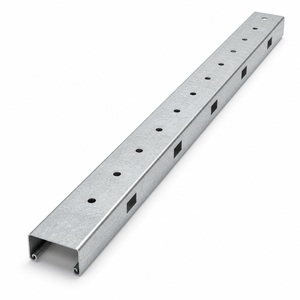
In deep underground drainage, horizontal bitumen recovery, and complex geotechnical stabilization projects across Canada, downhole filtering systems face severe operating conditions. Slotted metal pipes function as mechanical screening conduits that deliver mechanical wellbore integrity while controlling fluid ingress and particulate retention. Unlike surface-wrapped screens or standard porous conduits, precision-slotted liners machined from robust tubular steel provide structural hoop strength, predictable collapse resistance, and tailored hydraulic open areas. When engineered according to API Spec 5CT, ASTM A53/A106, and CSA Z245 standards, slotted pipe liners serve as dependable foundations for sand control, aquifer dewatering, and tailings filtration across British Columbia, Alberta, Saskatchewan, and Ontario.
Specifying slotted liners requires balancing hydrodynamics and mechanical stability. Cutting longitudinal, staggered, or overlapping apertures through structural steel modifies the pipe's tensile, torsional, and radial collapse properties. Engineering teams must calculate mechanical cross-sectional retention while delivering sufficient open flow area—typically between 2.5% and 8.5%—to prevent high inlet velocities that trigger premature erosion-corrosion. Machined with parallel kerfs, inverse keystone tapers, or rounded continuous profiles, our precision slotted pipes accommodate variable grain-size distributions encountered in Canadian reservoir formations.
Features an inverted internal angle (usually 6° to 8°) wider on the interior bore. Any mineral particle passing the outer surface moves through freely without lodging, eliminating aperture plugging and maintaining uniform draw-down pressures.
Optimized slot layout matrices (straight, staggered, and gang-milled arrangements) preserve over 75% to 88% of native parent pipe hoop strength, counteracting heavy overburden pressures and shifting soil loads in permafrost layers.
Available in API J55, K55, L80, N80, alongside 304L/316L austenitic and 2205 duplex stainless grades. Shipped with complete EN 10204 3.1 MTR validation verifying low-temperature Charpy V-notch toughness down to -45°C.
Configured specifically to solve geographical, climatic, and geological engineering challenges across Canada’s resource hubs.
1. Alberta Bitumen Recovery (SAGD & CSS Projects): In Steam-Assisted Gravity Drainage (SAGD) and Cyclic Steam Stimulation (CSS) systems across the Athabasca, Cold Lake, and Peace River oil sands, slotted liners act as bottom-hole production screens. Operating temperatures often exceed 200°C to 280°C in high-pressure steam atmospheres. Thermal expansion stresses and sand abrasion can destabilize non-welded assemblies. Heavy-wall carbon and specialized alloy pipes slotted with keystone profiles provide structural stability under high cyclic thermal loads, screening out abrasive sand while channeling bitumen into horizontal producer wells.
2. Saskatchewan Potash & Critical Uranium Extraction: Deep solution mining in the Western Canadian Sedimentary Basin extracts soluble minerals through high-pressure brine circulation. Pipes deployed in these operations face hot, saturated chloride solutions that induce severe stress corrosion cracking (SCC) in basic carbon steel. Utilizing corrosion-resistant alloys, high-density polyethylene-lined pipes, and specialized 316L/Duplex stainless slotted screens ensures long service lifetimes in brine circulation, brine well dewatering, and deep tailings disposal systems.
3. British Columbia & Yukon Hydro-Geotechnical Tunneling: Geotechnical infrastructure across mountainous zones requires aggressive ground-water control. During seismic stabilization, railway tunnel driving, and open-pit bench excavations, hydro-static head pressure poses structural risks. Slotted horizontal collector pipes and sub-horizontal drainage liners stabilize soil, mitigate hydrostatic wall thrust, and divert groundwater while preventing soil wash-out during spring freeze-thaw cycles.
4. Municipal Sub-Artesian Aquifers & Cold-Weather Dewatering: Across Ontario and Quebec municipalities, municipal well fields access deep glaciofluvial aquifers. Slotted casing pipes engineered from low-carbon or 304L stainless steel provide reliable intakes for potable water. The non-clogging slot geometry prevents encrustation caused by dissolved iron, manganese, and calcium compounds, maintaining high specific yield across multi-decade municipal operating cycles.
Precision manufacturing parameters configured for Canadian engineering compliance.
| Nominal Diameter (O.D.) | Wall Thickness Range | Slot Width (Kerf) | Slot Lengths | Slot Pattern | Standard Open Area |
|---|---|---|---|---|---|
| 2-7/8" to 4-1/2" (73mm - 114mm) | 5.51mm - 9.52mm | 0.012" - 0.250" (0.30mm - 6.35mm) | 38mm - 65mm (1.5" - 2.5") | Straight / In-Line | 2.8% - 4.5% |
| 5-1/2" to 7" (139.7mm - 177.8mm) | 6.98mm - 12.65mm | 0.010" - 0.125" (0.25mm - 3.18mm) | 50mm - 75mm (2.0" - 3.0") | Staggered (Preserves Hoop Strength) | 3.5% - 6.2% |
| 8-5/8" to 10-3/4" (219mm - 273mm) | 7.04mm - 15.09mm | 0.015" - 0.200" (0.38mm - 5.08mm) | 65mm - 100mm (2.5" - 4.0") | Overlapping / Staggered | 4.0% - 7.5% |
| 12-3/4" to 20" (323.8mm - 508mm) | 9.52mm - 17.48mm | 0.020" - 0.250" (0.50mm - 6.35mm) | 75mm - 120mm (3.0" - 4.75") | Multiple Gang Staggered | 4.5% - 8.5% |
How evolving environmental governance and metallurgical engineering influence North American procurement decisions.
Stringent AER (Alberta Energy Regulator) Compliance & Sand Inflow Limits: Canadian oil sand operators face stringent regulatory mandates concerning wellbore integrity and environmental protection. Surface sand disposal challenges require downhole sand capture rates above 98%. Consequently, laser-machined slotted pipes featuring microscopic tolerances (sub-0.012-inch apertures with burr-free surfaces) have largely replaced traditional mechanical saw-slotted pipes to prevent premature breakthrough and casing shearing.
Sub-Zero Impact Toughness Demands (-45°C Charpy Verification): Projects across northern British Columbia, the Northwest Territories, and northern Alberta deal with harsh winter conditions during transport, staging, and installation. Conventional tubular steels risk brittle fracture under cold temperatures. Sourcing managers increasingly specify low-temperature impact testing (Charpy V-Notch per CSA Z245.1 standards at -45°C) to verify metallurgical ductility during winter drilling programs.
Transition to High-Yield Corrosion Resistant Alloys (CRAs): Deep geothermal developments, CCUS (Carbon Capture, Utilization, and Storage), and sour gas wells involve severe carbon dioxide and wet hydrogen sulfide (H2S) exposure. These environments lead to Sulfide Stress Cracking (SSC) in non-treated steels. Buyers are moving toward 13Cr, super-martensitic steels, and 2205 duplex slotted tubulars that meet NACE MR0175/ISO 15156 requirements, mitigating hydrogen embrittlement while extending downhole component life.
Exporting specialized alloy components, distillation column internals, and precision slotted metals to heavy industry across more than 20 countries since 1998.
Founded in 1998, Ambani Metals brings over two decades of engineering expertise, supplying custom column trays, mesh assemblies, and tubular products to over 1,000 customers globally.
In-house processing for carbon steels, 304L/316L stainless, and high-performance alloys including Hastelloy, Monel, Inconel, and Titanium, tailored to severe corrosive environments.
Full material certification (MTR EN 10204 3.1), heat traceability, wall thickness ultrasonic testing, optical laser profile checks, and third-party inspection readiness (SGS, BV, TÜV).
Seaworthy crating, pipe end protectors, anti-corrosion barrier coatings, and direct documentation support to expedite customs clearance through Vancouver, Prince Rupert, Montreal, and Halifax.
Technical and logistical answers for project managers, structural engineers, and sourcing directors.