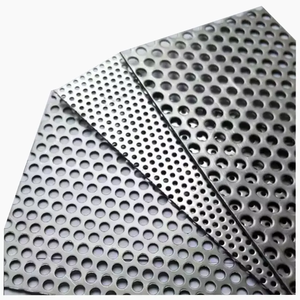
XG Expanded Mesh Perforated Galvanized Steel Panels for Liquid Filters
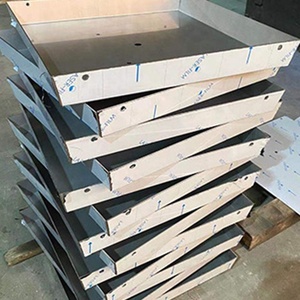
High-strength punching and resistance-welded panels designed as robust coarse filtering layers and retention baffles in scrubbers.
Precision-machined, corrosion-resistant column internals manufactured from certified austenitic stainless steels, Hastelloy, Monel, and specialty alloys. Tailored for stringent downstream specifications across Ulsan, Yeosu, and Daesan industrial complexes.
High-strength punching and resistance-welded panels designed as robust coarse filtering layers and retention baffles in scrubbers.
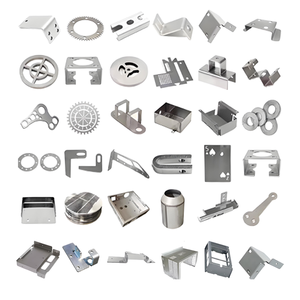
Precision-bent liquid collection troughs, vapor channel chimneys, and structural support segments fabricated to detailed EPC isometric drawings.
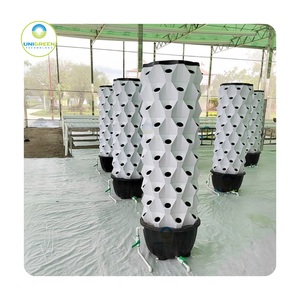
Food-grade, chemically inert engineered polymer modular components adapted for low-temperature scrubbers and specialized bioprocess absorption.
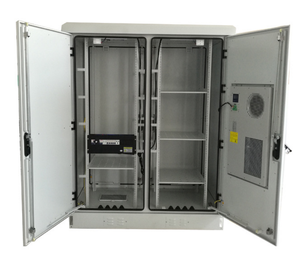
Protective housing systems engineered for transmitter junctions, analyzer taps, and PLC controls installed directly on refinery column skirts.
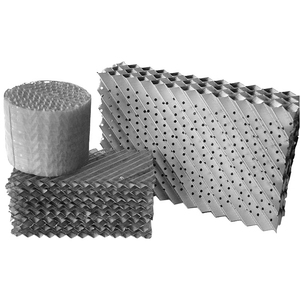
Ultra-low pressure drop structured gauze matrices maximizing theoretical stage count (HETP) for fine chemical rectification and vacuum separation.
OEM engineered bubble caps, dynamic moving valves, and weir clamp hardware stamped with progressive dies for tightest hydraulic tolerance.
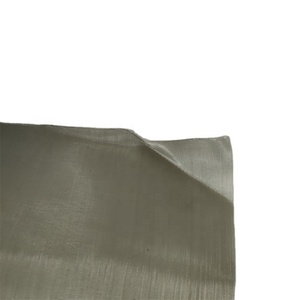
Micron-rated Dutch-weave and square-weave wire cloth for demister pads, mist eliminators, and particulate retaining grids in amine contactors.
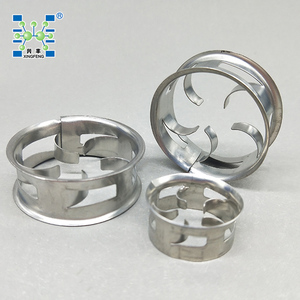
Aerodynamically optimized open-flanged random packing rings providing maximum gas handling capacity, low pressure drop, and superior anti-fouling.
In high-throughput absorption and scrubbing systems, mechanical integrity and hydraulic design govern separation performance. Selecting between cross-corrugated sheet packing, high-surface wire gauze, and dynamic valve trays requires balancing vapor loading parameters, hydraulic turndown, fouling tendencies, and pressure drop constraints.
| Internal Configuration | Ideal Application Scenario | Hydraulic Turndown Ratio | Pressure Drop (ΔP per Theoretical Stage) | Anti-Fouling Resistance | Standard Material Alloys |
|---|---|---|---|---|---|
| Structured Wire Gauze Packing | Vacuum distillation, high-purity solvent purification, low liquid loads | High (~5:1) | Extremely Low (< 0.3 mbar) | Low (Requires clean feedstock) | SS316L, 904L, Hastelloy C-276, Titanium |
| Corrugated Sheet Structured Packing | Acid gas absorption, CO2 capture stripping, crude unit revamps | High (~4:1) | Very Low (0.5 – 1.0 mbar) | Moderate (Available with self-draining surfaces) | SS304L, SS316L, Alloy 20, Duplex 2205 |
| Cascade Mini Rings (CMR) | VOC absorption, high liquid flow scrubbing, sour water strippers | Good (~3.5:1) | Low to Moderate | High (Low liquid hold-up edge profiles) | SS410, SS304, Carbon Steel, Monel 400 |
| Fixed & Floating Valve Trays | Petrochemical fractionation with wide load swings, atmospheric towers | Very High (~4:1 to 5:1) | Moderate (3.0 – 6.0 mbar) | High (High turbulence vapor jets sweep surface) | SS304, SS316, SS410, Hastelloy |
| Multi-Pass Sieve Trays | High liquid volume deethanizers, debutanizers, caustic scrubbers | Limited (~2:1) | Moderate to Low | Moderate | SS304/L, SS316/L, Clad Steels |
* Hydraulic performance data conforms to FRI (Fractionation Research, Inc.) calculation methodologies. Custom liquid distributor weir load calculations are generated per project data sheet.
South Korea's advanced manufacturing landscape demands rigorous chemical separation performance. Our column internals directly support key industrial installations across major Korean clusters including Ulsan, Yeosu, Daesan, and Gyeonggi-do.
Major naphtha cracking plants and olefin fractionators operated by domestic leaders require rapid turnaround revamp components to maintain plant run-length without unscheduled downtime.
Mega-scale semiconductor manufacturing demands ultra-high purity (UHP) solvents and aggressive acid-gas exhaust scrubbers adhering to strict ppb-level emission limits.
The massive expansion in lithium-ion precursor synthesis (NCM/LFP) and hydrometallurgical black mass recycling relies on heavy-duty chemical absorption internals.
South Korea's industrial landscape is undergoing a structural shift driven by carbon neutrality mandates (K-ETS), rigorous safety certifications under KOSHA, and the supply chain reorganization around semiconductors and EV batteries.
Under South Korea's Carbon Neutrality 2050 framework, steelmakers in Pohang and Gwangyang alongside chemical refiners are investing in Carbon Capture, Utilization, and Storage (CCUS). Large-scale post-combustion amine scrubbers require ultra-low pressure drop structured packings and high-uniformity liquid distributors to minimize reboiler parasitic loads.
As domestic semiconductor fabrication processes shrink below 3nm nodes, solvent recycling systems require fractional columns with heightened equilibrium stage density. Internals must deliver flawless vapor-liquid distribution, zero liquid channeling, and ultra-smooth surfaces to prevent particulate shed or metallic leaching into process streams.
Space-constrained petrochemical hubs in Yeosu and Daesan increasingly favor column debottlenecking over new tower construction. Replacing aging conventional bubble cap or sieve trays with high-capacity structured packing or modern anti-fouling valve trays allows operators to achieve 20-35% throughput gains within unchanged column shells.
With over 25 years of specialized metal fabrication and mass transfer engineering, our facility integrates complete raw material traceability, advanced CNC stamping, and rapid maritime dispatch to Incheon and Busan.
Every batch of stainless steel (304/316L), Hastelloy, Monel, and Titanium is fully documented with EN 10204 3.1 Mill Test Certificates and heat-number tracking to satisfy strict Korean QA audits.
Equipped with automated stamping presses and progressive tooling, we hold dimensional tolerances down to ±0.02mm on trays, bubble caps, packing elements, and downcomer clearances.
Our process engineering team evaluates column geometry, liquid-vapor flow regimes, turndown requirements, and fouling hazards against your process data sheets to prevent hydraulic weeping or entrainment.
Direct maritime logistics routes from Qingdao, Shanghai, and Ningbo ensure port-to-port transit times to Busan and Incheon of just 2 to 4 days, making scheduled turnaround deadlines achievable.
Common technical and commercial questions regarding documentation, material certification, and logistics for cross-border projects.
Yes. We regularly supply major EPC contractors and engineering firms with complete documentation packages including EN 10204 3.1 Material Test Reports (MTRs), PMI (Positive Material Identification) inspection logs, welding performance qualification records (WPS/PQR), and third-party inspection reports (e.g., SGS, TUV, DNV) compatible with KOSHA and KGS requirements.
Liquid maldistribution drastically degrades separation efficiency. We design high-precision gravity-fed trough-type distributors, pan distributors, or tubular spray nozzle systems engineered to provide at least 100 to 250 drip points per square meter. Each distributor undergoes in-house hydraulic levelness and flow-uniformity testing before dispatch.
Standard maritime transit from China's primary coastal ports (Shanghai/Ningbo/Qingdao) to Busan or Incheon Port takes only 2 to 4 days. All column trays and structured packing modules are crated in ISPM-15 compliant fumigated wooden boxes, vapor-barrier wrapped, and structurally partitioned to prevent distortion during transit and dock crane handling.
Absolutely. Our engineering department works fluently with 3D CAD modeling, AutoCAD, and plant piping design files. We cross-verify nozzle placements, internal support rings, downcomer bolting bars, and tray section split dimensions against your vessel manway sizes for smooth, on-site bolt-in installation without field hot work.
Structured packing is preferred for vacuum distillation systems, thermally sensitive organic intermediates, and revamps where pressure drop across the bed must stay below 0.3-1 mbar per stage. Trays remain the standard for high-pressure systems, severe fouling applications, wide turndown demands, or where solid-liquid slurries could foul fine corrugated mesh.
Submit your process data sheet, vessel isometric, or replacement specifications. Our technical engineering specialists will deliver a complete hydraulic evaluation and commercial estimate within 24 hours.