
- +91-9930498858Call / WhatsApp
- [email protected]Email Us
Engineered for high chemical inertness, high mechanical crushing strength, and optimized pressure drops across aggressive corrosive, thermal, and stripping environments.
Navigating chemical corrosion, extreme thermal variations, and mass transfer performance within modern New England chemical processing and biopharmaceutical corridors.
In chemical reaction towers, scrubbers, and fractional distillation units, the packing layer constitutes the core interfacial mass transfer zone. Selecting an optimal ceramic tower packing geometry requires balancing low hydraulic resistance against maximum liquid-gas contact surface area. Industrial ceramic packing compositions—primarily high-purity chemical porcelain consisting of aluminum silicate (Al2O3 • SiO2)—demonstrate uncompromised operational life in harsh processing media where carbon steels, austenitic alloys, and standard polymers degrade rapidly.
Unlike metallic internals that are prone to localized pitting, galvanic degradation, or stress corrosion cracking in halogenated atmospheres, engineered technical ceramics resist all acids (including concentrated nitric, sulfuric, and hydrochloric acids at boiling temperatures) with the sole exception of hydrofluoric acid (HF). Process engineering plants operating in the Greater Boston industrial network, along the Mystic River corridor, and across regional specialty biomanufacturing hubs require rigorous quality validation: zero leaching, zero heavy-metal dissolution, uniform void fractions, and high mechanical shock resistance.
| Profile Geometry | Specific Surface Area (m²/m³) | Free Void Fraction (%) | Bulk Density (kg/m³) | Primary Industrial Use Case |
|---|---|---|---|---|
| Ceramic Intalox Saddle | 140 – 320 | 72 – 79% | 550 – 680 | Sulfuric acid drying & absorption towers, RTO heat recovery beds |
| Ceramic Raschig Ring | 90 – 210 | 68 – 74% | 620 – 780 | Corrosive waste-gas scrubbing, carbon dioxide capture columns |
| Ceramic Cascade Mini-Ring | 160 – 340 | 76 – 83% | 490 – 620 | Demanding acid fractionation, debottlenecking vacuum operations |
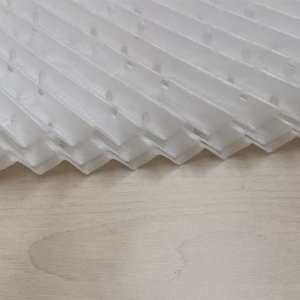
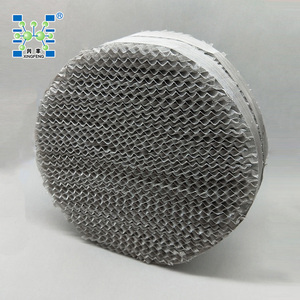
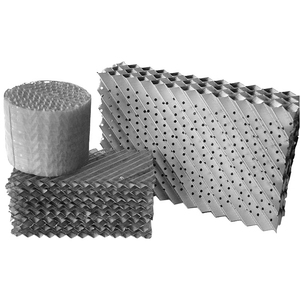
| Ceramic Structured Packing | 250 – 500 | 75 – 85% | 420 – 560 | High-purity fine chemicals, aggressive API solvent recovery |
| Ceramic Cross-Partition Ring | 80 – 150 | 65 – 72% | 700 – 850 | Base support beds, high liquid-load primary gas distribution |
The industrial landscape of Boston, Massachusetts, extends beyond traditional marine commerce into a dynamic ecosystem of high-tier life science manufacturing, clean-technology pilot plants, fine specialty chemicals, and advanced municipal resource recovery systems. Supplying mass transfer hardware to this geographic footprint requires an understanding of localized compliance, physical constraints, and performance demands:
The transition toward localized, resilient supply chains and high-efficiency decarbonized production is driving technical shifts for chemical plant operators and EPC engineers throughout the Northeast:
1. Electrified & Compact Process Intensification: With commercial real estate in Massachusetts commanding a premium, chemical and pharmaceutical developers are re-engineering massive distillation shells into compact, high-efficiency columns. Ceramic structured and high-performance cascade mini-rings provide elevated effective surface area per cubic meter, allowing process systems to shrink column heights by 25% to 40% while preserving theoretical stage counts.
2. Stringent Net-Zero & Energy Debottlenecking: Energy efficiency goals enacted under regional climate legislation demand lower column delta-P (pressure drop per theoretical stage). Ceramic low-drag packings directly decrease boiler duty, lowering steam and electrical pump consumption in vacuum purification units.
3. Immediate Inventory & Turnaround Logistics: Planned plant maintenance shutdowns along Boston's shipping terminals and chemical facilities require punctual hardware turnaround. Having responsive direct factory supply lines reduces supply vulnerability during urgent packing replacements.
Combining 25+ years of foundational metal, ceramic, and mass transfer manufacturing with end-to-end technical verification.
Every ceramic batch, stainless grade (304/304L, 316/316L), and exotic alloy (Hastelloy, Monel, Inconel, Titanium) is supplied with certified mill test reports (MTR), heat numbers, chemical assays, and crush-load verification data.
Our in-house technical engineering team reviews customer vapor-liquid loading parameters, turndown specifications, and fouling risks prior to fabrication, ensuring column internals and packing beds perform to design from initial start-up.
Streamline complex procurement by sourcing complementary tower components from a single vendor: ceramic and plastic structured packings, precision stamped valve trays, mist eliminators, perforated support grids, and deep-drawn components.
From visual dimensional validation and wall-thickness consistency to porosity testing and thermal-shock resistance, our shop accommodates client-led and independent third-party inspections prior to dispatch.
Shipping to more than 20 countries, including dedicated container and LCL freight routes directly into the Port of Boston and regional logistics terminals, packaged in reinforced seaworthy crating with complete customs clearance documentation.
In-house precision tooling, high-tonnage stamping, specialized wire mesh weaving, and ceramic sintering allow us to support emergency shutdown replacements and scheduled debottlenecking revamps on accelerated production timelines.
Practical guidance addressing engineering criteria, local logistics, and column retrofit specifications.
Planning an upcoming maintenance turnaround, pilot column evaluation, or custom internal revamp? Submit your process data sheet to consult directly with our technical specialists.
Get a Quote