- +91-9930498858Call / WhatsApp
- [email protected]Email Us
Comprehensive specifications manufactured to ASTM, DIN, and ISO standards for rigorous marine, chemical, and industrial processing plants.
A rigorous examination of weave mechanics, wire deformation limits, and fluid-solid dynamics in demanding separation processes.
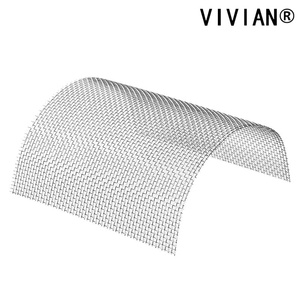
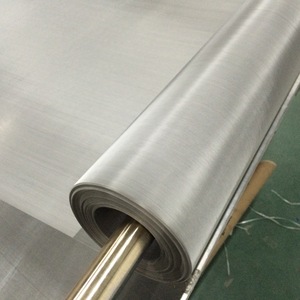
In high-differential pressure filtration, conventional plain weave wire cloth often reaches structural limitations. Because plain weave follows a rigid single-over, single-under warp-and-weft sequence, the maximum wire diameter is constrained by the severe bending angle applied during mechanical crimping. When filtration processes require pore sizes down into fine micrometric thresholds (below 63 microns) without sacrificing tensile integrity, twill weave wire mesh serves as the metallurgical solution.
In twill weaving, each weft wire floats across two warp wires sequentially before crossing beneath the subsequent two wires (a 2/2 twill cycle), offsetting the crossing points between adjacent rows. This geometrical arrangement produces the characteristic diagonal twill lines. More crucially, it substantially reduces the curvature and mechanical strain imposed on each individual strand. As a result, factory looms can interlock heavier wire diameters inside a dense weave pattern, producing high mechanical strength, remarkable resistance to hydraulic collapse, and dependable dimensional aperture stability under pulsating pressure cycles.
| Weave Morphology | Weaving Kinematics | Aperture Stability | Tensile / Pressure Tolerance | Primary Industrial Role |
|---|---|---|---|---|
| Plain Weave | 1 over / 1 under pattern | Rigid, square geometry | Moderate (limited by wire gauge) | General sizing, screening, light strainers |
| Square Twill Weave | 2 over / 2 under cycle | Uniform diagonal distribution | High (supports heavier wire gauges) | High-viscosity filtration, catalyst screens |
| Twill Dutch Weave | Coarse warp / Micro weft driven | Zero direct line-of-sight path | Extremely High (resists backpressure surges) | Hydraulic aerospace loops, marine fuel filters |
| Reverse Twill Dutch | Dense warp / High count arrangement | Continuous slotted micro-slits | Superior transverse mechanical rigidity | Continuous polymer melt extrusion screen changers |
Tailoring corrosion-resistant metallurgy and precise aperture geometry to Greece’s maritime, agrochemical, and petroleum processing hubs.
Operating out of the global shipping corridor anchored by Piraeus, Perama, and Syros, commercial fleets face stringent IMO D-2 and USCG discharge regulations. Twill Dutch woven mesh packs in SS 316L, 254 SMO, and Monel 400 provide 20–40 micron filtration for ballast intake systems. Their inter-wire geometry stops invasive organisms and coastal silt while resisting pitting corrosion from the warm, highly saline waters of the Aegean and Ionian Seas.
Greece’s major refining complexes at Aspropyrgos, Elefsina, and Corinth require continuous high-temperature, high-pressure separation. Ambani Metals delivers heavy-gauge twill weave media and column internals to support cracking reactions, amine gas sweetening, and catalyst retention. These elements withstand exposure to sour gas, sulfuric compounds, and thermal cycling up to 600°C without wire loosening or aperture creep.
Greece is renowned globally for premium Extra Virgin Olive Oil (EVOO) produced across the Peloponnese and Crete. Modern decanter centrifuges and pressurized polishing filters use precision 316L food-grade twill weave wire cloth. The weave's high aperture consistency removes fine vegetative tissue, pomace residues, and suspended micro-particulates without stripping natural polyphenols or compromising clarity.
How decarbonization mandates, desalination investments, and green hydrogen supply chains are reshaping wire mesh procurement.
Faced with tourism spikes and water scarcity across the Cyclades and Dodecanese islands, municipal water utilities and resort infrastructures are investing in modular seawater reverse osmosis (SWRO) facilities. High-flow cartridge filters protected by Hastelloy C-276 and duplex stainless steel twill weave pre-strainers prevent abrasive silica, micro-plastics, and biological debris from damaging expensive membrane surfaces.
Under EU Net-Zero Industry guidelines, Greece's energy corridor in Western Macedonia and Alexandroupolis is pioneering green hydrogen production and offshore LNG regasification. Electrolyzer stacks demand pure nickel 200/201 and titanium wire cloth woven to strict twill profiles. These meshes function as current distributors and gas diffusion layers, providing superior conductivity and resistance to hydrogen embrittlement.
Greek procurement managers are moving away from multi-tiered traders in favor of verified direct mill exporters. Complete chemical composition tracing, raw material test certificates (EN 10204 3.1), and verified ASTM dimensional tolerances allow Hellenic engineering firms to shorten lead times, avoid counterfeit alloys, and satisfy strict European pressure equipment directives (PED).
Addressing compliance, metallurgy, lead times, and customs documentation for shipments into Piraeus, Thessaloniki, and Patras.
Combining heavy-duty fabrication, complete metallurgical traceability, and international export expertise since 1998.
Our raw wire rod and feedstocks are procured exclusively from top-tier primary stainless mills, with mill test certificates and full heat-number traceability provided for every order.
In-house tool design, progressive stamping, deep drawing, and CNC laser slitting eliminate outsourced delays and ensure repeatable dimensional accuracy across every batch.
Rigorous dimensional checks, optical aperture verification, tensile testing, and third-party inspection agencies (TUV, SGS, Lloyd's Register) accommodated upon request.
Over two decades delivering to 20+ countries across Europe, the Gulf, and the Americas, backed by reinforced export packaging and fast customs preparation.
Connect with our technical engineering team for hydraulic sizing, material selection, and project delivery schedules.