
- +91-9930498858Call / WhatsApp
- [email protected]Email Us
Precision-engineered column internals, high-precision honed shells, structural screening media, and plant containment systems manufactured under rigorous ASME and ISO standards.
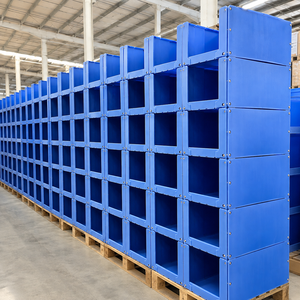
Chemical-resistant, lightweight copolymer polypropylene bins tailored for refinery staging, structured packing element storage, and fast plant-turnaround maintenance logistics.
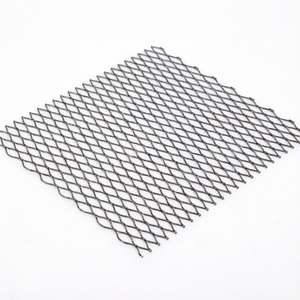
Heavy-duty diamond pattern expanded steel for industrial perimeter defense, walkway demister cages, and anti-glare structural boundaries across petrochemical complexes.
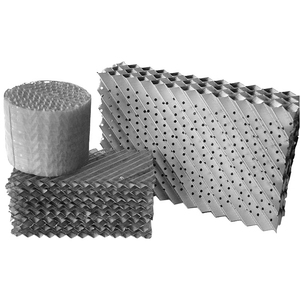
High-capillary corrugated wire gauze packing optimized for ultra-low pressure drop, vacuum fractionation, fine chemical distillation, and active pharmaceutical ingredient (API) columns.
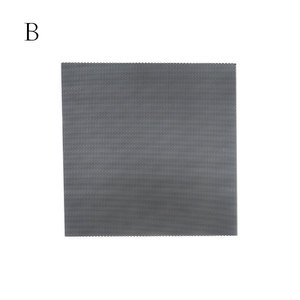
Precision slitted and stretched micro-aperture mesh used for particulate retention, catalyst support beds, flame arrestors, and acoustic filtration damping panels.
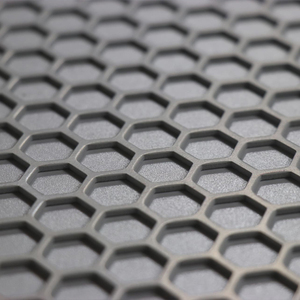
Architectural-grade wave profile perforated aluminum designed for plant acoustic barrier shrouds, cooling tower air-intake baffles, and internal architectural facades.
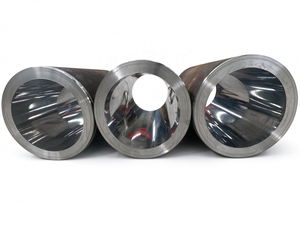
Cold drawn seamless heavy-wall piping (ST52, 42CrMo) with Ra ≤ 0.4μm internal micro-finish for high-pressure reboiler pumps, hydraulic actuators, and valve manifold bodies.
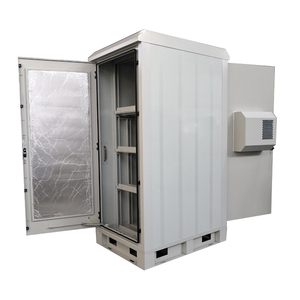
Weatherproof, NEMA 4X equivalent enclosure fitted with 600W DC climate systems to protect sensitive SCADA, chromatographic analyzers, and DCS modules in field operations.
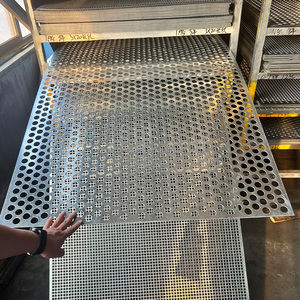
Aerodynamically modeled perforated panels engineered for particulate abatement, flaring wind-shear shielding, and bulk terminal environmental dust containment walls.
Mass transfer operations form the technological heart of continuous process engineering. Whether separating hydrocarbons in an atmospheric crude distillation tower (CDU), stripping sour gases within a Claus sulfur recovery unit, or isolating high-purity active pharmaceutical ingredients under fine vacuum, the thermodynamic efficiency of the entire chemical complex relies directly on the hydraulic and interfacial behavior of mass transfer equipment. In an era governed by stringent carbon footprint reduction, fluctuating feedstock profiles, and aggressive operating margins, chemical plant operators cannot afford hydraulic bottlenecks, premature flooding, or unforeseen corrosion degradation.
China has emerged as a premier global hub for the design, fabrication, and export of advanced mass transfer apparatus. By integrating deep metal-forming capabilities, precision CNC laser micro-perforating, specialized high-alloy automated welding, and rigorous computational fluid dynamics (CFD) modeling, leading Chinese suppliers deliver world-class column internals that rival traditional Western original equipment manufacturers (OEMs). EPC contractors across North America, the Gulf Cooperation Council (GCC), Southeast Asia, and Europe are increasingly re-engineering their procurement supply chains to leverage China's rapid prototype-to-production turnaround times, tight material traceabilities, and unmatched scale economies.
Selecting the correct column internal requires evaluating multi-phase fluid dynamics, physical foaming tendencies, operating pressure envelopes, turndown ratios, and fouling vectors. The optimal internal layout maximizes the active interfacial surface area ($a$, m²/m³) between vapor and liquid phases while minimizing mechanical liquid entrainment and vapor maldistribution.
Engineered for high liquid-load services and wide operational turn-downs. Sieve, fixed valve, movable cage valve, and bubble cap designs allow positive phase sealing, making them resilient in high-fouling, high-pressure hydrocarbon stabilization operations.
Fabricated from crimped, texturized metal sheets or fine woven wire gauze. Configured in alternating inclinations (typically 45° or 60°), providing massive specific surface area (up to 750 m²/m³) with exceptionally minimal pressure loss per theoretical equilibrium stage.
Stamped metallic saddles, Pall rings, cascade mini-rings, and raschig cylinders dumped into packed beds. Delivers high fouling tolerance, ease of replacement, and cost-effective retrofits for corrosive scrubbing, stripping, and flue gas absorption systems.
| Equipment Type | Specific Surface Area | Pressure Drop (ΔP/Stage) | Turndown Ratio | Fouling Resistance | Primary Industrial Applications |
|---|---|---|---|---|---|
| Wire Gauze Structured Packing | 450 – 750 m²/m³ | 0.15 – 0.4 mbar | 10:1 (Broad) | Low (Clean service only) | Fine chemicals, fragrances, vacuum isomer fractionation |
| Corrugated Sheet Structured Packing | 125 – 500 m²/m³ | 0.3 – 0.8 mbar | 5:1 – 8:1 | Moderate | Vacuum distillation, LNG cryogenic de-methanizers, CO2 capture |
| Movable Valve Trays | N/A (Stage-based) | 3.0 – 6.0 mbar | 4:1 – 5:1 | Moderate to High | Petroleum fractionators, de-ethanizers, crude columns |
| Fixed Sieve Trays | N/A (Stage-based) | 2.5 – 4.5 mbar | 2:1 (Narrow) | Low to Moderate | Steady-state chemical distillation, air separation units |
| Metallic Random Packing (Saddles) | 100 – 350 m²/m³ | 0.8 – 1.8 mbar | 3:1 – 4:1 | Very High | Acid gas scrubbers, CO2 strippers, wastewater stripping towers |
The lifetime and operational safety of mass transfer columns depend primarily on selecting metallurgy that matches fluid chemistry, chloride pitting potential, sulfur saturation, and high-temperature operating limits. Our engineering and export facilities maintain deep material stocks with mill-certified origins:
Standard architectural workhorse for general petrochemical, organic synthesis, food-grade refining, and ethanol distillation where general corrosion rates remain below 0.05 mm/yr.
High chromium and molybdenum ferritic-austenitic phase balance delivering superior yield strength and exceptional PREN values (>42) to combat chloride stress corrosion cracking.
Impervious to wet chlorine gas, hypochlorite, boiling hydrofluoric acid, and aggressive amine scrubbing solvents operating at elevated temperatures in sour gas units.
Ultra-low weight, high-integrity corrosion barrier media utilized in harsh chlorine dioxide bleaching, nitric acid distillation, and coastal seawater desalination columns.
International procurement paradigms within global engineering, procurement, and construction (EPC) conglomerates have fundamentally shifted over the past five years. Sourcing specialists are abandoning fragmented, single-item purchasing models in favor of end-to-end engineered modular packages supplied directly by integrated Chinese manufacturing clusters. Key market forces driving this transition include:
1. Complete Skid Modularization & Pre-Assembly: Rather than sourcing trays, liquid distributors, flash feed pipes, and demisters from distinct sub-vendors, global buyers now mandate integrated pre-assembly. Columns are fabricated with internals test-fitted inside the shell workshops in China, verified with laser scanning, tagged, and packed into seaworthy export cassettes. This eliminates field installation interferences and cuts refinery turnaround downtime by up to 35%.
2. Digital Twin Integration & CFD Verification: Leading Chinese manufacturers provide proprietary and ANSYS Fluent-based CFD simulations of internal fluid dynamics. Plant operators receive verified velocity vector distribution contours and liquid hold-up profiles before raw metal is punched. Sourcing engineers now demand verified mathematical modeling of vapor maldistribution coefficients ($C_v \le 0.05$) directly in technical tender proposals.
3. Resilience in Supply Chain Lead Times: With integrated rolling mills, stamping press lines, precision wire-drawing facilities, and pickling-passivation yards housed under unified manufacturing complexes, Chinese suppliers deliver full tower revamp internals within 6 to 10 weeks, compared to 20 to 28 weeks often quoted by Western manufacturers experiencing fragmented vendor sub-tiers.
The industrial landscape for mass transfer equipment is undergoing a technological renaissance, fueled by the global clean energy transition, industrial decarbonization, and rapid advancements in computational manufacturing:
Carbon Capture, Utilization, and Storage (CCUS): The global rollout of post-combustion carbon capture facilities has triggered unprecedented demand for ultra-large diameter (exceeding 8 to 14 meters) absorption and stripping towers. Structured packings for CCUS require specialized low-pressure drop corrugation angles (e.g., modified Mellapak patterns) and high-wettability surface micro-texturing to maximize amine-CO2 interfacial chemical reaction kinetics while avoiding solvent degradation.
Dividing Wall Columns (DWC): The chemical industry is replacing energy-intensive two-column or three-column distillation sequences with integrated Dividing Wall Columns. A single vertical partition wall divides the shell into pre-fractionation and main separation zones. Sourcing DWCs demands internal manufacturers capable of fabricating sub-millimeter tolerance non-welded vertical wall sealings and dual-circuit liquid distributors that deliver precise splitting ratios.
Advanced Surface Engineering & Micro-Porous Texturing: By altering surface tension through micro-embossing, chemical vapor etching, and hydrophilic laser processing, modern structured packings maintain uniform film flow even at ultra-low liquid irrigation densities ($L < 0.2\text{ m}^3/\text{m}^2\cdot\text{h}$), effectively preventing dry patches that cripple mass transfer efficiency.
Over two and a half decades of relentless manufacturing refinement have positioned our facilities at the vanguard of international process equipment fabrication. We do not simply fabricate sheet metal; we engineer process certainty:
From precision high-tonnage deep drawing, multi-stage stamping, and CNC turret punching to micro-wire weaving and cold drawn cylinder honing, our manufacturing spans raw ingots to completed assemblies without reliance on uncontrolled third-party subcontractors.
Every piece of column internal, pipe, and mesh is linked via mechanical heat stamp to original EN 10204 3.1 Mill Test Certificates. We perform mandatory positive material identification (PMI), optical emission spectrometry, and hydrostatic tests prior to dispatch.
With an export footprint spanning over 20 nations across North America, the Middle East, Europe, and Asia-Pacific, our logistics division ensures export-grade vacuum-sealed barrier packaging, ISPM-15 treated wooden crating, and complete customs clearance documentation.
When selecting a Chinese mass transfer equipment supplier, procurement teams must look beyond initial unit pricing. The financial cost of premature column flooding, unscheduled plant shutdowns, or off-spec product outputs dwarfs the initial capital expenditure of internal hardware. We advise international buyers to execute the following due-diligence audit:
Verify that raw stainless steel, nickel, and titanium coils are sourced from Tier-1 mills with certified heat numbers and verified chemistry, backed by pre-dispatch third-party PMI testing.
Demand documented hydrodynamic calculations detailing weeping points, dumping limits, jet flooding velocities, downcomer backup levels, and pressure drops across the complete operating envelope.
Require photographic and dimensional pre-assembly sign-offs on full tray circles and distributor levels on shop assembly floors prior to packing to ensure flawless field installation.
Connect with our senior technical specialists to discuss tower hydraulic calculations, receive formal material certifications, or request a rapid turn-around proposal for your chemical processing installation.