
- +91-9930498858Call / WhatsApp
- [email protected]Email Us
Precision-engineered components delivering maximum structural stability, rigorous mechanical tolerances, and superior flow integrity under severe mechanical and thermal stress.
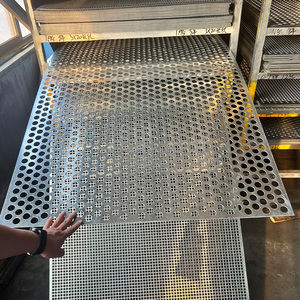
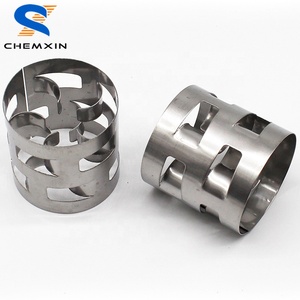
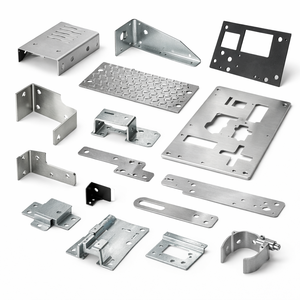
As a leading China-based precision manufacturing hub, our manufacturing floor deploys high-tonnage multi-station CNC punching presses, CNC laser tube cutters, and automated continuous spiral-weld systems to deliver perforated steel tubes configured for extreme-load industrial duties. Perforated steel tubes are not merely passive screening conduits; they act as primary load-bearing structural cores in depth filtration, high-temperature exhaust silencers, petrochemical catalyst beds, and downhole sand-control completions.
Selecting the optimal perforated tube design requires balancing hydraulic aperture open area against transverse collapse resistance and burst ratings. Our product line encompasses three primary mechanical architectures tailored to international industrial specifications:
Fabricated from continuous perforated metal strip, helically wound and welded via submerged arc or high-frequency induction. The spiral seam configuration redistributes mechanical shear stress evenly across the circumference, resulting in exceptionally high resistance to radial collapse under downhole external hydrostatic load.
Produced by roll-forming precision-punched sheet plates followed by automated Longitudinal TIG or Plasma Arc Welding. Featuring calibrated unperforated margins at both pipe ends and seam boundaries, these tubes guarantee tight out-of-roundness tolerances suitable for sliding-fit sleeve filtration assemblies and hydraulic filter housings.
Integrated assemblies combining a heavy-gauge perforated stainless steel structural core surrounded by sintering layers of ultra-fine stainless steel wire mesh or micro-expanded metal foils. Engineered explicitly for high-velocity separation, aerospace fluid loops, and corrosive hot-gas catalyst recovery units.
Specifying perforated steel tubing requires rigorous cross-examination of chemical exposure, media acidity (pH levels), operating temperature, and hydrodynamic pressure differentials. Below is a comparative operational matrix to guide global procurement managers and process engineers in selecting suitable alloys and perforation parameters.
| Material Grade | Primary Mechanical Characteristics | Corrosion Resistance Threshold | Recommended Industrial Applications |
|---|---|---|---|
| Austenitic SS 304 / 304L | High tensile ductility; yield strength ≥ 205 MPa; excellent cold forming ability. | General atmospheric corrosion; resistant to clean industrial fluids and organic acids. | Food & beverage processing; automotive silencer baffles; standard industrial strainer baskets. |
| Marine SS 316 / 316L | Added 2.0–3.0% Molybdenum; superior creep resistance at elevated temperatures. | Outstanding pitting and crevice corrosion resistance in high-chloride, acidic fluids. | Offshore platform sea-water intakes; desalination filter housings; active pharmaceutical API production. |
| Duplex 2205 (UNS S32205) | Dual-phase austenitic-ferritic microstructure; yield strength ≥ 450 MPa (double SS 316). | Exceptional resistance to Chloride Stress Corrosion Cracking (SCC) and sour crude (H2S). | Downhole oil and gas casing liners; marine subsea manifolds; harsh petrochemical heat-exchanger tubes. |
| Specialty Alloys (Hastelloy / Monel) | High-nickel matrices maintaining structural integrity across −196°C to +650°C. | Extreme immunity to hydrofluoric, hydrochloric, and hot concentrated sulfuric acid streams. | Nuclear waste reclamation; flaring gas systems; specialized chemical reactors and mass transfer columns. |
The global demand for perforated steel tubing is entering a transformative era driven by stringent carbon mitigation protocols, subsea extraction deep-water expansions, and ultra-high-efficiency process revamps. Industrial supply-chain leaders are actively transitioning procurement strategies away from commoditized purchasing toward specialized, lifecycle-optimized configurations.
Carbon Capture, Utilization, and Storage (CCUS) infrastructure requires massive amine absorption and stripping towers. Perforated tubular cores function as primary fluid distributors and structured packing retainers. Buyers now require specialized low-carbon certified stainless steels (316L with ≤0.03% C) that maintain strict resistance to amine degradation and thermal stress corrosion across continuous 200°C gas passes.
Leading EPC contractors across Europe, the Middle East, and North America have pivoted from initial CapEx purchase prices to multi-year lifecycle metrics. Specifying micro-welded, precision-machined perforated tubing reduces unplanned shut-ins and membrane blowout accidents caused by localized hydraulic turbulence and hole-edge micro-fissuring, yielding double-digit savings in operating maintenance.
Traceability documentation is non-negotiable for critical refinery and nuclear applications. Advanced buyers mandate end-to-end heat-number traceability linked directly to digital optical inspection records. Every lot of our perforated steel tubing comes accompanied by 3.1 Mill Test Certificates verifying alloy chemistry, radial roundness tolerances, and hydrostatic test certifications.
Decades of metallurgy experience, integrated stamping facilities, and dedicated export logistics provide a frictionless procurement platform for Tier-1 contractors worldwide.
We source raw coils exclusively from primary mills (such as Jindal, Baosteel, and TISCO), eliminating recycled scrap contamination. Full MTC per EN 10204 3.1 is standard with every shipment.
In-house progressive dies and automated multi-station punch heads yield consistent aperture spacing with pitch variances under ±0.05 mm, ensuring uninterrupted fluid dynamics.
Our Quality Management System supports on-site third-party inspection (SGS, BV, TÜV, Lloyd's Register) for weld penetrant, ultrasonic testing, dimensional verification, and pressure trials.
Tubes are packaged inside moisture-barrier wrapped crates, reinforced steel-framed boxes, or fumigated timber containers with internal cellular dividers to prevent surface abrasion during transit.
Direct technical answers addressing hydraulic capacity calculations, tooling customizability, quality compliance, and international shipping protocols.
For a standard 60-degree staggered round hole layout, the formula is: OA% = (d2 × 90.69) / C2, where d is hole diameter and C is center-to-center pitch distance. As open area percentage climbs above 35–40%, structural hoop strength and axial collapse ratings decrease exponentially. Our application engineering team provides finite element hydraulic calculations to strike the perfect equilibrium between permissible pressure drop (ΔP) and external mechanical crush resistance.
Our standard production tolerances conform to ISO 2768-m. Outer diameter tolerances are maintained within ±0.15 mm to ±0.30 mm depending on nominal pipe size. Wall thickness variation is maintained within ±5% of raw coil specs. Overall length is controlled via precision CNC saw or laser cutoff within ±1.0 mm, with cut ends squared to 90° ± 0.5° and thoroughly deburred or bevelled for field welding.
Yes. We routinely fabricate tubes with designated blank (solid) margins along the longitudinal seam, as well as solid tube ends (e.g., 25 mm, 50 mm, or custom lengths) to accommodate end caps, threading (NPT, BSP, or API casing threads), quick-coupling grooves, or flanged connection rings. Custom tooling setups allow precise control of perforation start and stop positions.
Every industrial production order comes complete with an inspection dossier that includes: Raw Material Mill Test Certificates (chemical composition and mechanical testing), Liquid Penetrant Inspection (DPI) reports for seam welds, Dimensional Verification Data Sheets, and Hydrostatic or Pneumatic Leak-Test Certificates. Third-party testing by agencies like SGS, Intertek, or Bureau Veritas can be coordinated upon request.
To provide a firm quotation within 24 hours, please submit: (1) Material specification grade (e.g., SS 304, 316L, Duplex 2205); (2) Tube dimensions including OD, wall thickness, and overall cut length; (3) Perforation parameters including hole diameter, hole center pitch, and hole arrangement (60° staggered or inline); (4) Required solid margin dimensions; (5) Total quantity or procurement volume; and (6) Delivery destination terms (FOB, CIF, or DDP).