
- +91-9930498858Call / WhatsApp
- [email protected]Email Us
Precision-manufactured in compliance with ASTM E2016-20, ISO 9001:2015, and ASME standards. Explore certified products engineered for high fouling resistance, cryogenic-to-high thermal stability, and maximum mass transfer efficiency.
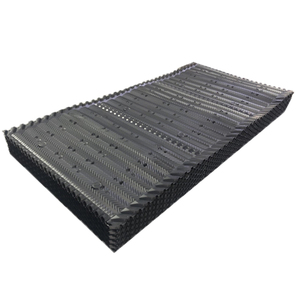
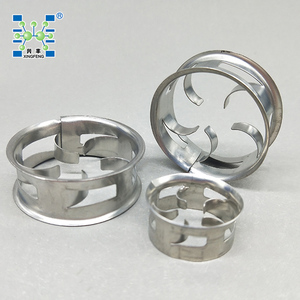
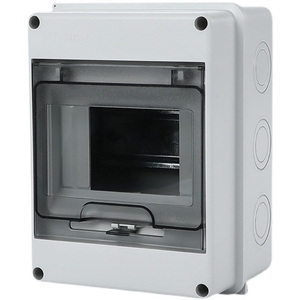
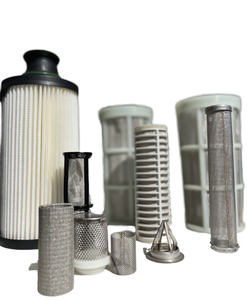
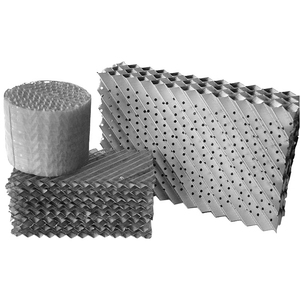
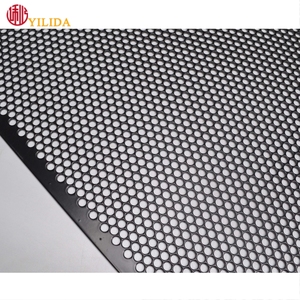
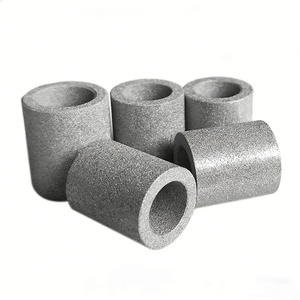
Operating as an authoritative manufacturing force in the industrial metallurgy domain, our integrated production network bridges the gap between raw wire drawing and complex chemical process fabrication. While generic vendors merely trade slit wire cloth, our manufacturing ecosystem commands full-spectrum production control: from high-speed shuttleless rapier looms weaving micron-rated Dutch twill weaves to 800-ton hydraulic deep-drawing presses and vacuum sintering chambers operating at 1,180°C.
Building upon decades of specialized engineering experience—grounded in rigorous mass transfer and liquid separation equipment—we fabricate distillation column trays (including floating valve, fixed valve, bubble cap, and sieve configurations), high-efficiency structured packings, random tower packing elements, demister pads, and precision perforated filter assemblies. Our supply chain leverages primary-grade stainless steel from established global mills (including certified heats of AISI 304, 304L, 316, 316L, 321, 904L, Duplex 2205, and specialty nickel alloys such as Hastelloy C-276, Monel 400, and Inconel 625).
Information Gain Metric: Every batch of stainless steel woven wire mesh and mass transfer internal is backed by strict metallurgical traceability, including EN 10204 3.1 Mill Test Certificates (MTC), spectroscopic positive material identification (PMI), bubble point testing per ISO 4003, and dimensional inspection reports compliant with ASTM E2016.
Equipped with computerized German and domestic heavy-duty weaving machinery capable of producing plain, twilled, reverse plain Dutch, and multipattern twilled Dutch weaves down to 1-micron aperture retention.
Full design and hydraulic rating analysis for distillation columns, acid mist eliminators, wire gauze structured packing, and random tower elements tailored to petrochemical fractionation and pharmaceutical stripping.
Zero-compromise QA protocols: automated optical inspection (AOI) for aperture uniformity, salt spray testing (ASTM B117), tensile strength validation, and ultrasonic degreasing for pharmaceutical-grade purity.
Selecting the appropriate stainless alloy balance ensures capital efficiency while preventing stress corrosion cracking (SCC), intergranular attack, and localized pitting in aggressive processing environments.
| Alloy Grade | Nominal Chemistry | Operating Temp Limit | PREN Value | Primary Industrial Applications |
|---|---|---|---|---|
| AISI 304 / 304L | 18Cr - 8Ni (Low C) | Up to 550 °C | ~ 18.0 - 20.0 | General food filtration, architectural cladding, HVAC intake screens, municipal water treatment. |
| AISI 316 / 316L | 16Cr - 10Ni - 2.5Mo | Up to 650 °C | ~ 23.0 - 25.0 | Marine hardware, pharmaceutical separation, chemical distillation packings, flame arrestor elements. |
| AISI 321 / 310S | 25Cr - 20Ni / Ti stabilized | 800 °C to 1,150 °C | ~ 25.0 | Industrial furnace conveyor belting, petrochemical thermal crackers, flare stacks, exhaust filtration. |
| Duplex 2205 | 22Cr - 5Ni - 3Mo - 0.16N | -50 °C to 300 °C | ≥ 35.0 | High chloride environments, offshore oil/gas demisting, phosphoric acid scrubbers, high mechanical stress. |
| Hastelloy C-276 | Ni - 16Mo - 16Cr - 4W | Up to 1,000 °C | ≥ 68.0 | Severe chemical synthesis, flue gas desulfurization (FGD), wet chlorine gas filtration, sour gas wells. |
The global procurement framework for stainless steel mesh and mass transfer components is experiencing a structural paradigm shift. Plant engineers and corporate supply chain directors are moving away from spot-market, lowest-unit-cost buying toward lifecycle optimization and supply-chain resilience.
Single-layer woven cloth is increasingly being replaced by 5-layer diffused bonded sintered wire mesh laminates. Buyers prioritize mechanical backwash resistance and elimination of wire migration in high-velocity gas lines.
Multinational procurement executives now mandate verifiable carbon footprints for raw steel. Chinese mills utilizing electric arc furnace (EAF) recycling with scrap-dominant melts are preferred over blast furnace operations to reduce Scope 3 emissions.
Rather than importing standard bulk rolls, international buyers demand pre-cut discs, laser-welded filter cylinders, pleated packs, and framed column segments to eliminate post-import scrap loss and manual fabrication overhead.
China's top stainless steel mesh and separation equipment factories have transitioned from manual mechanical operations into intelligent, digitally monitored facilities. The convergence of metallurgical science and high-speed mechatronics has unlocked unprecedented tolerances in micro-filtration and mass transfer components.
1. Sub-Micron Precision Shuttleless Weaving: Modern looms employ computerized tension control systems that continuously measure warp and weft wire drag. This eliminates internal residual stress within the mesh roll, preventing bowing, curling, or aperture distortion during downstream stamping and slitting.
2. Advanced Diffusion Sintering in Clean-Room Vacuums: By bonding multiple layers of woven wire cloth under high vacuum conditions without adding brazing fluxes, our sintered elements achieve uniform tensile capacity exceeding 350 MPa, while maintaining uncompromised chemical purity suitable for cGMP pharmaceutical APIs.
3. Computational Fluid Dynamics (CFD) Column Modeling: For structured packing and random mini cascade rings, proprietary hydraulic simulations allow our engineers to forecast flooding points, liquid hold-up profiles, and pressure gradients across specific vapor-liquid ratios before cutting metal.
Direct, authoritative engineering guidance addressing critical purchasing, quality assurance, and metallurgical specifications.
Connect directly with our chemical mass transfer and metallurgy technical sales team. Upload your specification sheets, drawings, or request mill-certified samples for expedited quotation within 12 hours.
Send an Inquiry