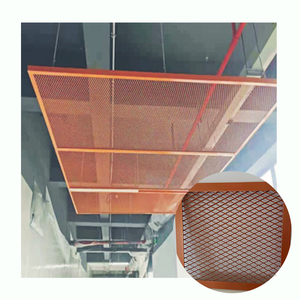
Decorative Aluminum Expanded Metal Mesh Suspended Ceiling
Alloy 3003/5052
Anodized / PVDF
Acoustic Damping

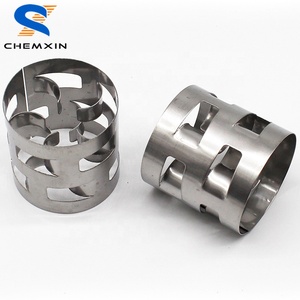
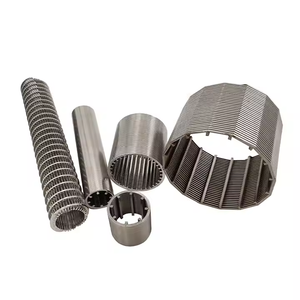
Standard and specialized geometries engineered to ASTM, DIN, and ISO specifications for high-vacuum fractionation, extreme temperature hydraulic systems, and architectural structural facades.
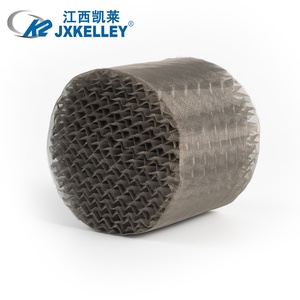
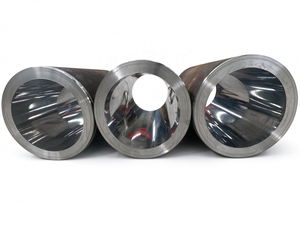
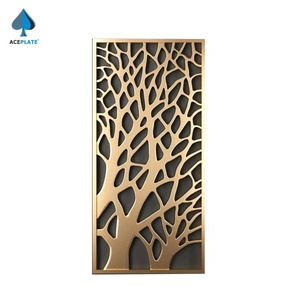
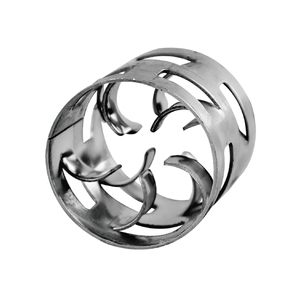
The manufacturing of precision deep drawn cans, seamless enclosure shells, and cylindrical metal housings requires a comprehensive understanding of plastic strain ratios (r-values) and work hardening exponents (n-values). Unlike standard stamping or roll-forming processes that produce longitudinal weld seams, deep drawing forces a flat sheet metal disc through a forming die via progressive punch impacts. This produces a monolithic, leak-proof vessel characterized by uninterrupted grain structures, exceptional burst-pressure tolerance, and smooth inner surfaces.
When sourcing from a qualified China deep drawn can supplier and exporter, engineering buyers evaluate wall thinning, ironing thresholds, and the limiting drawing ratio (LDR). In advanced deep drawing, the blank holder force (BHF) is dynamically modulated through hydraulic nitrogen cushions or closed-loop servo presses. This dual control prevents both wrinkling in the flange zone and tearing across the punch radius. For ultra-deep vessels—where the length-to-diameter ratio surpasses 3:1—multi-stage redraw operations (direct and reverse redrawing) coupled with intermediate protective-atmosphere annealing cycles are used. This prevents work-hardening cracking in austenitic stainless steels (AISI 304, 304L, 316, 316L) and nickel superalloys (Monel, Inconel, and Hastelloy).
| Alloy Classification | Material Designation | Tensile / Yield Strength (MPa) | Max Draw Ratio (1st Draw) | Typical Industrial Target Application |
|---|---|---|---|---|
| Austenitic Stainless | AISI 304 / 316L | ≥ 520 / ≥ 210 | 1.90 - 2.15 | Sanitary food processing, separation columns, chemical sensor canisters |
| Corrosion Superalloy | Hastelloy C-276 / Monel 400 | ≥ 690 / ≥ 280 | 1.75 - 1.95 | Offshore sour gas scrubbers, marine instrumentation, hydrofluoric acid service |
| High-Strength Carbon | ST52 / E355 / Q345B | ≥ 600 / ≥ 355 | 2.00 - 2.20 | Hydraulic piston reservoirs, cold drawn honed barrels, structural enclosures |
| Non-Ferrous Lightweight | Alloy 3003-O / 5052-H32 | ≥ 190 / ≥ 130 | 1.80 - 2.05 | Architectural acoustic baffles, thermal shielding, EV capacitor shells |
To ensure stability under extreme hydraulic cyclic fatigue, internal surfaces can undergo mechanical roller burnishing, isotropic super-finishing, or honing down to Ra ≤ 0.4 μm. This mirror-grade micro-finish prevents stress concentrations, minimizes fluid boundary friction in separation towers, and maintains seal integrity across severe pneumatic strokes.
Key technological, regulatory, and supply chain shifts driving global procurement strategies across Tier-1 EPCs and OEM manufacturing operations.
Procurement teams are shifting away from conventional hydraulic presses toward CNC multi-axis servo-electric presses. These systems allow microsecond ram speed modulation throughout the stroke. The result is superior dimensional repeatability on thin-gauge cans, minimal wall thinning variations (±0.015mm), and near-zero metallurgical micro-fracturing along bottom draw radii.
Raw material cost volatility is driving demand for near-net-shape deep drawing. By integrating nested blank optimization software, in-die sensor gating, and precision edge trimming, Chinese exporters can deliver yield utilization rates above 88%. This significantly reduces embodied carbon metrics for projects governed by EU CBAM and North American ESG mandates.
Global buyers now routinely require deep draw lots to include mill test certificates (MTCs), raw material heat tracing, optical laser CMM point clouds, and PMI (Positive Material Identification) spectroscopic data. Integrating real-time quality control documentation with seaworthy packaging protects against cross-contamination and simplifies port customs clearance.
Backed by over a quarter-century of heavy engineering and precision sheet metal fabrication, our manufacturing infrastructure bridges raw mill processing with ultra-precision CNC forming. We operate as an integrated technical partner for global clients, offering clear quality advantages:
Direct sourcing of stainless steels, high-purity nickel alloys, and certified pressure-vessel plate. Every batch includes full heat-number traceability and EN 10204 3.1 inspection certification.
Complete in-house control spanning tool design, progressive deep drawing, precision CNC punching, laser cutting, automated seam welding, and surface honing. No fragmented sub-contracting risk.
In-house optical coordinates inspection, hydrostatic pressure test tanks, and surface roughness interferometry. We routinely accommodate third-party inspection agencies such as SGS, TÜV, and Bureau Veritas.
Standardized moisture-barrier wrapping, heavy-duty fumigated wooden crates, internal shock buffers, and pre-organized multi-destination customs paperwork for on-time delivery across 20+ countries.
Detailed engineering and supply chain answers covering tolerances, alloy selection, production tooling, and export logistics.