
- +91-9930498858Call / WhatsApp
- [email protected]Email Us
Engineered via progressive transfer presses, continuous draw dies, and micro-precision hydraulic systems. Explore our standard and custom industrial metal solutions.
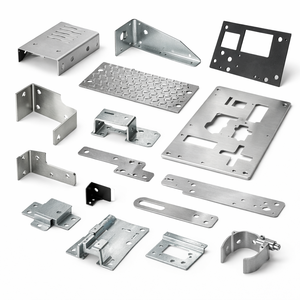
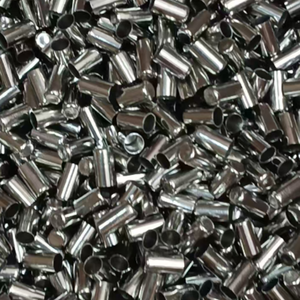
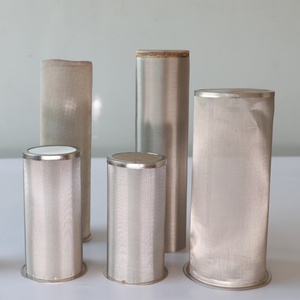
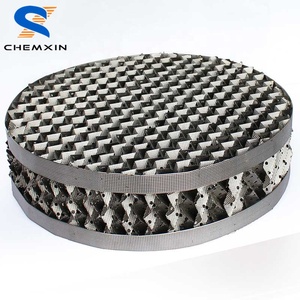
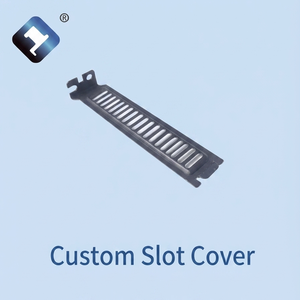
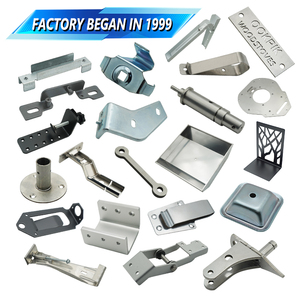
Achieving defect-free, monolithic deep drawn shells requires radical control over blank-holder pressures, anisotropic draw ratios, and inter-stage annealing.
In wholesale precision manufacturing, deep drawn shells represent the pinnacle of cold metal deformation. Unlike simple metal spinning or multi-piece welded canisters, deep drawing forms a flat sheet blank into a hollow cylindrical, rectangular, or complex contoured enclosure through severe radial tension-compression stress states. To eliminate wrinkling, thinning, and orange peel effects on thin-gauge stainless steel (SS304/316L), aluminum, titanium, or refractory metals such as Niobium, our technical lines deploy multi-stage progressive dies and servo-mechanical transfer presses capable of micrometer-level repeatable blank-holding force.
We balance plastic strain ratios (r-values) and work-hardening exponents (n-values) to maintain an LDR between 2.0 and 2.2 on first draws, preventing hoop stress fracture and excessive flange wrinkling on ultra-deep aspect ratio shells.
For austenitic alloys and refractory niobium crucibles prone to rapid strain hardening, our hydrogen-nitrogen atmosphere furnaces execute continuous inter-pass recrystallization annealing, preventing residual stress cracking without oxidation.
Controlled multi-step ironing dies maintain homogeneous wall thickness within ±0.015mm across entire axial lengths, yielding Ra ≤ 0.4 μm mirror finishes that eliminate expensive post-drawing mechanical polishing procedures.
| Material Classification | Common Standard Grades | Wall Thickness Range | Max Depth-to-Diameter | Primary Industrial Applications |
|---|---|---|---|---|
| Austenitic Stainless Steel | SS304, SS304L, SS316, SS316L | 0.15 mm – 4.0 mm | Up to 4.5:1 (Multi-draw) | Mass transfer columns, solenoid valves, sensor capsules |
| Refractory & Pure Metals | Niobium R04200/R04210, Pure Nickel | 0.20 mm – 2.5 mm | Up to 3.0:1 | Lab crucibles, sputtering targets, alkali battery cases |
| Nickel-Base Superalloys | Hastelloy C-276, Inconel 625, Monel 400 | 0.30 mm – 3.2 mm | Up to 2.8:1 | Subsea gas valves, severe corrosion chemical reactor cups |
| Non-Ferrous Alloys | Copper C11000, Brass H65, Al 5052/6061 | 0.25 mm – 5.0 mm | Up to 5.0:1 | EMI shielding canisters, automotive connectors, heat sinks |
How automation, lightweighting, and tightened geopolitical supply chain protocols are transforming wholesale sourcing for industrial shells through 2026–2030.
Global procurement teams in automotive and electronic engineering are actively phasing out solid-machined billet parts and porous die castings. Converting to deep drawn shells cuts raw material scrap rates from ~60% down to under 15%, delivering structural high-yield strength through controlled cold work crystallization while lowering net component weight by up to 35%.
Wholesale customers demand zero-defect delivery without third-party secondary setups. Modern progressive transfer presses now execute in-die knurling, lateral pierce slots, reverse flanging, bottom hole extrusion, and thread tapping within the primary press cycle, reducing multi-setup handling errors and shortening cycle times from weeks to hours.
Modern applications in semiconductor manufacturing, lithium energy storage, and pharmaceutical vapor-liquid contact require complete elimination of chlorine- and sulfur-containing drawing lubricants. Advanced procurement orders now stipulate vacuum vapor degreasing, cleanroom ultrasonic washing, and surface cleanliness validation to VDA 19 / ISO 16232 standards.
ESG compliance and carbon accounting are shifting wholesale buyer criteria. Sourcing protocols now demand mill test certificates (MTCs) to EN 10204 3.1 directly tied to virgin steel heats. Supplying factories with documented closed-loop scrap recycling and reduced energy-intensity presses are earning prioritized supplier status across EU and US supply frameworks.
Combining 25+ years of specialized fabrication, mill-direct stainless supply, and world-class quality verification under one roof.
Direct supply partnerships with tier-one stainless and specialty alloy mills ensure all coils, sheets, and tubes have full mechanical and chemical traceability with EN 10204 3.1 certification.
Full CAD/CAM mold engineering with slow-wire EDM and high-precision CNC tool rooms. We develop, tune, and test compound dies in-house, drastically trimming sample lead times to 15–20 days.
Equipped with optical coordinate measuring machines (CMM), automated vision sorting, pneumatic leak decay instruments, and surface roughness profilers to guarantee zero defect leakage.
Over two decades supplying 20+ countries including USA, Canada, Australia, and the Gulf region. Anti-corrosive VCI packing and fumigated seaworthy crating ensure safe ocean and air arrivals.
Direct technical answers addressing engineering feasibility, tooling investments, alloy selection, and lead times.
Submit your CAD files, process data sheet, or target dimensional requirements to our engineering team. Receive rapid DFM feedback, tooling estimates, and factory-direct volume pricing within 24 hours.
Get Catalog