
- +91-9930498858Call / WhatsApp
- [email protected]Email Us
Explore our certified continuous screen changer discs, sintered multi-layer packs, structured gauze assemblies, and tight-tolerance deep-drawn filter vessels engineered for extreme polymer melt operations.
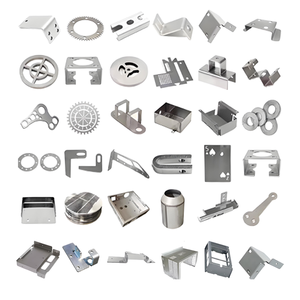
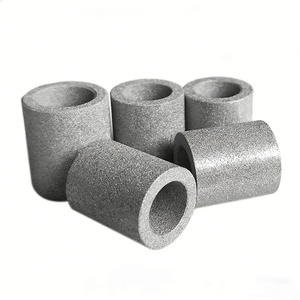
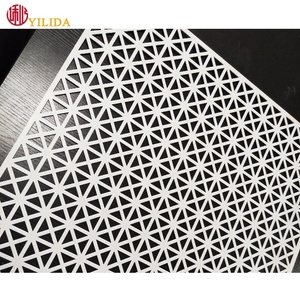
A technical evaluation framework assessing production capabilities, metallurgical validation, and quality management across global extrusion screen producers.
Polymer extrusion facilities, masterbatch producers, and blown-film converters require filtration hardware that guarantees unyielding micron retention, zero wire migration, and the structural integrity to withstand differential pressures (ΔP) exceeding 200 bar. Finding elite manufacturers capable of engineering custom spot-welded, rim-bound, and diffusion-sintered screens requires parsing through raw capacity, metallurgical precision, and certified tolerances.
The global marketplace for extruder screen packs is anchored by manufacturers that combine multi-axis weaving looms with in-house progressive die stamping and clean-room ultrasonic cleaning. Whether processing virgin medical-grade PEEK, commodity polyolefins (LLDPE/HDPE/PP), or contaminated post-consumer recycled (PCR) resin streams, these top 10 manufacturing operations define industry performance benchmarks:
Global leader in mass transfer equipment, precision-drawn filtration hardware, and specialty alloy extruder screens. Known for full heat-traceable 304L/316L Dutch weave meshes, custom spot-welded screen packs, and Inconel/Hastelloy fabrication for high-corrosive fluoropolymer processing.
Internationally recognized for ultra-dense weave precision wire cloths, cleanroom screen fabrication, and aerospace-level screening consistency for high-value optical grade polycarbonates.
Pioneers in high-strength reverse Dutch weave belt filter meshes optimized specifically for automated continuous screen ribbon changers in sheet and blown-film extrusion.
Specializes in sintered stainless steel fiber web media, delivering deep-bed depth filtration for ultra-fine sub-micron polymer purity without rapid delta-P choking.
Celebrated for ultra-fine micro-wire drawing technologies, producing flawless alloy meshes widely deployed in Japanese fine-denier spunbond textile spinning units.
High-volume manufacturing cluster offering rapid toolroom turnaround, extensive roll stock supply, and highly competitive unit economics on standard circular spot-welded disc packs.
Focuses on advanced diffusion-bonded porous metallic plates and high-tensile auto-screen belt meshes engineered for severe mechanical stress applications.
Pioneers of ultra-precise micronic weave uniformity. Preferred in micro-extrusion lines where variable opening distributions cause melt flow anomalies and optical defects.
Expansive North American supplier maintaining large converting centers capable of rapid stamping of diverse rim-bound and spot-welded disc geometries.
Custom converter serving European polymer operations with tight-tolerance laser-cut meshes, circular screen discs, and verified metallurgical alloy compositions.
Analyze the fluid dynamics, particulate loading capacity, and mechanical burst profiles across predominant mesh configurations.
| Weave / Construction Type | Filtration Rating (μm) | Mechanical Rigidity | Differential Pressure (ΔP) | Primary Industrial Use Case |
|---|---|---|---|---|
| Plain Square Weave (SS304/316) | 150 – 1500 μm | Moderate | Lowest Initial ΔP | Coarse recycling, scrap recovery, breaker plate pre-filtration |
| Plain Dutch Weave (PDS) | 25 – 250 μm | High | Controlled | Blown film, compounding, masterbatch formulation |
| Twilled Dutch Weave (TDS) | 5 – 80 μm | Very High | Moderate-High | Ultra-thin cast film, BOPP, medical-grade extrusion |
| Reverse Dutch Weave (Auto-Belt) | 40 – 200 μm | Extreme Tensile Warp | Low-Moderate | Continuous automatic screen changers (ribbon belt type) |
| Sintered 5-Layer Composite | 2 – 100 μm | Maximum (No migration) | Stable, Reusable | Critical optical resins, polycarbonate, PET bottle-grade spinning |
How the green transition, PCR circularity, and Industry 4.0 automation are shifting operational criteria for industrial screen buyers.
Global mandates requiring minimum 30% recycled plastics have drastically increased contamination loadings (gels, wood fibers, paper residue, degraded crosslinked polymers). Modern screen packs must leverage multi-tier gradient assemblies (e.g., 20/40/80/120/20 mesh) that retain contaminants across progressive depths rather than rapidly blinding a single fine mesh layer.
High extrusion pressures frequently induce "wire shifting" or mechanical distortion in loose woven cloths, causing sudden contamination breakthroughs. Extrusion engineers are shifting toward thermally sintered 3-layer and 5-layer plates where warp and weft intersections are metallurgically fused, permanently freezing pore geometry under 30+ MPa pressure drops.
Manual screen changing causes machine shutdowns, thermal degradation, and line-speed drops. High-output lines increasingly mandate Continuous Screen Changers (CSC) utilizing reverse Dutch weave belts. These belts demand ultra-high tensile stainless warp wires capable of surviving aggressive hydraulic pulling forces without edge curling or unraveling.
Combining 25+ years of Indian manufacturing expertise with certified global logistics, in-house tooling, and exhaustive raw material traceability.
100% prime mill-sourced raw materials. Every coil and wire spool ships with full EN 10204 3.1 Material Test Certificates (MTC) and complete heat numbers, eliminating alloy substitutions.
Our in-house metal stamping mold fabrication ensures ±0.02mm tooling tolerance, delivering burr-free edges on discs, kidney packs, and aluminum/copper rim-bound packs that guarantee zero leakage.
Beyond SS304/316, we fabricate screens in Inconel 600/625, Hastelloy C-276, Monel 400, pure Nickel, and Phosphor Bronze for fluoropolymers (PTFE/PVDF), corrosive resins, and flame retardants.
Exporting to 20+ countries including the USA, UAE, Australia, Canada, and Saudi Arabia. Heavy wooden-crate packaging with desiccant protection ensures zero marine corrosion during transit.
Real-world engineering answers addressing common questions from plant managers and sourcing teams.
Consult with our mass transfer and filtration engineers today to reduce extrusion line downtime, eliminate screen failures, and receive factory-direct pricing on custom-stamped screen assemblies.
Send an Inquiry