Technical Benchmark: The Physics and Engineering of Wire Gauze Packing
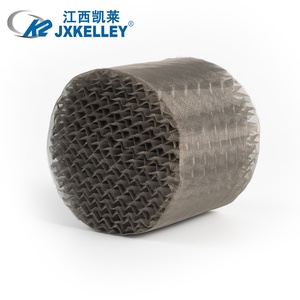
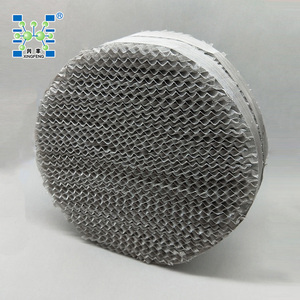
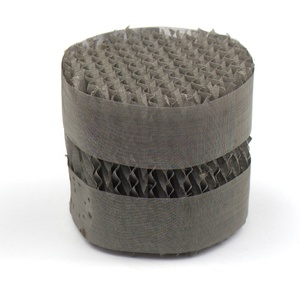
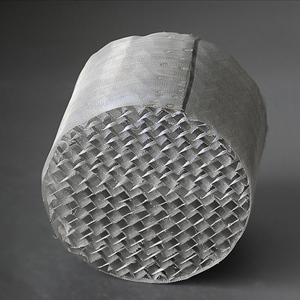
Wire gauze structured packing represents the undisputed gold standard in high-vacuum chemical fractionation, reactive distillation, and close-boiling isomer separation. Unlike corrugated sheet metal packings that depend exclusively on dynamic hydraulic liquid film flow, wire gauze harnesses micro-capillary wicking forces. The interwoven metal threads—typically fine stainless steel or specialty alloy filaments measuring 0.10 mm to 0.16 mm in diameter—generate spontaneous capillary spreading across the entire geometric surface. This physical property maintains complete surface wetting even under exceptionally starved liquid loading rates as low as 0.2 m³/m²·h, where conventional sheet packings suffer from dry zones, channeling, and rapid separation efficiency collapse.
In thermal separation processes characterized by high theoretical stage requirements (exceeding 40 to 100 equilibrium stages), minimizing the overall column pressure drop ($\Delta P$) is critical to preventing thermal degradation of bottom products, minimizing reboiler skin temperatures, and preserving energetic thermodynamic driving forces. Industrial wire gauze packing routinely achieves a pressure drop of only 0.1 to 0.4 mbar per theoretical stage (HTU/HETP ranging between 100 mm to 250 mm depending on model selection: 250AX, 500BX, or 700CY). This enables plant engineers to construct compact distillation columns with significantly reduced overall shell height, lower capital expenditure (CAPEX), and substantially depressed operational utility consumption (OPEX).
Model Standard
Specific Surface Area
Corrugation Angle
Typical HETP Range
Typical ΔP per Stage
Prime Process Application
250AX Gauze
250 m²/m³
45° / 60°
200 – 350 mm
0.15 – 0.30 mbar
High-throughput vacuum distillation, heavy hydrocarbons, revamps
500BX Industry Standard
500 m²/m³
45° (Type Y) / 30° (Type X)
120 – 200 mm
0.20 – 0.40 mbar
Fine chemicals, flavours, fragrances, pharmaceutical API synthesis
700CY Ultra-High Stage
700 m²/m³
45°
80 – 140 mm
0.30 – 0.60 mbar
Heavy water enrichment, isotope separation, close-boiling stereoisomers
Hydrodynamic Performance and Mass Transfer Mechanisms
The efficiency of wire mesh structured packing is rooted in its two-phase counter-current flow pattern. Liquid introduced via precision multi-point distributors (such as capillary tube or trough distributors) meets the top edge of the corrugation peaks. Driven by both gravity and horizontal capillary forces, the liquid film spreads into an ultra-thin, continuous micro-layer on both sides of the mesh webbing. Meanwhile, rising vapor shears through the inclined triangular corrugated channels, creating intensive gas-liquid mass transfer at the phase interface without initiating liquid entrainment or prematurely triggering the hydraulic flooding envelope.
Because the interstitial holdup within a wire gauze bed is intrinsically minute (typically 2% to 6% of the packed bed volume), the thermal residence time of the process inventory is minimal. This property is paramount in protecting heat-sensitive compounds—such as vitamins, bio-based essential oils, active pharmaceutical ingredients (APIs), and synthetic monomer chemistries—from undesirable polymerization, thermal cracking, or color degradation.
Micro-Capillary Wetting
The plain-weave and twill-weave wire matrices ensure instantaneous capillary distribution, achieving a uniform wetted area near 99.8% even under extremely low reflux and minimum liquid irrigations.
Negligible Pressure Drop
By engineering triangular gas paths at optimized 45-degree corrugation angles, vapor phase kinetic energy losses remain below 0.3 mbar per theoretical stage, minimizing bottom operating temperatures.
Broad Turndown Flexibility
Maintains high separation efficiency across a capacity factor range ($F_s$) from 0.8 to 2.4 Pa^0.5, allowing chemical plants to adjust feed production rates flexibly without column performance collapse.
Founded in 1998, Ambani Metals brings over 25 years of specialized mechanical engineering, deep-drawing manufacturing, and mass transfer column internals fabrication to the international marketplace. Exporting to leading process engineering hubs across the United Arab Emirates, the United States, Australia, Canada, Saudi Arabia, Qatar, and broader global markets, our facilities operate as a true one-stop production ecosystem.
While standard trading brokers assemble third-party supplies, Ambani Metals manages the end-to-end value chain under strict ISO 9001:2015 quality surveillance. Our comprehensive in-house tooling capabilities encompass heavy cold-stamping, hydraulic deep drawing of structural collar supports, computerized wire mesh weaving looms, multi-axis CNC bending, automated corrugated pleating machines, and specialized ultrasonic degreasing stations. Every square meter of structured gauze packing is thoroughly washed to eliminate forming oils and grease residues, ensuring that high-purity cryogenic air separation systems or vacuum pharmaceutical towers avoid hazardous foaming, carbon contamination, or catalytic poison risks during commissioning.
Certified Alloy Metallurgy
Mill test certificates (MTC) conforming to DIN EN 10204 3.1 accompany every consignment. Available alloys include standard SS 304, 304L, 316, 316L, plus Hastelloy C-276, Monel 400, Inconel 625, Nickel 200, and Titanium Grade 2.
Integrated Column Internals Synergy
Packing performance is only as good as initial liquid distribution. We engineer matched internals packages including chimney trays, multi-channel trough distributors, bed limiters, support plates, and vane demisters.
Export-Engineered Packaging
Pre-segmented blocks designed to match vessel manhole inner diameters (DN 400 to DN 6000+). Packed in moisture-barrier sea-worthy wooden cases with structural banding to prevent corrugation crushing in transit.
Strategic Sourcing & Procurement Trends for Structured Packing (2025–2030)
Industrial procurement departments within global engineering, procurement, and construction (EPC) conglomerates and chemical plant operating companies face evolving market drivers. As decarbonization mandates accelerate, purchasing wire gauze packing requires an analytical perspective beyond basic unit price:
1. Sourcing for CCUS and Decarbonization Strippers
Carbon capture, utilization, and storage (CCUS) facilities are standardizing on specialized structured packing. Flue gas amine sweetening and post-combustion CO2 stripping demand ultra-low vapor resistance combined with immense contact surface area to treat monumental volumetric gas flows at atmospheric pressures.
Hybrid beds: Low pressure drop corrugated sheet at bed bottoms with high-efficiency wire gauze on upper wash sections.
2. Full Lifecycle Material Traceability and ESG Auditing
Global operators are establishing strict ESG procurement protocols requiring verifiable traceability from reputable primary melt mills, documented recycled scrap content percentages, and zero child/unethical labor in supply chains.
Mandatory Positive Material Identification (PMI) testing on both wires and frame collars.
Raw material origin compliance (e.g., Jindal Stainless, Outokumpu) to prevent counterfeit metallurgy.
3. Factory-Direct Modular Skid Integration
Rather than purchasing loose packing bundles for field assembly, engineering contractors are demanding pre-fitted, modular packed column cartridges pre-assembled in factory cleanrooms. This cuts site installation time by up to 65% and eliminates field handling damage.
Segmented ring packing designed with built-in outer perimeter wall wipers.
Pre-installed support grid clamps to avoid column wall re-welding on site revamps.
4. Transition from Random to Structured Packing Revamps
With plant owners aiming to debottleneck brownfield capacity by 20% to 40% without replacing existing pressure vessel shells, upgrading old random packing beds (Raschig rings, Pall rings) to wire gauze internals is a leading capital investment priority.
Doubles theoretical stage counts within the existing tangent-to-tangent height.
Lowers reboiler operating energy up to 30%, decreasing carbon emission taxes.
Technological & Design Evolution: Next-Generation Mass Transfer
Modern mass transfer research leverages advanced computational fluid dynamics (CFD) modeling, non-destructive surface diagnostics, and specialized metallurgy to overcome historical operational boundaries:
Surface Plasma Texturing & Nano-Etching
Emerging manufacturing processes expose woven metal gauze to specialized chemical nano-etching or plasma oxidation treatments. This alters the contact angle, allowing even aqueous systems with high surface tension (such as water-rich streams) to wet the metallic matrix instantaneously without requiring chemical pre-oxidation.
Boundary Layer Elimination & Wall Wipers
A longstanding issue in packed towers is liquid wall migration, causing liquid bypass along the vessel perimeter. Modern factory designs integrate flexible, stamped PTFE or matching alloy wiper collars around each packing segment, mechanically deflecting perimeter liquid back into the active gauze matrix.
High-Performance Corrugation Transitions
CFD-refined apex bends and variable corrugation crimp geometries reduce gas entrance shock when vapors cross from one packed layer to the adjacent layer rotated at 90 degrees. This smooth transition reduces regional turbulence and extends column hydraulic capacity by 8% to 12% before onset of flooding.
Comprehensive Procurement & Technical FAQ
Direct answers to critical questions faced by process engineers, technical buyers, and plant maintenance directors when evaluating wire gauze structured packing manufacturers:
What distinguishes Wire Gauze Packing from Corrugated Sheet Packing?+
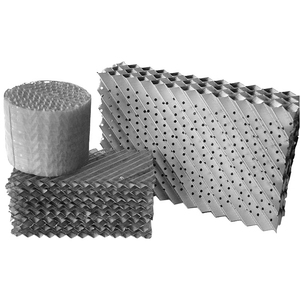
While both feature corrugated geometries, wire gauze is woven from fine wire filaments that harness capillary forces to self-spread liquid evenly across both sides of the mesh. Corrugated sheet packing relies purely on hydraulic film flow and dynamic spreading over perforations and surface grooving. Consequently, wire gauze packing achieves significantly lower HETP (100–200 mm vs. 300–600 mm for sheet) and lower pressure drop per theoretical stage, making it the premier internal for vacuum systems, heat-sensitive separation, and low-liquid-load columns.
How does liquid distribution affect wire gauze packing performance?+
Because wire gauze produces thin liquid films and has low liquid holdup, uniform initial distribution is crucial. While capillary action helps spread liquid across corrugated sheets, it cannot compensate for gross maldistribution across the column cross-section. For optimum separation efficiency, liquid distributors should provide at least 100 to 200 drip points per square meter. Capillary tube distributors or narrow-pitch trough distributors are recommended for columns packed with BX 500 or CY 700 geometries.
Which metallurgy should be chosen for corrosive or sour services?+
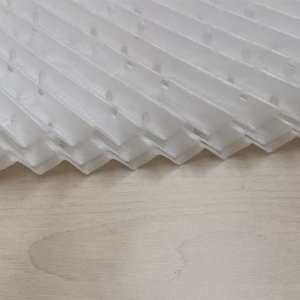
Stainless steel 304/304L is standard for cryogenic air separation and neutral organic separation. For general chemical distillation, food acids, and pharmaceutical intermediates, SS 316/316L provides enhanced resistance against localized pitting. For severe environments containing chlorides, moist halogens, or sulfuric acid, Ambani Metals fabricates gauze packings from Hastelloy C-276, Monel 400, or Inconel 625. For pure caustic or alkaline electrolysis scrubbers, Nickel 200/201 is preferred, while plastic gauze (PP/PVDF) is best for room-temperature aggressive mineral acids.
Can wire gauze packing be cleaned or refurbished if fouling occurs?+
Yes. Although wire gauze is sensitive to particulate fouling and polymerization deposits, clean-in-place (CIP) methods using solvent washing, mild acid flushes, or steam purging often restore operational efficiency. For offline maintenance, modules can be removed through column manways and cleaned via warm ultrasonic baths. Because the wire mesh is mechanically robust and securely banded, it withstands standard chemical washing when handled by trained personnel.
What documents and QA verifications are delivered with export shipments?+
Ambani Metals provides complete documentation compliant with international EPC standards, including DIN EN 10204 3.1 Material Test Certificates (verifying chemical and mechanical properties), positive material identification (PMI) inspection reports, dimensional inspection records, degreasing cleanliness validation certificates, and ISPM-15 certified fumigated seaworthy wooden export packing slips.
How do you handle column sizing and installation geometry for large towers?+
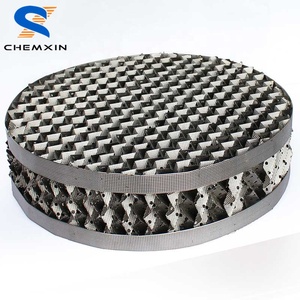
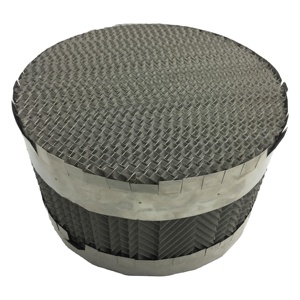
For small columns (DN < 300 mm), packing is typically fabricated in one-piece cylindrical cartridges. For vessels with inside diameters from 400 mm up to 6000 mm+, the packing is fabricated in segmented cakes that easily pass through standard DN 450, DN 500, or DN 600 manways. Each layer is installed with adjacent layers rotated 90 degrees relative to each other to ensure continuous cross-mixing of ascending vapor and descending liquid streams.
Ready to Optimize Your Column Separation Performance?
Whether you are designing a greenfield distillation facility or debottlenecking existing vacuum fractionators, our process and mechanical engineering specialists provide comprehensive hydraulic sizing, stage calculations, and rapid competitive quotations.