- +91-9930498858Call / WhatsApp
- [email protected]Email Us
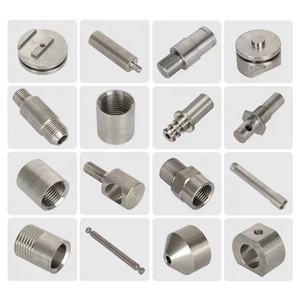
Manufactured to critical tolerances using high-grade stainless steel 304/316L, titanium, and specialized alloys tailored for extreme offshore and thermal conditions in Qatar.
In modern industrial manufacturing, precision deep drawn components represent a critical leap beyond traditional multi-stage welded fabrications. Through hydraulic and mechanical multi-station progressive drawing presses, cold-rolled metal blanks undergo plastic deformation under controlled tension, resulting in seamless, monolithic hollow bodies with high depth-to-diameter ratios. For engineering procurement specialists, project managers, and EPC contractors stationed in Doha, Ras Laffan, and Mesaieed Industrial Cities, selecting top-tier Chinese manufacturing partners bridges the technical gap between cost predictability and tight mechanical tolerances (±0.015mm).
As Qatar intensifies its North Field East (NFE) and North Field South (NFS) expansions alongside municipal desalination installations, mechanical components face severe operating hurdles. Chemical process environments require materials to endure saturated hydrogen sulfide (H2S), concentrated chloride brines, rapid pressure fluctuations, and ambient desert temperatures exceeding 50°C. Fabricated seamless cylinders, sensor wells, filter housings, and distillation internals eliminate weld-seam heat-affected zones (HAZ), structurally preventing stress corrosion cracking (SCC) and premature pitting.
Deep drawing requires an acute understanding of work hardening coefficients, yield strengths, and anisotropic characteristics (r-value and n-value). Drawing austenitic stainless steels, pure nickel, or reactive alloys requires proprietary lubricant regimes, precision die clearances, and intermediate vacuum annealing to prevent galling, earing, and brittle micro-fractures.
| Alloy Grade | Yield Strength (MPa) | Corrosion Resistance Mechanism | Primary Qatari Industry Sector |
|---|---|---|---|
| AISI 316L / 1.4404 | 220 – 310 | 2.0-3.0% Molybdenum addition suppresses localized chloride pitting; low carbon prevents carbide precipitation. | Offshore Oil & Gas, LNG Processing Units, Desalination Pre-treatment |
| Hastelloy C-276 / Alloy C22 | 350 – 490 | High tungsten and nickel content creates immunity to wet chlorine gas, hypochlorite, and strong oxidizing salts. | Mesaieed Petrochemical Refining, Sour Gas Scrubbing, Acid Injection Wellheads |
| Monel 400 / UNS N04400 | 240 – 350 | Solid-solution copper-nickel alloy resisting rapidly flowing seawater, cavitation erosion, and hydrofluoric acid. | Marine Engineering, Seawater Intake Screen Assemblies, Subsea Valve Seals |
| Inconel 625 / 718 | 415 – 750 | Niobium-molybdenum matrix stiffening provides high creep rupture strength up to 980°C with oxidation shielding. | Gas Turbine Exhaust Canisters, Flare Tip Enclosures, Downhole Pressure Gauges |
| Commercial Titanium (Gr. 2) | 275 – 450 | Spontaneous formation of rutile (TiO2) passive film impervious to microbiologically influenced corrosion (MIC). | Thermal Desalination (MED/MSF) Heat Exchanger Boots, Chlor-Alkali Brine Filters |
The deployment of deep drawn parts, engineered column internals, and specialized filtration systems in Qatar is intrinsically linked to the operational profiles of leading national operating companies and international consortia. Our direct-export supply chain from China to Doha serves multiple mission-critical sectors:
Ras Laffan processing facilities implement deep drawn liquid collection boots, structured packing beds, and multi-pass valve trays. Seamless canisters shield downhole telemetry and flow transmitters from severe hydrostatic sour gas bursts.
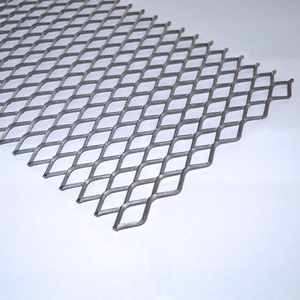
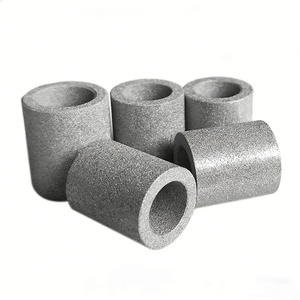
Desalination units supplying Doha’s municipal and industrial sectors require sintered stainless steel filter elements, expanded metal intake strainers, and seamless pump impeller enclosures engineered to withstand hypersaline reject brine.
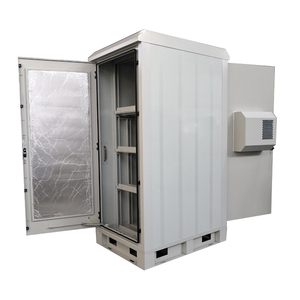
Solar substations, telecom repeaters, and desert monitoring sites rely on IP55/IP65 deep drawn, stamp-reinforced outdoor battery storage enclosures paired with integrated DC air conditioning to protect energy storage units against fine dust storms.
Driven by the Qatar National Vision 2030 (QNV 2030) and the Tawteen localized procurement initiative, the demand for precision-engineered components is transitioning rapidly from standard generic commoditization to specialized high-efficiency geometries. Key structural market trends include:
1. Shift Toward Mass Transfer Revamping and Modular Footprints: Plant operators in Mesaieed are retrofitting existing distillation towers with high-efficiency corrugated wire gauze structured packings and high-capacity valve trays. Revamping inner tray assemblies within identical column shells yields a 20% to 35% throughput increase without costly civil works.
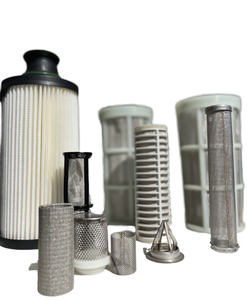
2. Transition from Multi-Part Welded Assemblies to Single-Blank Deep Drawing: Traditional components fabricated by rolling and longitudinal welding present inherent structural failure zones under high-vibration flow. EPC engineering firms routinely mandate deep drawn seamless alternatives for instrumentation sleeves, filter cartridges, and sensor housings to secure uninterrupted lifecycle performance.
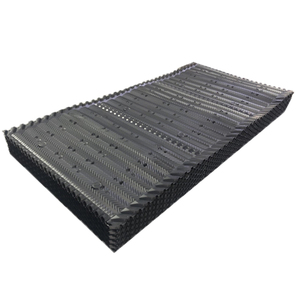
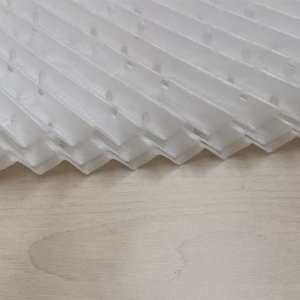
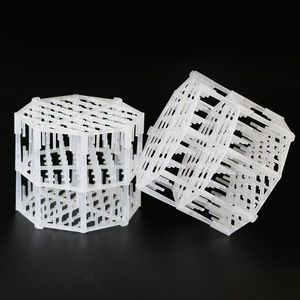
3. Accelerated Sustainability & Energy Efficiency Mandates: Cooling tower retrofits across district cooling plants in Lusail and Doha Pearl are systematically adopting aerodynamic PVC/PP honeycomb and spherical fills. This transition slashes drift losses, lowers fan motor power consumption, and maximizes thermal exchange surface areas per cubic meter.
Drawing upon more than 25 years of engineering manufacturing legacy, our enterprise delivers end-to-end oversight across tooling fabrication, hydraulic deep drawing, progressive stamping, perforating, and chemical mass transfer assembly.
Every sheet, coil, and billet is sourced directly from top-tier primary mills with EN 10204 3.1 / 3.2 inspection certification, positive material identification (PMI), and complete heat-number tracking to maintain metallurgical compliance.
Proprietary engineering eliminates subcontractor markups and delays. We design, wire-cut, and polish progressive stamping and deep drawing dies in-house, achieving critical diametric and concentricity tolerances within ±0.015mm.
Export packaging features vapor corrosion inhibitor (VCI) shrink wrapping, desiccant packs, and IPPC-stamped ISPM-15 seaworthy timber cases designed for rapid clearance at Hamad Port and direct transport to site laydown yards.
For standard stainless steel (304/316L) and aluminum cylindrical housings, our progressive die drawing tolerances achieve ±0.02mm on diameter and ±0.05mm on wall thickness. Secondary CNC trimming, ironing, and fine-blanking operations can further tighten critical inner bore tolerances to ±0.01mm.
When depth-to-diameter draw ratios exceed 2:1, cold drawing induces significant crystalline strain hardening. We utilize in-house controlled-atmosphere continuous vacuum annealing ovens to recrystallize the metallic microstructure, restoring ductility without surface decarburization or scale formation.
Every industrial shipment bound for Doha includes a complete export technical dossier: Mill Test Certificates (MTC conforming to EN 10204 Type 3.1), raw material PMI reports, coordinate measuring machine (CMM) dimensional inspection sheets, Certificate of Origin (COO), and third-party inspection sign-offs (SGS, TÜV, or Bureau Veritas upon request).
Yes. Our engineering division reviews legacy plant data sheets, isometric layouts, and column mechanical drawings. We reproduce or modernize existing sieve, valve, and bubble cap trays into segmented, manway-sized sections for rapid retrofitting through standard column nozzles.