- +91-9930498858Call / WhatsApp
- [email protected]Email Us
Explore our certified manufacturing capabilities spanning precision sheet metal fabrication, architectural perforation patterns, corrosion-resistant structured packings, and heavy-duty filtration meshes exported directly to Colombian industrial fabricators and building contractors.
Architectural engineering and facade design in the Republic of Colombia require a sophisticated understanding of geographic, seismic, and microclimatic variance. As Colombian urban centers undergo sustained infrastructural modernization—ranging from high-density corporate towers in Bogotá D.C. to eco-conscious bioclimatic developments in Medellín and humid coastal resorts in Cartagena de Indias—decorative perforated metal panels have transitioned from purely aesthetic features into critical building envelope components.
Colombia does not possess a uniform operational environment. Our manufacturing protocols engineer decorative perforated sheets specifically tuned to distinct domestic zones:
The Andean Plateau (Bogotá, Tunja, Manizales - 2,200m to 2,600m above sea level): Characterized by high diurnal temperature swings (5°C to 20°C in 12 hours) and extreme ultraviolet radiation exposure. Perforated aluminum sheets (Grade 3003-H14 or 5052-H32) supplied to these highland hubs require 70% fluoropolymer (PVDF) resin finishes (conforming to AAMA 2605 specifications) or architectural anodization exceeding 20 microns to eliminate chalking, embrittlement, and chromatic fading over 30-year lifecycle spans.
The Aburrá Valley & Inter-Andean Basins (Medellín, Bucaramanga, Cali): Known as the capital of bioclimatic architecture, Medellín actively incorporates kinetic and passive decorative perforated screening systems. In these environments, perforations are calibrated with varying open-area ratios (28% to 48%) to maximize cross-ventilation, lower indoor temperatures by up to 5.5°C without active air conditioning, and reduce HVAC energy expenditure by 35%.
The Coastal Industrial Hubs (Cartagena, Barranquilla, Santa Marta, Buenaventura): Operating under ISO 9223 Corrosivity Category C4 to C5-M (Marine Coastal). Conventional galvanized or post-punched mild steels suffer from micro-crevice oxidation at hole edges within 18 months. For Caribbean and Pacific seaside applications, our factory fabricates strictly in pickled and passivated AISI 316 / 316L Stainless Steel or marine-grade 5052/5083 Aluminum Alloy coated with multi-layer thermosetting powder coatings with zero-edge exposed raw metal.
Modern Colombian building developments demand exact open-area mathematics. When designing perforated metal brise-soleil or double-skin ventilated facades (fachadas ventiladas), hole diameter, staggered centers, and unpunched margin tolerances directly dictate solar heat gain coefficients (SHGC) and structural wind deflection:
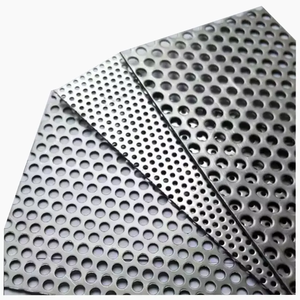
Staggered Round Perforations (60° Triangular Centers): The global benchmark for structural rigidity, offering superior planar stiffness under severe gust loads common to mountainous Colombian passes. Round perforations yield up to 63% open area while preserving panel flatness without oil-canning.
Hexagonal & Geometric Laser-Cut Patterns: Increasingly favored by Colombian architectural firms seeking indigenous pre-Columbian patterns (such as Zenú weaving motifs) integrated into corporate exteriors. Utilizing multi-axis fiber lasers and CNC turret punch tooling, our automated cells execute custom perforation layouts with zero edge burr, maintaining hole tolerances within ±0.12 mm.
Acoustic Interior Paneling: In dense transit and educational hubs such as TransMilenio stations or university auditoriums, perforated stainless and galvanized panels backed with non-combustible sound absorption fiberglass fleece deliver Noise Reduction Coefficients (NRC) between 0.75 and 0.90.
Selecting the appropriate alloy balances structural modulus, weight overhead, marine resistance, and direct budgetary parameters for Colombian procurement teams.
| Substrate Material | Yield Strength (MPa) | Corrosion Resistance | Weight (kg/m² @ 2mm) | Target Colombian Regional Application |
|---|---|---|---|---|
| Aluminum Alloy 5052-H32 | 190 – 215 | Exceptional (Marine Grade) | 5.4 | Coastal facades (Cartagena, Santa Marta), high-rise seismic curtain walls |
| Stainless Steel AISI 316L | 220 – 290 | Maximum (Chloride Resistant) | 16.0 | Offshore oil & gas terminals, heavy chemical units (Barrancabermeja) |
| Stainless Steel AISI 304 | 205 – 240 | High (General Atmospheric) | 15.8 | Interior acoustic dividers, commercial malls in Bogotá and Cali |
| Hot-Dip Galvanized Steel | 250 – 330 | Moderate (Sacrificial Zinc) | 15.7 | Industrial warehouses, agro-coffee dry-processing screening screens |
| Architectural Brass / Copper | 140 – 200 | Natural Self-Passivating Patina | 17.8 | Luxury hospitality, boutique retail interiors, historic restorations |
From coffee processing facilities in the Eje Cafetero to landmark civic infrastructure in Antioquia, our fabricated products perform under heavy operational demands.
Engineered for corporate headquarters, civic centers, and commercial universities across Bogotá and Medellín. Custom-spaced perforated aluminum cassettes provide continuous building envelope ventilation while meeting non-structural seismic drift requirements under NSR-10 regulations.
High-tensile perforated steel and brass sieve plates deployed in coffee cherry pulping, parchment separation, and cacao drying equipment throughout Risaralda, Caldas, and Quindío. Uniform, burr-free round and slotted punchings prevent bean breakage during intensive mechanical sorting.
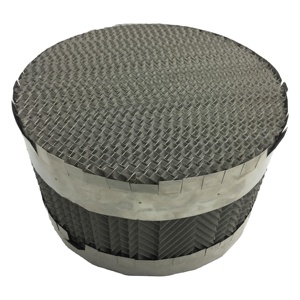
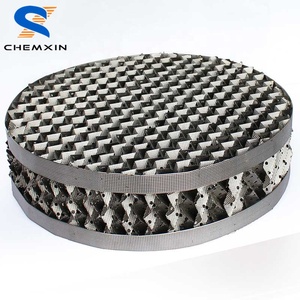
Serving crude processing complexes in Barrancabermeja and Cartagena. From perforated distributor trays to corrugated wire gauze structured packings (BX500 and 250AX), our corrosion-resistant 304 and 316L stainless steel internals deliver consistent mass transfer under harsh downhole pressures.
Heavy-gauge perforated and expanded metal infill panels for urban footbridges, pedestrian overhead crossings, and parking garage ventilation screens. Engineered to withstand lateral impact loads up to 1.5 kN/m while ensuring 40% natural sightline transparency for municipal security.
Micro-perforated acoustic metal ceiling tiles (ø 1.5mm holes at 3mm pitch) installed in airports like El Dorado and convention auditoriums. When combined with mineral fleece backings, they neutralize echoes in wide open spaces without degrading airflow circulation.
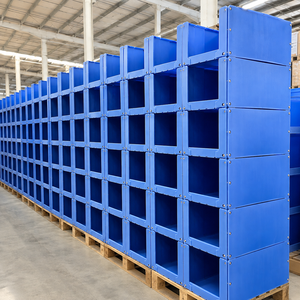
Complementary storage configurations, perforated side panel racks, and corrugated logistics picking bins that streamline manufacturing component assembly lines across industrial corridors in Yumbo (Valle del Cauca) and Tocancipá (Cundinamarca).
The Colombian construction and industrial sector is witnessing structural shifts influenced by international green building benchmarks and municipal regulations.
Colombia has become Latin America's leading regional innovator in green construction certifications, driven in part by CAMACOL (Cámara Colombiana de la Construcción). Through tax incentives offered by the national government for certified sustainable buildings (under Resolution 0549/2015), developers require external facades to reduce thermal heat gain directly. Decorative perforated metal screens provide predictable shading coefficients, enabling buildings in hot zones like Barranquilla to qualify for significant property tax deductions.
Architects in Medellín and Bogotá have transitioned from static, repetitive hole patterns to algorithmic, parametric perforation designs. By programming CNC turret presses and fiber laser cutters to dynamically vary hole sizes from 5mm to 60mm across a single 3-meter sheet, facades depict natural organic gradients, cloud formations, and regional topographic lines. This demand requires foreign suppliers to operate native 3D CAD/CAM nesting software compatible with architectural Revit and Rhino workflows.
Due to high import duties on fully assembled architectural units, Colombian structural steel contractors increasingly import flat or semi-notched perforated sheets in standardized maritime container bundles, performing final bending, framing, and on-site sub-structure anchoring domestically. Suppliers who offer pre-punched perimeter bolt holes, slotted expansion margins, and modular sub-frame clips provide a distinct operational advantage to local metal workshops.
With an unbroken manufacturing lineage dating back to 1998, we combine mill-direct purchasing power with deep custom sheet metal fabrication capabilities.
Every sheet of stainless steel, aluminum, and brass originates from Tier-1 certified rolling mills. All shipments include EN 10204 3.1 Material Test Reports (MTRs), confirming chemical spectrography and tensile properties before production commences.
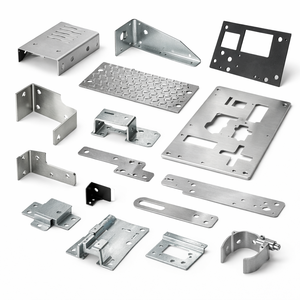
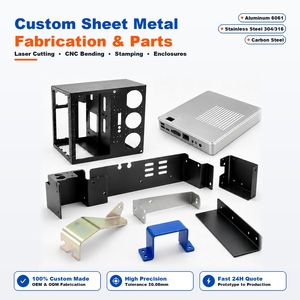
Equipped with high-speed CNC turret punch presses, 12kW fiber laser cutting beds, and automated press brakes. We fabricate intricate patterns, formed flanges, counterbored fastener holes, and deep drawn metal enclosures with repeatable micron-level accuracy.
Exporting to more than 20 countries across North America, the Gulf Cooperation Council (GCC), Australia, and Latin America. We navigate customs requirements, consular document legalization, and secure export crating tailored to maritime ocean containers.
Panels are individually interleaved with protective PE scratch films, bundled in fumigated ISPM-15 compliant hardwood crates with moisture-barrier wrapping and silica desiccants to withstand trans-equatorial humidity changes.
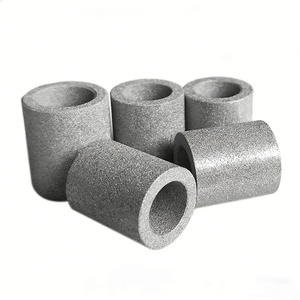
In addition to decorative sheets, we are world-class manufacturers of distillation column trays, liquid distributors, wire mesh filters, and structured packings. Plant operators revamp separation columns and architectural facades with a single audited supplier.
Our sales engineering division works directly with Colombian procurement officers, civil engineers, and architects in Spanish, providing structural calculations, CAD DWG shop drawings, and weight estimates within 24 hours of inquiry.
Direct answers addressing import tariffs, structural compliance, finishes, and shipping schedules for projects across Colombia.
Connect with our technical sales division to review your project blueprints, calculate solar shading open areas, verify NSR-10 compliance, and obtain an expedited CIF quotation to Cartagena, Barranquilla, or Buenaventura.
Get a Quote