- +91-9930498858Call / WhatsApp
- [email protected]Email Us
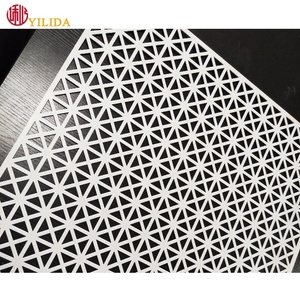
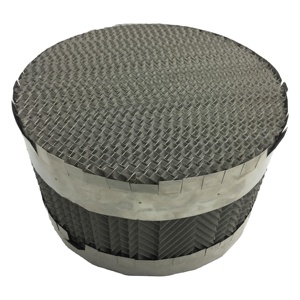
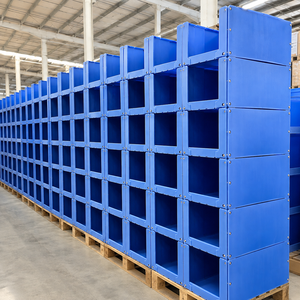
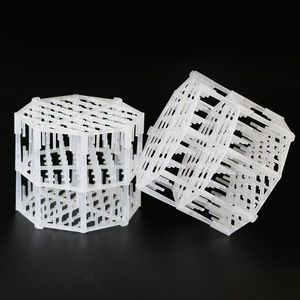
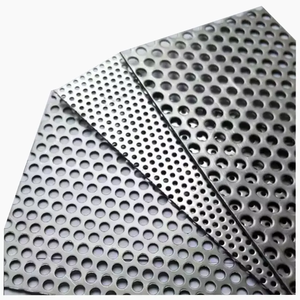
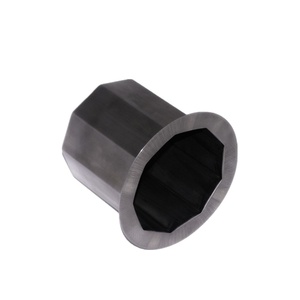
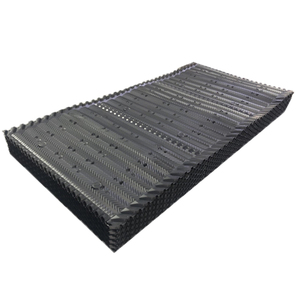
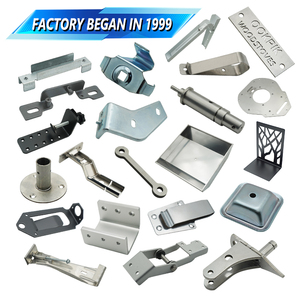
Explore our core product matrix, fabricated to exacting tolerances to support high-vacuum systems, separation columns, industrial packaging, and precision stamped assemblies across the Greater Seoul industrial axis.
A comprehensive technical evaluation of progressive transfer drawing, crystallographic strain distribution, and work-hardening kinetics for Seoul high-reliability sectors.
Deep drawing is a complex triaxial stress-strain deformation process where a flat metallic blank is radially drawn into an axisymmetric or non-axisymmetric forming die cavity via mechanical punch pressure. For Seoul-based engineering procurers operating in high-density consumer electronics (Gangnam, Yeouido R&D centers) and semiconductor tool manufacturing (Pangyo, Suwon, Giheung corridors), the primary objective is maximizing the Limiting Draw Ratio (LDR = Dblank / dpunch) without initiating localized plastic necking, flange wrinkling, or micro-cracking across the punch corner radius.
When drawing deep cylindrical shells from austenitic stainless steels (such as SUS304, SUS304L, and SUS316L), planar anisotropy (plastic strain ratio, r-value) and strain-hardening exponents (n-value) dictate the metal's flow behaviour. Standard SUS304 exhibits pronounced strain-induced martensitic transformation during cold working. While this increases tensile yield strength—desirable for pressurized sensor vessels and explosion-proof lithium-ion battery housings—it elevates residual hoop stress, creating vulnerability to delayed seasonal cracking (hydrogen-assisted stress corrosion cracking). Our production facilities deploy precise multi-stage progressive dies configured with intermediate controlled-atmosphere vacuum bright annealing stages (1050°C to 1100°C followed by rapid gas quenching) to fully re-crystallize austenitic grain structures, relieve residual stress, and restore elongation capacity (>45%) prior to secondary ironing and calibration strokes.
Configured with high-rigidity tungsten carbide (WC-Co) die inserts, precision gas-spring blank holders, and optimized draw beads. We control blank-holder force (BHF) dynamically to suppress ear-formation and localized thinning to less than 8% across heavy-draw geometries.
Integrated multi-step ironing operations compress drawn shell sidewalls against micro-lapped punch bodies, yielding optical mirror finishes with surface roughness down to Ra ≤ 0.2 µm while guaranteeing diameter roundness within ±0.015 mm.
All deep drawn cylinders undergo ultrasonic chemical degreasing and helium mass spectrometry leak testing (leak rate < 1 × 10⁻⁹ mbar·L/s), making them directly integratable into extreme ultra-violet (EUV) and chemical vapor deposition (CVD) equipment.
A rigorous comparative analysis evaluating cycle efficiency, raw material utilization rates, and mechanical integrity for thin-wall canisters and deep shells.
| Evaluation Parameter | Progressive Deep Drawing | CNC Billet Machining | Impact Extrusion | Roll-Forming & Longitudinal Seam Welding |
|---|---|---|---|---|
| Material Utilization Rate | 85% – 94% (Near-net shape, negligible scrap) | 15% – 30% (High metallurgical wastage) | 70% – 80% (Moderate slug scrap) | 65% – 75% (Edge trimming & seam dressing) |
| Cycle Time per Unit | 1.5 – 4.0 seconds (High-speed transfer press) | 180 – 600 seconds (Multi-axis spindle) | 4.0 – 8.0 seconds (Mechanical toggle press) | 45 – 90 seconds (Rolling + TIG/Laser weld) |
| Leak-Tight Integrity | 100% Seamless (Monolithic grain flow, zero joint risk) | Seamless (Dependent on porosity) | Seamless (Limited wall-to-base ratios) | Weld Seam Vulnerable (Heat-affected zone micro-cracks) |
| Tensile Strength Behavior | Enhanced via controlled work-hardening | Base annealed condition only | Work-hardened base, weaker upper walls | Non-uniform strength across weld HAZ |
| Surface Finish (Sidewall Ra) | Ra 0.15 – 0.4 µm (Burnished through draw die) | Ra 0.8 – 1.6 µm (Turning marks evident) | Ra 0.6 – 1.2 µm (Die drag patterns) | Ra 0.8 – 2.5 µm (Uneven bead transition) |
| Suitability for Seoul Scale | Optimal for automotive, battery & sensor runs (>5k units) | Prototyping & ultra-low volumes (<200 units) | Medium volumes, softer alloys (Al, Cu) | Large diameter architectural/pressure tanks |
Aligning component geometry and alloy selection with specific industrial requirements found within South Korea's high-tech manufacturing corridors.
Micro-Sensor Canisters & RF Shielding Enclosures: Supplying deep drawn Oxygen-Free Copper (C1020), nickel-plated brass, and thin-gauge SUS304 cans for high-frequency millimeter-wave (5G/6G) telecommunication transceivers, IoT gateway filters, and precision optoelectronic housings requiring seamless electromagnetic isolation.
Semiconductor & Display Ultra-Pure Fluid Vessels: Fabricating electropolished SUS316L VIM-VAR deep-drawn filter cups, gas purifier shells, and chemical mechanical planarization (CMP) slurry canisters characterized by zero interior weld crevices and micro-roughness below Ra 0.2 µm.
Next-Gen EV Powertrain & Hydrogen Storage Liners: Engineering deep drawn cylindrical aluminum (Al 3003/5052) and high-strength alloy casings for prismatic cell capacitor cans, high-pressure hydrogen injector valve sleeves, and brushless steering motor flux rings built to automotive IATF 16949 dimensional standards.
Biomedical Hermetic Device Encapsulation: Precision drawing of Grade 2 Titanium and medical-grade SUS316L miniature enclosures for implantable telemetry devices, endoscopic housing shells, and automated analytical laboratory fluidic sampling chambers demanding passivated, non-thrombogenic surfaces.
Understanding regulatory, technological, and environmental transformations governing South Korea's industrial manufacturing supply chains.
The South Korean battery ecosystem is transitioning toward 4680, 4695, and larger-scale cylindrical cell architectures. This shift demands deeper drawing capabilities with ultra-thin sidewall tolerances (≤ 0.55 mm ± 0.02 mm) while preserving base thickness for burst-disc groove integration. Our tooling incorporates real-time multi-point acoustic emission sensors to monitor ductile crack initiation during high-speed continuous drawing.
Under Korea's Act on Registration and Evaluation of Chemicals (K-REACH) and evolving OSHA guidelines within the Seoul Special Metropolitan Area, post-forming pickling operations must transition away from toxic hydrofluoric formulations. We offer specialized citric acid-based passivation adhering to ASTM A967 Standard Practice, guaranteeing ASTM B117 salt spray neutral corrosion endurance exceeding 720 hours without surface staining.
Robotics hardware firms in Guro and Bucheon are aggressively reducing payload weight in 6-axis articulated collaborative robot arms. By substituting welded cast-aluminum shells with progressive deep-drawn high-strength 5052-H32 aluminum and multi-step ironed thin-wall housings, total rotational inertia is slashed by up to 34%, dramatically lowering servo motor duty cycles.
Combining over a quarter-century of precision metalworking pedigree with lean global logistics, custom tooling workshops, and transparent metallurgy.
Founded in 1998, we have evolved from a specialized mass transfer and distillation internals manufacturer into an integrated precision metal-forming power. Having served more than 1,000 corporate clients across 20+ countries, our technical engineering bench understands the uncompromising quality benchmarks expected by Korean OEMs.
Tooling is the foundation of deep drawing precision. We maintain an in-house toolroom equipped with CNC wire electrical discharge machining (EDM), slow-feed wire cutting, and coordinate jig grinding centers. This captive capability reduces new product prototyping lead times for Seoul clients to under 21 calendar days from approved CAD drawings.
Every production batch is accompanied by an EN 10204 Type 3.1 Mill Test Certificate (MTC) verifying raw chemical composition (spectrographic testing) and mechanical properties. Our QA labs utilize automated Coordinate Measuring Machines (CMM), optical comparators, and surface roughness profilometers to validate every critical dimension.
Exporting manufactured parts to South Korea requires flawless packaging and customs execution. We pack all deep drawn shells in heavy-duty, fumigated ISPM-15 export wooden crates with anti-corrosion VCI (Volatile Corrosion Inhibitor) plastic lining. Direct shipments route reliably through Incheon Port (handling northern Gyeonggi logistics) and Busan Port, with emergency shipments dispatching via Incheon International Airport (ICN).
Essential guidance covering technical tolerances, raw material equivalence (KS vs. ASTM), tariff structures, and lead-time guarantees.
We source prime-grade raw coil stock directly from world-class certified mills conforming to ASTM, JIS, and KS standards. Specifically, our standard SUS304 complies fully with KS D 3705 (Cold-rolled stainless steel plates, sheets, and strip) and KS D 3576. For semiconductor clean-fluid applications, we provide fully certified low-carbon SUS304L and molybdenum-bearing SUS316L, complete with EN 10204 Type 3.1 chemical assay breakdowns cross-referencing carbon, sulfur (≤ 0.005% for ultra-high purity grades), and phosphorus fractions.
Through progressive multi-die redrawing combined with terminal carbide ironing rings, we routinely hold outer and inner diameter tolerances within ±0.015 mm (±0.0006 inches) on shells up to 80 mm diameter. For larger industrial cylinders (up to 300 mm diameter), diameter runout is held within ±0.05 mm. Wall thickness variance can be held within ±5% across the full height of the shell body, with base-to-wall transitions radiused to prevent structural stress risers.
Yes. We understand that R&D centers in Pangyo Techno Valley or Gasan often need 50 to 500 qualification samples for functional bench testing, pressure vessel burst validation, and environmental testing before releasing capital expenditure for hard multi-stage progressive tooling. We utilize modular single-stage hydraulic tooling and CNC spinning/forming lathes to deliver near-net pilot prototypes at a fraction of full-scale tooling costs, with typical turnaround in 14 to 20 working days.
Industrial components manufactured in our facilities qualify for preferential tariff concessions under the Comprehensive Economic Partnership Agreement between India and the Republic of Korea (IK-CEPA). We furnish certified Certificates of Origin (COO) validated by authorized agencies alongside commercial invoices and packing lists. This allows Seoul importers to benefit from reduced or zero customs duties on qualifying stamped and deep-drawn metal classifications (HS Code 7326 / 8479 series).
Our post-forming finishing ecosystem encompasses automatic de-burring, centrifugal barrel tumbling, ultrasonic hydrocarbon or aqueous degreasing, mirror electropolishing (achieving internal surface finishes down to Ra 0.15 µm), chemical nickel plating, clear anodizing for aluminum alloys, and vacuum bright stress-relief annealing. Cleanroom-ready components undergo cleanroom DI water rinsing and vacuum heat-sealed double-polyethylene bagging.
To provide an engineered quote within 24 business hours, please provide your 2D CAD engineering drawing (PDF/DWG with geometric dimensioning and tolerancing, GD&T) and 3D solid model (STEP or IGES). Clearly state the raw material grade (e.g., SUS304, Al 3003, Nickel 200), nominal wall thickness, critical fitment zones, internal surface finish criteria, annual production quantity forecasts, and preferred Incoterms (FOB, CIF Incheon Port, or DDP Seoul facility).
Submit your 2D/3D component specifications to our senior tool design engineering team today. We deliver comprehensive DFM (Design for Manufacturability) feasibility reports, grain structure analysis, and transparent quotation packages.
Get Catalog