
- +91-9930498858Call / WhatsApp
- [email protected]Email Us
Manufactured under stringent quality management, our woven gauze, expanded metals, stamping dies, and wire mesh components power high-reliability operations across North America and global process plants.
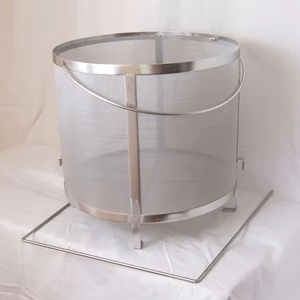
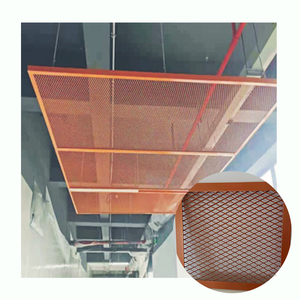
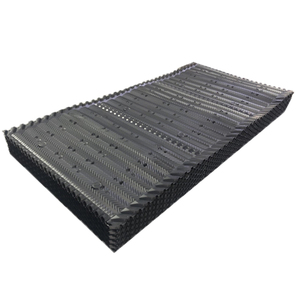
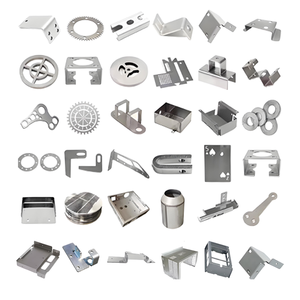
A rigorous examination of warp-to-shute micro-mechanics, surface retention versus cake filtration, and high-differential pressure performance for American process applications.
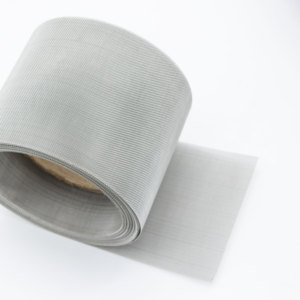
Characterized by heavier warp wires woven with fine, tightly driven shute wires. This geometry produces wedge-shaped triangular interstitial apertures rather than straight-through square pores, yielding high mechanical firmness. It provides absolute micron cut-offs down to 20 μm, ideal for precoat candle filters, nutsche filter dryers, and liquid-solid separation in upstream petrochemical lines.
By implementing a two-over, two-under twill sequence in the shute direction, wires cross each other at reduced angles, allowing twice as many shute wires per inch. TDW forms dense light-tight barrier structures capable of sub-surface depth particle retention down to 1–2 microns absolute rating. It withstands extreme pressure spikes in polymer extrusion and hydraulic fluid purification without wire yield.
Engineered by reversing wire diameters—arranging high-tensile fine warp wires close together over thick shute stabilizer rods. This configuration maximizes cross-sectional tensile strength along the roll length, specifically engineered for continuous screen changers in plastic recycling lines, rotary drum filters, and centrifuge scrapers where mechanical abrasion resistance is imperative.
| Weave Nomenclature | Nominal Mesh Count (Warp × Shute) | Absolute Retention (μm) | Flow Permeability (Air @ 200Pa) | Predominant US Industry Application |
|---|---|---|---|---|
| Plain Dutch (PDW) | 12 × 64 to 80 × 700 | 300 μm down to 25 μm | Medium - High | Oil sands, mining, fuel filtration, water treatment |
| Twilled Dutch (TDW) | 20 × 250 to 500 × 3500 | 100 μm down to 2 μm | Restricted (Micro-retention) | Aerospace hydraulic fluid, cGMP pharmaceutical API isolation |
| Reverse Dutch (RDW) | 72 × 15 to 400 × 120 | 150 μm down to 45 μm | High Velocity Mechanical | Continuous extrusion belts, polymer recycling, centrifuge lining |
| Broad Mesh Twilled | 20 × 150 to 30 × 200 | 175 μm down to 60 μm | High Throughput | Beverage clarification, brewery mash separation, bulk dewatering |
From the Gulf Coast refining corridor to Midwestern biochemical processing and Pacific Northwest aerospace manufacturing, Dutch weave mesh provides decisive operating advantages.
Petrochemical refiners face chronic stress cracking in amine treating units, fluid catalytic cracking (FCC) slurry pumps, and alkylation separators. We supply dual-certified 316L, Monel 400, and Hastelloy C-276 Dutch weave packs capable of handling high sour gas concentrations and chlorides at operating pressures reaching 3,500 psi without metallurgical degradation.
Separation media used in API crystallization, active pharmaceutical intermediate isolation, and sterile chromatography must exhibit zero media migration. Our ultrasonic-cleaned 316L sintered and calendared Dutch weave filter discs prevent particulate contamination, satisfying FDA 21 CFR 177.2600 and ASME BPE cleanability protocols with traceable roughness average (Ra) values.
Liquid oxygen (LOX), high-pressure helium, and aviation kerosene distribution systems demand absolute barrier security under cryogenic temperatures (-320°F) up to elevated thermal cycles. We engineer custom-slit Inconel 625 and Titanium Grade 2 Dutch weave elements calibrated for bubble point test conformity in compliance with SAE ARP901 filtration benchmarks.
Strategic changes across environmental policy, raw material compliance, and circular polymer recycling are redefining the technical criteria American procurement managers apply.
With aggressive corporate sustainability commitments and state EPR laws (e.g., California SB 54), plastics compounders require high-pressure reverse Dutch continuous ribbon belts that endure extreme shear while removing contamination from post-consumer recycled resins.
Defense and critical infrastructure engineering teams demand airtight raw material certificates. We guarantee full EN 10204 3.1 chemical verification, heat number chain of custody, and verified non-recycled melt compliance to simplify qualification procedures.
Federal Inflation Reduction Act (IRA) incentives have accelerated carbon sequestration and hydrogen electrolyzer installations. Twilled Dutch weaves serve as primary electrode support substrates and liquid desiccant mist collectors in supercritical CO2 pipelines.
To eliminate wire shedding in high-vibration fluid streams, US operators increasingly transition from conventional raw weave rolls to multi-layer diffusion-bonded porous wire laminates combining Dutch weave cloth with protective structural mesh backing.
Exporting to more than 20 countries worldwide since 1998, we unite proprietary high-tension weaving looms with in-house stamping, laser cutting, and mass transfer manufacturing.
Operating automated rapier and shuttleless weaving lines running up to 2.5 meters in width. From stainless 304/316L to exotic Monel, Inconel, Nickel 200, and Hastelloy wire spools, our temperature-stabilized weaving floor prevents differential tensioning defects across every square foot shipped.
Beyond bulk roll inventory, we maintain progressive die stamping presses and CNC laser cutting units holding ±0.02 mm dimensional tolerances. We fabricate custom round discs, seamless deep drawn filter housings, pleated cartridges, and spot-welded multi-layer mesh packs on demand.
We routinely manage ocean container and expedited air cargo shipments arriving at ports across Los Angeles/Long Beach, Houston, and New York/New Jersey. Products arrive packed in heavy fumigated plywood crates with vapor-phase corrosion inhibitors (VCI) and complete customs documentation.
Direct technical answers addressing standards, test certifications, minimum order parameters, and logistics execution.
Connect with our technical sales division for immediate specification reviews and rapid North American delivery schedules.