
- +91-9930498858Call / WhatsApp
- [email protected]Email Us
Explore our certified range of tower packings, specialized column internals, and precision fabrication hardware built to withstand aggressive corrosion and extreme thermal cyclic operating conditions across Moscow, Kapotnya, and the Central Federal District.
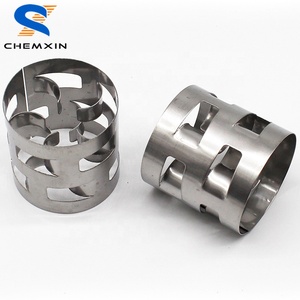
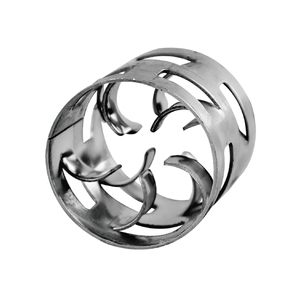
Fractionation units, vacuum distillation columns, absorption scrubbers, and natural gas treatment plants operating across Moscow, the Moscow Oblast, and neighboring refining hubs face severe environmental constraints. Extreme winter operating temperatures, alternating cyclic thermal fatigue, aggressive sour crude oil matrices (high H2S and organic chloride loads), and tight revamp turnaround schedules demand random packing geometries with superior mechanical load capacity and predictable hydraulic performance.
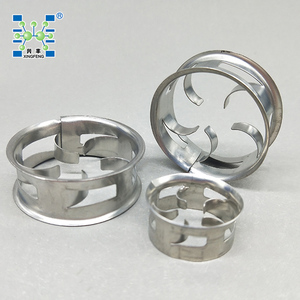
As a global mass transfer hardware manufacturer established in 1998, we supply high-performance metal random packings—including Metal Pall Rings, Cascade Mini Rings (CMR), Raschig Rings, Intalox Saddles, and Dixon Gauze Rings—fabricated from certified cold-rolled sheet alloys. Unlike standard plastic packings that embrittle or glass/ceramic packings that crack under heavy liquid hydraulic hammer, our stamped metal random packings deliver continuous thermal resilience up to 1000°C (depending on metallurgical alloy selection) while maximizing effective interfacial surface area ($a_e$) per cubic meter of column volume.
To assist process lead engineers, revamp directors, and EPC design teams across Moscow in selecting the optimal configuration, the table below delineates verified technical characteristics:
| Packing Type | Available Sizes (mm / in) | Specific Surface Area ($m^2/m^3$) | Void Fraction (ε %) | Bulk Density ($kg/m^3$ - SS304) | Primary Industrial Moscow / Regional Duties |
|---|---|---|---|---|---|
| Metal Pall Ring | 16, 25, 38, 50, 76 (5/8" to 3") | 110 – 345 | 94.0 – 97.5% | 230 – 480 | Atmospheric distillation, sour gas sweetening, amine absorbers, stripping towers. |
| Cascade Mini Ring (CMR) | No. 1, No. 1.5, No. 2, No. 3 | 125 – 310 | 95.5 – 98.0% | 185 – 390 | Deep vacuum refining, high liquid rate wash sections, FCC unit light-ends fractionation. |
| Metal Raschig Ring | 10, 15, 25, 50, 80 (3/8" to 3.15") | 100 – 490 | 88.0 – 94.0% | 350 – 850 | Corrosive chemical scrubbing, high-temperature support beds, acid mist elimination. |
| Metal Dixon Ring | 3x3, 6x6, 10x10, 15x15 | 800 – 2400 | 82.0 – 91.0% | 420 – 950 | Laboratory distillation columns, pilot hydrocarbon testing, isotope separation. |
| Metal Intalox Saddle | 25, 38, 50, 76 (#1 to #3) | 120 – 300 | 95.0 – 97.8% | 210 – 420 | Olefin separation, acid gas removal units (AGRU), quench towers, cryogenic processing. |
Modern column upgrades throughout the Moscow petrochemical corridor emphasize reducing pressure drop ($\Delta P$) across existing column shells. Traditional Raschig rings frequently nest, inducing dead zones and channeling vapor towards column walls. In contrast, our advanced Cascade Mini Rings feature a low aspect ratio (height-to-diameter ratio of 1:3), which causes the rings to settle preferentially on their flat sides during random dumped installation. This mechanical orientation exposes maximum open area to rising vapors, reducing hydraulic drag by up to 45% compared to cylindrical equivalents, delaying bed flooding, and enhancing overall tower capacity by up to 20% without structural column wall alterations.
Moscow serves as the managerial, technological, and logistical heart of Russia's downstream processing network. Within the Moscow megalopolis and neighboring industrial rings (including Voskresensk, Dzerzhinsky, Podolsk, and Yaroslavl), mass transfer hardware must satisfy continuous rigorous demands.
Kapotnya Refinery and surrounding crude upgrading plants utilize SS 410, SS 316L, and Monel random packings in atmospheric distillation side-strippers, kerosene splitters, and fluidized catalytic cracking (FCC) gas concentration sections requiring superior antifouling longevity.
Gas transport terminals entering the Central Federal District rely on SS 304L Pall Rings within MDEA / MEA absorber columns and TEG contact towers to scrub high-volume CO2 and H2S traces, meeting strict municipal transmission pipeline standards.
Active Pharmaceutical Ingredient (API) manufacturers and fine specialty synthesis operations throughout the Moscow techno-parks deploy mirror-passivated SS 316Ti and Dixon Gauze Rings in solvent recovery columns to eliminate carryover contamination.
Regional nitrogenous chemical installations leverage SS 304 and high-silicon alloy Raschig rings in bleach absorption columns and nitrogen oxides (NOx) scrubber scrubbers capable of handling aggressive oxidizing wet fumes.
The modernization of the Russian chemical and energy refining landscape is characterized by three prominent structural trends:
Industrial facility managers cannot afford prolonged shutdowns during harsh winter seasons. Consequently, turnkey internal retrofits require dumped random packings with precise geometric repeatability. Ambani Metals delivers high-integrity, automated stamping-formed rings that do not deform or snag, facilitating pneumatic filling via hopper chutes or wet-dumping techniques without crushing the lower bed tiers.
Increasing concentrations of heavy sulfur, naphthenic acids, and chlorides in feedstock crudes have rendered standard carbon steel packings economically obsolete due to rapid corrosion thinning. Moscow engineers are specifying SS 316L, 1.4571 (SS 316Ti), Duplex 2205, Hastelloy C-276, and Monel 400. Our mill-direct sourcing from Tier-1 stainless steel manufacturers guarantees strictly controlled carbon levels (≤0.03% in L-grades) and complete resistance to intergranular stress cracking.
Supply chain security has become the highest priority for procurement directors in Moscow. By managing fully owned casting, stamping, wire weaving, and deep-drawing facilities in India since 1998, we provide dependable, direct supply pathways. We issue complete documentation packages (EN 10204 3.1 Material Test Certificates, mechanical tensile assessments, and spectroscopic PMI reports) ensuring smooth conformity audits with local GOST and Rostechnadzor guidelines.
With more than 25 years of engineering and manufacturing excellence, our industrial capabilities deliver tangible advantages to plant managers, lead chemical designers, and procurement managers:
We source raw coils, wire, and plate materials directly from vetted mills. Every batch includes full heat-number traceability, chemical composition analysis, and mechanical testing certificates.
Stamping, deep drawing, perforating, wire mesh weaving, and precision welding operate under one roof. We maintain rigorous dimensional tolerances and protect scheduled delivery timelines.
Our quality control engineers perform full dimensional audits, weld penetrant checks, optical spectrometer material verification, and welcome third-party inspections (SGS, TÜV, Bureau Veritas).
Packings and tower internals are packed in reinforced, moisture-barrier-lined, fumigated wooden crates or bulk ton-bags, supported by accurate commercial invoices, packing lists, and Certificates of Origin.
Direct technical and commercial answers regarding column hydraulic modeling, alloy compatibility, logistics channels, and order fulfillment.
Have an active process data sheet, column hydraulic revamp plan, or RFQ for random packings and internals serving Moscow? Connect directly with our lead applications team for hydraulic sizing, stage calculations, and pricing.