
Progressive Die Stamping Manufacturers for Germany

High-Precision Mass Transfer Internals, Honed Tubing, and Custom Deep-Drawn Engineering Delivering DIN/EN Compliance

Precision Tooling & Engineered Component Portfolio

Engineered to withstand rigorous mechanical tolerances, aggressive thermal fluctuations, and corrosive chemical applications across European process operations.
Engineering Standards for Progressive Die Stamping in Germany

A technical overview of high-speed progressive metal forming, structural integrity, and metallurgy compliance required by German industrial procurement standards.

The German industrial manufacturing market demands an uncompromised level of consistency, operational predictability, and structural durability. When selecting a progressive die stamping manufacturer, tier-1 suppliers and equipment fabricators from Baden-Württemberg to North Rhine-Westphalia rely on manufacturing partners who not only deliver volumetric capacity, but demonstrate meticulous compliance with DIN EN ISO 286 dimensional tolerances, advanced geometric tolerances (GD&T), and thorough metallographic traceability. Progressive die stamping is fundamentally an engineering-driven synthesis of cutting, bending, embossing, and deep-drawing carried out sequentially across modular die stations. At Ambani Metals, our engineering ethos combines over 25 years of metallurgical expertise with rigorous tooling execution, delivering parts that mitigate tool deflection, minimize scrap rates, and maintain micron-level positional accuracy over millions of production cycles.
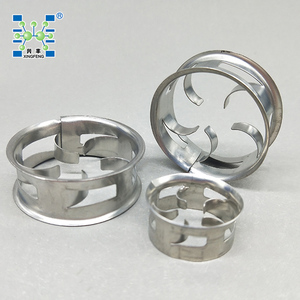
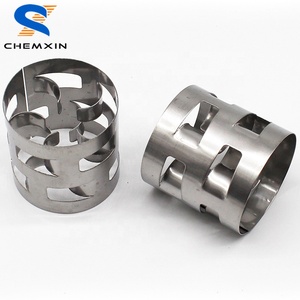
In complex mass transfer internals, column distillation installations, and fluid power assemblies, progressive tooling enables the seamless transformation of raw coils into intricate geometries. Whether manufacturing 316-grade stainless steel Pall rings with integrated internal fingers or producing precision deep-drawn shells for fluid reservoirs, every station of our progressive dies is constructed using high-carbon, high-chromium tool steels (such as 1.2379/D2) and powdered metallurgy carbides. This metallurgical diligence ensures absolute repeatability throughout the lifecycle of the tool, preventing burr formation, localized wall thinning, and structural stress micro-cracks that can compromise components operating in demanding chemical or high-pressure automotive environments.

Tooling Precision & Die Design

In-house CAD/CAM tooling centers employing 3D simulation to analyze raw material grain flow, strip layout optimization, and spring-back compensation for stainless, alloy, and non-ferrous coils.

Full Metallurgical Traceability

Complete material compliance conforming strictly to EN 10204 3.1 certification. Every heat number, mechanical tensile report, and chemical assay is tracked from raw billet to finished component.

High-Speed Automated Press Lines

Stamping tonnages ranging up to heavy-duty hydraulic and high-speed mechanical presses equipped with acoustic emission sensors to monitor tool wear and strip feeding tolerances.

Localized Applications & Manufacturing Trends in Germany

Bridging traditional manufacturing excellence with clean technology, Industry 4.0 automation, and European circular supply chains.

DIN/ISO
Specification Alignment
25+
Years Industry Proven
< 0.4µm
Internal Honed Roughness
100%
Dimensional Batch Verification
German industrial sectors are undergoing unprecedented technological acceleration, primarily centered around energy transformation (Energiewende), industrial decarbonization, and advanced hydrogen economies. These transitions drive a substantial shift in the technical demands placed on progressive die stamping suppliers. In conventional applications, progressive stamping served basic mechanical housing and automotive bracketry. Today, the focus has shifted towards precision thin-gauge separation elements, bipolar battery plates, mass transfer distributor trays capable of handling specialized biochemical solvents, and high-purity chemical filtration media.
Furthermore, progressive dies fabricated for the German market increasingly integrate secondary processes directly into the press—such as in-die tapping, hardware insertion, and 100% vision-system dimensional verification. Component surfaces must meet specific cleanliness and roughness criteria (such as VDMA or customized customer specs) to facilitate downstream robotic laser welding or automated clean-room assembly. At Ambani Metals, our production protocols adapt directly to these expectations, providing the level of structural cleanliness, deburring quality, and packaging integrity demanded by OEMs throughout Central Europe.
Component Application Material Specification Progressive Process Dynamics Target Technical Tolerances
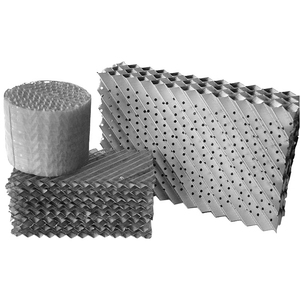
Chemical Column Internals & Packing 1.4404 (SS 316L), 1.4301 (SS 304), Monel 400 Multi-station blanking, slot perforation, continuous roll forming ± 0.05 mm strip progression / Zero flash
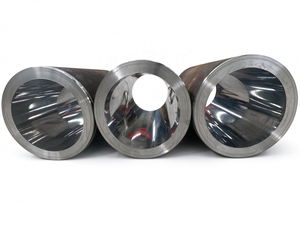
Fluid Power & Hydraulic Housings E355, ST52, 16Mn, 42CrMo4 Deep drawn cupping, ironing, multi-axis hydraulic honing ISO H8 bore tolerance / Ra ≤ 0.4 µm
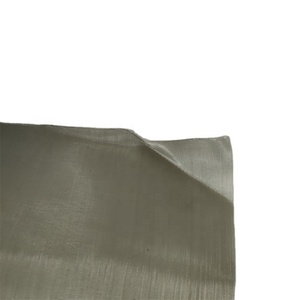
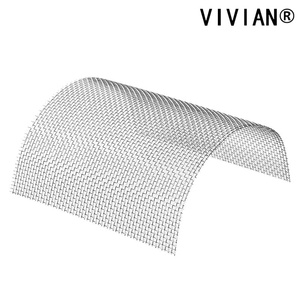
Filtration Screens & Demisters Hastelloy C-276, Nickel 200, 1.4401 Mesh Progressive slit-expansion, micro-piercing, precision shearing Uniform pitch consistency / Burr height < 0.01 mm
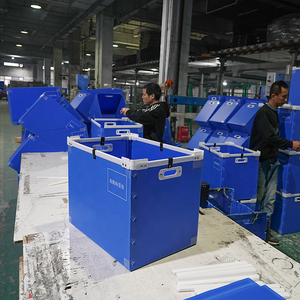
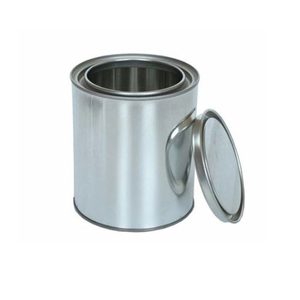
Hermetic Packaging & Fluid Enclosures Electrolytic Tinplate, Deep-Drawing Aluminum Multi-stage compound drawing, curling, pressure flange sealing Hermetic seam retention / Leak test certified

Why German Engineering Teams Partner with Ambani Metals

Combining vertically integrated manufacturing capacity with comprehensive global shipping and QA methodologies.

25+ Years Industrial Heritage

Founded in 1998, Ambani Metals has developed from a precision engineering specialist into a world-class exporter serving demanding global clients across more than 20 countries. Our long-term technical experience ensures immediate comprehension of critical engineering drawings.

Single-Source Manufacturing Stack

From raw stainless steel inventory, coil slitting, and deep-hole drilling to high-speed progressive die stamping and ultrasonic cleaning—our single-roof operations eradicate subcontractor delays and retain strict end-to-end quality control.

Seaworthy & European Packaging

All goods bound for Germany are treated with industrial rust-preventative agents, vacuum sealed where appropriate, and loaded into heat-treated, phytosanitary ISPM-15 compliant wooden cases, ensuring zero corrosion or mechanical deformation during transit.

Procurement & Engineering FAQ for German Buyers

Key technical, compliance, and logistics clarifications for European procurement specialists.

How do you handle DIN / EN raw material equivalencies from your facilities?
We source our alloys, carbon steels, and stainless sheets from accredited mills providing complete chemical analysis and mechanical property validation according to EN 10204 3.1 inspection certificates. We directly cross-reference and adhere to German material standards (e.g., 1.4404 for AISI 316L, 1.4301 for AISI 304, and 1.0580/E355 for ST52). Specific client chemical limits or grain structure constraints can be certified prior to die loading.
What are your tooling lead times for custom progressive stamping dies?
Standard prototype and progressive die tooling cycles typically span between 4 to 7 weeks depending on tool complexity, draw stations, and custom in-die requirements. First Article Inspection (FAI) reports along with full PPAP (Production Part Approval Process) documentation including 3D CMM coordinate checks are submitted for engineering release prior to series manufacturing.
Can your engineering team support column revamps or replacement internals from legacy drawings?
Yes. Ambani Metals has supported extensive brownfield plant revamps across petrochemical and chemical refining operations. We can reverse-engineer or adapt existing legacy column prints—converting sieve, fixed valve, floating valve, and bubble cap tray layouts into high-efficiency progressive stamping tooling with modular bolt-together assemblies that fit directly through standard vessel manways.
What delivery terms (Incoterms) and transport paths are typical for deliveries to Germany?
We regularly ship under Incoterms 2020 via CIF, CFR, FOB, or DDP depending on client preferences. Standard logistics channels route via major sea freight gateways such as Hamburg or Bremerhaven, supported by express air freight options via Frankfurt (FRA) for urgent tooling trials or mission-critical spare parts replenishment. Complete documentation sets (Bill of Lading, Certificate of Origin, Packing List, Mill Test Reports) are generated systematically to ensure streamlined customs clearance.

Initiate Your Engineering Consultation

Send your CAD models (.STEP / .IGES), 2D DIN dimension sheets, or operating process parameters directly to our technical desk.

Send an Inquiry