
- +91-9930498858Call / WhatsApp
- [email protected]Email Us
Ambani Metals combines more than 25 years of engineering experience with high-grade fabrication technologies to deliver mass transfer column internals, perforated sheets, wire cloth, and deep-drawn metal packaging. Browse our certified product matrix built to JIS and international quality standards.
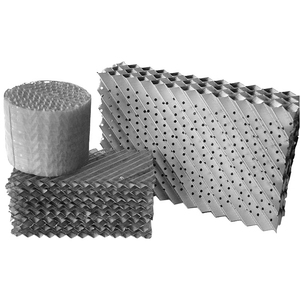
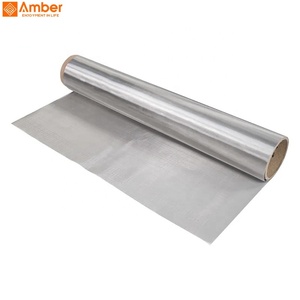
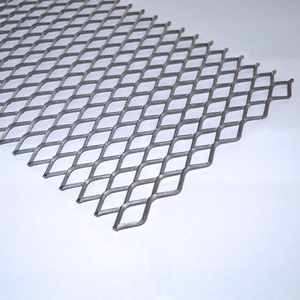
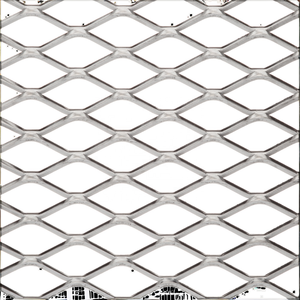
In thermal separation processes—spanning vacuum distillation, stripping, and gas absorption—sheet metal packing acts as the hydrodynamic backbone of column internals. Ambani Metals manufactures both corrugated metallic sheet packing and woven wire gauze structured packing, engineered with precise geometric surface structures that optimize vapor-liquid mass transfer efficiency while minimizing pressure drop (ΔP).
For chemical and semiconductor refiners in Japan, achieving tight fractionation with minimal thermal degradation of valuable products requires precise manufacturing tolerances. Corrugated layers inclined at alternating angles (typically 30° for Type X or 45° for Type Y) create continuous intersecting flow channels that promote macroscopic turbulence without causing localized pressure accumulation.
Japanese manufacturing demands absolute precision, defect-free reliability, and strict compliance with rigorous plant performance metrics. Our sheet metal packing, wire mesh, and precision deep-drawn parts are engineered for diverse Japanese heavy and fine industries.
Installed inside vacuum distillation units, ethylene fractionators, and aromatic separation columns across Tokyo Bay and Chiba. Our SUS316L and high-alloy structured packing withstands cyclic thermal stress and provides maximum throughput for refinery debottlenecking revamps.
High-purity solvents (IPA, PGMEA, photoresist developers) required by semiconductor fabrication lines in Kumamoto and Fukuoka rely on our clean, electropolished wire gauze structured packing to extract trace contaminants at ultra-high theoretical plate counts.
Amine absorption columns and carbon dioxide capture pilot plants in Osaka and Hiroshima utilize our corrosion-resistant sheet metal structured packing and gas distributor grids to handle fluctuating liquid loads with negligible pressure drop.
The Japanese industrial sector is undergoing a profound structural transition, driven by national decarbonization goals, energy-saving mandates, and high-tech supply chain re-shoring. These dynamics directly influence how Japanese plant engineers procure mass transfer hardware:
Japanese refineries are systematically replacing conventional bubble cap or valve trays with high-efficiency structured sheet metal packing. The drastically reduced pressure drop lowers column reboiler temperatures, cutting natural gas and thermal fuel consumption by 15% to 30%.
With fine-chemical syntheses handling harsher organic chlorides, fluorinated intermediates, and acid gases, procurement teams in Japan are transitioning from baseline SUS304 to advanced Hastelloy C-276, Inconel 625, Monel 400, and Titanium structured packing.
Faced with land constraints and aging coastal facility footprints, engineering contractors in Japan require ultra-high capacity sheet metal packing that enables smaller column diameters and shorter shell heights without compromising separation purity.
| Packing / Tray Category | Surface Area (m²/m³) | Pressure Drop (ΔP / theoretical stage) | Separation Efficiency (HETP) | Primary Industrial Match |
|---|---|---|---|---|
| Corrugated Sheet Metal Packing (Type Y/X) | 125 – 500 | 0.3 – 1.0 mbar | High (250 – 450 mm) | Vacuum fractionation, fine chemicals, petrochemical revamps |
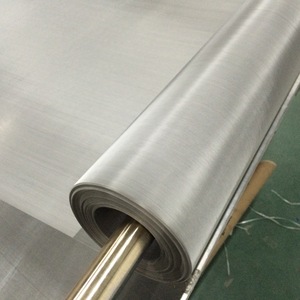
| Wire Gauze Structured Packing | 450 – 750 | 0.1 – 0.5 mbar | Superior (120 – 250 mm) | High-purity electronic solvents, pharmaceuticals, isomers |
| Fixed & Floating Valve Trays | N/A | 3.0 – 8.0 mbar | Moderate | Refinery crude distillation, fouling & heavy slurry duties |
| Metallic Random Packing Rings | 100 – 350 | 1.0 – 2.5 mbar | Moderate to Good | Acid gas scrubbers, carbon dioxide strippers, revamps |
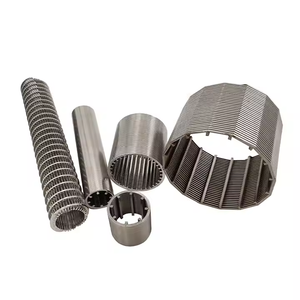
| Wedge Wire Filter Elements | Custom Slot Opening | Extremely Low | High Retention | High-solids resin processing, water purification, catalyst beds |
Operating since 1998, Ambani Metals has built a rock-solid manufacturing ecosystem that solves the exact logistical, metallurgical, and documentation pain points encountered by international purchasers.
Every sheet of SUS304, SUS316L, Hastelloy, and Monel is procured from premier primary mills. Orders are dispatched with Mill Test Certificates, chemical composition analyses, and mechanical test logs, satisfying strict Japanese inspection criteria.
From micro-perforating, precision slitting, deep-drawing, and custom corrugation to automated welding and multi-pass tooling, our integrated manufacturing plants eliminate sub-contractor variances and guarantee tight dimensional tolerances.
All column packing, trays, and wire mesh components are packaged in ISPM-15 compliant fumigated wooden crates with desiccant protection and reinforced internal bracing to prevent dimensional warping during maritime transit to Yokohama, Kobe, or Nagoya.
While our primary production references ASTM and DIN specifications, our stainless steel and superalloy feedstock matches JIS grade equivalencies (e.g., SUS304, SUS316L, SUS310S). Full chemical and physical property charts are cross-mapped on our Mill Test Reports (MTR) according to EN 10204 3.1 standards to satisfy your project's Quality Assurance department.
Yes. Every structured packing layer and tray assembly is segmented into engineered modular blocks sized to pass through vessel manholes (typically 450 mm to 600 mm inner diameter). Each segment is numbered, tagged, and provided with an installation layout drawing for quick assembly during scheduled maintenance turnarounds (Teiki Shuuri).
Structured sheet metal packing is chosen when processes require minimal pressure drop per theoretical stage, such as vacuum distillation, heat-sensitive monomer purification, and capacity debottlenecking revamps. Trays are reserved for high-fouling, slurry-rich environments or applications requiring high liquid holdup.
To deliver hydraulic verification and commercial pricing, please share: column internal diameter, packed bed height (or number of theoretical stages needed), operating system pressure/temperature, vapor/liquid volumetric flow rates, process fluid physical properties (density, viscosity, surface tension), and chosen metallurgy.
Standard fabrication typically spans 3 to 5 weeks depending on custom tooling and alloy availability. Maritime freight to primary Japanese ports (Yokohama, Tokyo, Osaka, Kobe, Nagoya) typically takes 14 to 20 days. Air express options are available for urgent shutdown or turnaround maintenance parts.
Whether you require hydraulic modeling for a chemical plant revamp, replacement corrugated sheet packing, or custom deep-drawn precision enclosures, our senior engineering team is ready to review your data sheet.
Contact Us