- +91-9930498858Call / WhatsApp
- [email protected]Email Us
From micro-tolerance diffusion-bonded wire cloth to deep drawn filter housings and specialized cooling tower packings, explore our export-grade components engineered to ASME, ASTM, and cGMP standards for immediate deployment across New York manufacturing plants.
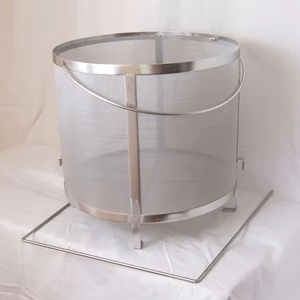
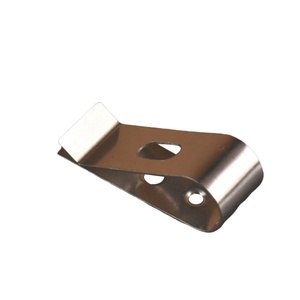
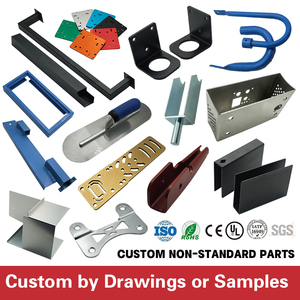
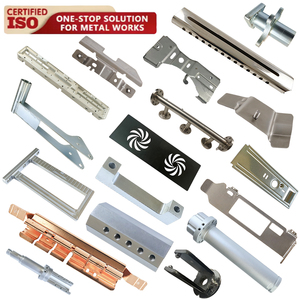
Conventional woven wire mesh exhibits pore displacement and wire migration under sustained mechanical load and pulsating backwash cycles. Sintered mesh laminates resolve this failure mode by diffusion bonding multi-layered woven wire cloth at atomic boundaries within vacuum furnaces under strict thermal and mechanical compression.
The industry benchmark for cross-flow solid-liquid separation. Constructed with a protective cover screen, an exact micron rating control layer (1µm to 100µm), a redistribution flow layer, and two coarse structural reinforcement meshes. Diffusion bonding locks every wire crossover point, guaranteeing zero aperture deformation under reverse flow pressure up to 30 bar.
Engineered for extreme hydrodynamic loads in centrifuge baskets, catalyst retention bottoms, and down-hole petroleum screening. A precision-perforated sheet (1.5mm to 3.0mm thickness) is diffusion-bonded to fine Dutch weave mesh. This creates a composite filter medium capable of withstanding differential pressures exceeding 100 bar without downstream buckling or structural failure.
Fabricated beyond standard AISI 316L. We manufacture diffusion-bonded laminates in Hastelloy C-22/C-276 for wet chlorine and hydrochloric acid streams, Monel 400 for aggressive marine and hydrofluoric acid alkylation, and Inconel 625 for extreme thermal service reaching 600°C. Fully supported by mill test certificates adhering to EN 10204 3.1 standards.
Hydraulic performance, nominal thickness, and bubble point test data validated under ethanol/air displacement per ASTM E2814.
| Filter Rating (Nominal µm) | Standard Layer Matrix Configuration | Overall Thickness (mm) | Bubble Point Pressure (mm H₂O) | Air Permeability (m³/m²·h at 200Pa) | Tensile Strength (MPa) |
|---|---|---|---|---|---|
| 2 µm | 100 / Dutch 325x2300 / 100 / 60 / 12 | 1.70 ± 0.05 | ≥ 1280 | 14 - 22 | ≥ 340 |
| 5 µm | 100 / Dutch 200x1400 / 100 / 60 / 12 | 1.70 ± 0.05 | ≥ 850 | 35 - 50 | ≥ 345 |
| 10 µm | 100 / Dutch 165x800 / 100 / 60 / 12 | 1.70 ± 0.05 | ≥ 580 | 80 - 110 | ≥ 350 |
| 20 µm | 80 / Dutch 100x600 / 80 / 40 / 12 | 1.70 ± 0.05 | ≥ 360 | 180 - 240 | ≥ 360 |
| 40 µm | 60 / Square 325x325 / 60 / 40 / 12 | 1.70 ± 0.05 | ≥ 210 | 360 - 480 | ≥ 370 |
| 100 µm | 40 / Square 150x150 / 40 / 30 / 12 | 1.70 ± 0.05 | ≥ 110 | 750 - 920 | ≥ 380 |
From Manhattan's dense district utility networks to upstate specialty chemical hubs, sintered mesh laminates deliver unmatched mechanical longevity where single-use polymer cartridges pose critical operational liabilities.
New York's rapidly expanding life sciences cluster requires ultra-pure separation. Sintered mesh laminates serve as rigid support plates in cGMP chromatography columns, downstream harvest nutsche filters, and nitrogen spargers. Their monolithic metallic construction eliminates fiber release, resists repeated SIP/CIP sterilization cycles (121°C–134°C), and complies with FDA 21 CFR 177 sanitary criteria.
Operating North America's largest commercial steam system, New York City requires filtration components capable of handling high velocity, thermal shocks, and magnetite particulate intrusion. Sintered laminates replace perforated baskets in steam desuperheaters and condensate return loops, offering robust resistance against wire erosion and thermal fatigue.
Plants along the Niagara Frontier utilize multi-layer diffusion-bonded leaf filters and candle elements for aggressive solvent recovery, resin dehydration, and precious metal catalyst retention. Sintered 316L and Hastelloy materials allow complete cake detachment during blowback, minimizing costly downtime during batch changeovers.
Albany's world-class semiconductor research institutes and Long Island's aerospace manufacturing base demand precision micro-filtration. Sintered mesh discs protect high-vacuum lithography gas delivery lines from sub-micron particulates and serve as non-deforming hydraulic filters under severe G-force acceleration.
Addressing New York State's strict 10 ppt drinking water thresholds for PFOA and PFOS requires resilient retention media. Sintered mesh underdrains prevent fine granular activated carbon (GAC) and ion-exchange resin beads from escaping adsorber vessels. Furthermore, sintered porous diffusers produce consistent micro-bubbles for high-efficiency ozone disinfection in wastewater tertiary polishing plants.
Industrial operations across New York State are navigating aggressive environmental and economic shifts. Here is how modern diffusion-bonded media aligns with statewide legislative mandates.
The New York Climate Leadership and Community Protection Act (CLCPA) enforces steep emissions cuts. Plant managers are actively eliminating disposable polypropylene filter cartridges that end up in regional landfills. Sintered metal laminates offer indefinite backwash lifetimes, reducing lifecycle carbon footprints and eliminating recurrent disposal costs.
FDA inspections in the Long Island pharmaceutical belt focus heavily on extractables and leachables from process filters. Sintered stainless steel eliminates polymeric binders, resins, or chemical adhesives. The atomic-level fusion achieved during vacuum sintering prevents any media migration into active pharmaceutical ingredients (APIs).
With New York's clean hydrogen hub initiatives expanding across Western NY and the Southern Tier, sintered porous transport layers (PTL) and gas diffusion media (GDL) have emerged as essential components for PEM and alkaline water electrolyzers, requiring tight pore control and uniform electrical conductivity.
Operating continuous vacuum sintering furnaces, heavy mechanical press brakes, deep drawing presses, and CNC multi-axis laser centers under one manufacturing umbrella since 1998.
We source exclusively from Tier-1 stainless steel and alloy mills. Full Positive Material Identification (PMI) and heat-numbered EN 10204 3.1 chemical & physical test certificates accompany every order to New York.
Our vacuum furnaces operate at 10⁻³ Pa and temperatures exceeding 1150°C, ensuring uniform diffusion without oxidation or alloy depletion. This yields ductile, crack-free laminates ideal for secondary forming.
From rolled and longitudinal-welded filter candle cylinders to custom stamped flange assemblies, deep drawn end caps, and CNC laser-contoured discs, all downstream finishing is executed under single-roof supervision.
Exporting to 20+ countries, our shipping team coordinates expedited air cargo via JFK/EWR and consolidated container freight through the Port of New York and New Jersey, equipped with fumigated seaworthy crating.
Essential technical and commercial guidelines for plant engineers, process designers, and procurement managers in the Tri-State area.
Send your process data sheets, differential pressure requirements, or CAD dimensional drawings for an immediate engineering assessment and competitive commercial quotation tailored for the New York market.