- +91-9930498858Call / WhatsApp
- [email protected]Email Us
Industrial filtration cylinders, perforated casings, deep drawn components, and protective housings tailored for Tokyo’s demanding sub-surface drainage, coastal construction, and micro-electronic process facilities.
Slotted metal pipes represent a vital mechanical interface in fluid management, well screens, subterranean water control, and industrial filtration. In dense coastal metropolitan areas like Tokyo, specifying the right combination of slot geometry, structural wall thickness, and metallurgy is critical to resisting both subterranean hydraulic loads and intense galvanic attack from maritime soil brackishness.
Depending on geotechnical reports and hydraulic parameters, selecting between straight bridge-slot patterns, continuous helical wire-wrapped screens, or precision laser-machined longitudinal slotted casings determines hydraulic throughput, sand control reliability, and long-term mechanical longevity.
| Configuration Type | Primary Slot Geometry | Hydraulic Open Area (%) | Collapse Resistance (JIS G3452 baseline) | Recommended Tokyo Application Domain |
|---|---|---|---|---|
| Straight Bridge-Slot Screen | 1.0 mm – 4.0 mm Louvered Openings | 8% – 15% | Very High (Retains pipe wall integrity) | Tokyo Bay Reclamation Zones, Coastal Landfill Consolidation |
| Laser Longitudinal Slotted Pipe | 0.20 mm – 1.5 mm Micro-Slots | 3% – 10% | Exceptional (Minimal structural notch effect) | Metro Deep Sub-Drainage, Basement Shoring & Groundwater Injection |
| Helical Wire-Wrapped (Wedge Wire) | Continuous V-Wire profile (0.15mm+) | 20% – 42% | Moderate to High (Reinforced rib structure) | Chiba-Tokyo Industrial Chemical Plants, Ultra-Pure Process Water Intake |
| Perforated Base + Mesh Overlay | Round holes with sintered mesh wrap | 12% – 28% | Extreme (Heavy schedule base casing) | High-pressure slurry filtration, Deep Seismic Dewatering Sumps |
Serving the complex engineering requirements of Tokyo requires understanding the unique geological, structural, and environmental challenges of the Kantō Plain. Our manufacturing lines adapt structural steel and exotic alloys to the exact technical rigors of Japanese engineering practices.
Tokyo’s deep underground infrastructure—including the Tokyo Metro network and deep stormwater bypass tunnels (like the G-Cans system)—demands high-strength, micro-slotted steel casings for continuous hydrostatic relief and deep soil consolidation without particle entrainment.
Reclaimed waterfront zones from Odaiba to Haneda Airport rely on heavy-gauge slotted drainage conduits. Fabricated from marine-grade SUS316L, Duplex 2205, or specialized hot-dip galvanized profiles, these pipes mitigate soil liquefaction risks during seismic events by controlling pore pressure.
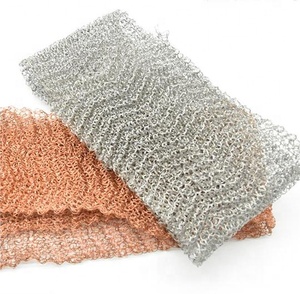
Across the Keihin Industrial Belt, our slotted metal tubes and knitted mesh filter tubes serve fine chemical distillation plants, electronics manufacturing units, and advanced cooling water loop filtration systems that operate under strict zero-contamination criteria.
The procurement landscape for metal drainage pipes, column internals, and slotted casings in Tokyo is undergoing systemic transitions driven by sustainability standards, seismic resilience mandates, and rigorous material traceability:
Major Tokyo EPC contractors increasingly phase out standard carbon steels in permanent subterranean installations, moving toward Duplex SUS31803 (2205) and 316L to reduce replacement frequency and achieve 100-year infrastructure lifecycle benchmarks.
Precision CNC laser tube processing has largely superseded mechanical punching for critical applications. Laser slotting ensures edge roundness, minimal heat-affected zones (HAZ), zero inner burrs, and consistent slot taper angles that prevent gravel pack bridging.
The Tokyo Metropolitan Government’s regulations on runoff attenuation require newly planned urban complexes in areas like Shibuya and Toranomon to install extensive sub-surface retention basins featuring engineered slotted pipe networks for groundwater replenishment.
Key technical, quality assurance, and commercial inquiries addressed by our export engineering desk.
Yes. Our precision pipe manufacturing operations routinely verify raw material chemistry and dimensional tolerances against Japanese Industrial Standards, including JIS G3459 for stainless steel pipes and JIS G3452 for standard carbon steel piping, supplying full mill test reports (EN 10204 3.1).
We supply passivated SUS316/316L, Monel 400, or Hastelloy mesh configurations. Furthermore, slot cross-sections are engineered with an inward-widening keystone geometry (V-shape) to guarantee that any sand or granular media entering the slot passes through without plugging the intake.
Every dispatch includes comprehensive quality dossiers containing PMI (Positive Material Identification) spectroscopy, ultrasonic thickness verification, hydro-static or burst pressure logs, slot dimensional tolerance reports, and full heat-number traceability back to primary melt sources.
Standard export orders are crated in seaworthy, fumigated wooden cases (ISPM-15 compliant) with inner anti-corrosion barrier wrapping and desiccant packs. Direct shipping routes ensure fast customs clearance and predictable project scheduling for Kanto-based job sites.
Combining 25+ years of specialized alloy fabrication with end-to-end quality governance for critical engineering projects.
Our plant processes a wide range of materials: standard stainless steel (SUS304, 304L, SUS316, 316L), nickel-base superalloys (Hastelloy C-276, Inconel 625, Monel 400), pure titanium, and copper/brass alloys for tailored corrosion resistance.
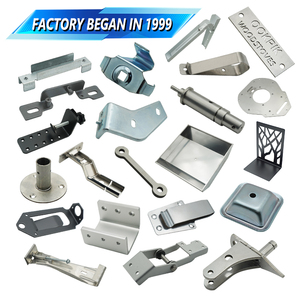
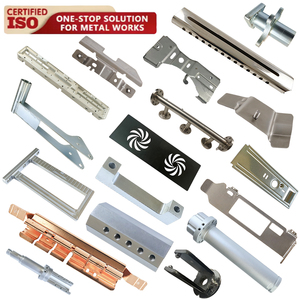
Equipped with heavy mechanical presses, progressive stamping systems, and high-precision CNC multi-axis laser tube cutters, we fabricate seamless filter cylinders, precision stamped casings, and complex deep drawn enclosures within tight tolerances.
We accommodate third-party inspection (SGS, TÜV, Lloyd's Register) and offer dimensional CMM reports, tensile verification, non-destructive weld testing, and surface roughness (Ra) verification prior to final seaworthy dispatch.