
- +91-9930498858Call / WhatsApp
- [email protected]Email Us
From ASTM-grade woven mesh filters to structured tower internals and deep drawn mechanical elements, review our premier export inventory configured for Central American supply chains.
The strategic commercial position of the Republic of Panama, punctuated by the Panama Canal expansion, heavy port transit across Balboa and Colón, alongside massive open-pit non-ferrous mineral extraction operations (such as Cobre Panamá), establishes exceptional operational demands on separation media. Woven wire cloth—engineered via cold-drawn ductile alloys interlaced through plain, twill, or Dutch weave configurations—serves as the unseen foundation across Panama's critical industrial infrastructures.
Operating within tropical marine environments characterized by relative humidity exceeding 85%, persistent saline aerosol mist, and intense mechanical vibration profiles requires profound metallurgical control. As an established direct manufacturer and exporter supplying the Latin American trade lane, Ambani Metals bridges the gap between strict European ASTM/ISO fabrication standards and localized Panamanian operational realities.
Our woven wire cloth production lines feature automated shuttleless rapiers and heavy-duty mechanical looms equipped with electronic warp feed control, ensuring absolute uniformity in aperture dimensions down to 5-micron absolute filtration limits. By utilizing vacuum-degassed wire materials in AISI 304, 304L, 316L, 904L, Monel 400, Hastelloy C-276, and Duplex 2205, our factory supplies Panamian engineering procurement specialists with woven textiles completely resistant to pitting index degradation, high-pressure surging, and particle abrasive fatigue.
Tailored physical mesh configurations and mass transfer surfaces operating inside primary domestic industries.
Panama's massive vessel transits mandate high-velocity bunker fuel conditioning and ballast water filtration. Our plain Dutch weave stainless 316L cloth elements trap micro-sediments down to 25 microns without collapse under differential pressures up to 10 bar, guaranteeing IMO D-2 maritime compliance across drydocks in Colón.
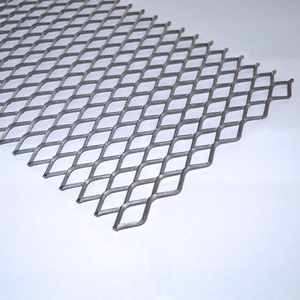
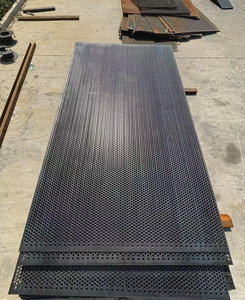
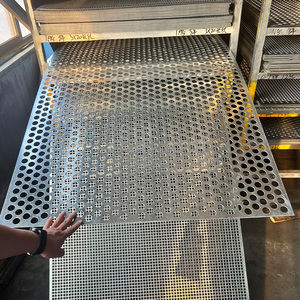
In large-scale copper, gold, and aggregate operations across Donoso and the central cordillera, vibratory slurry screens suffer extreme abrasion. We supply heavy-gauge crimped wire cloth and integrally formed perforated screen plates engineered with high carbon manganese steels and SS304 to extend wear cycles by over 300%.
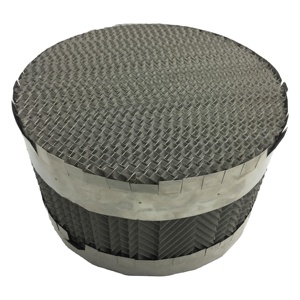
The manufacturing and chemical storage terminals of the Zona Libre de Colón utilize our BX500 SS304/SS316 structured gauze packing, random packing rings, and custom sieve trays to drive fractional distillation, petrochemical demisting, and organic solvent recovery under tight vacuum thresholds.
Bulk mineral logistics at port facilities generate particulate dispersion issues in Pacific and Atlantic harbors. Our multi-wave perforated aluminum and alloy windbreak panels reduce ambient wind speed by up to 80%, providing effective boundary layer dust suppression for port environmental conformance.
Engineered alloy guidelines based on critical process chemistry, exposure to saltwater, and operating temperature profiles.
| Alloy Classification | PREN Rating | Tensile Strength (MPa) | Primary Industrial Utility in Panama | Corrosion Factor Response |
|---|---|---|---|---|
| AISI 304 / 304L | 18.0 - 20.0 | 520 - 720 | Interior water processing, aggregate screening, and light machinery guards. | Susceptible to localized pitting in stagnant tropical seawater; best for freshwater. |
| AISI 316 / 316L | 23.0 - 25.0 | 550 - 750 | Marine ballast filtration, shipboard fuel demisting, coastal port ventilation. | Molybdenum addition resists marine chloride stress cracking up to 60°C. |
| Duplex 2205 | 35.0 - 38.0 | 655 - 880 | High-velocity seawater intakes, mine slurry tailings, offshore terminal strainers. | Exceptional resistance to pitting corrosion and abrasive mechanical erosion. |
| Monel 400 (Ni-Cu) | N/A (Nickel base) | 450 - 580 | Hydrofluoric alkylation units, ship propellers, subsea lock gate intake cloth. | Completely immune to rapid chloride-induced stress cracking in turbulent marine zones. |
| Hastelloy C-276 | ≥ 65.0 | 690 - 790 | Acid gas scrubbers, flue gas desulfurization, high-temperature chemical revamps. | Withstands wet chlorine gas, hypochlorite, and severe sulfuric/hydrochloric attacks. |
Over the past five years, procurement dynamics across the Central American transshipment center have evolved rapidly. Three macro trends dominate the sourcing decisions of plant managers, EPC project directors, and maintenance supervisors in Panama:
1. Demand for High PREN (Pitting Resistance Equivalent Number) In-Stock Alloys: Due to Panama's year-round ambient temperatures and marine salinity, standard commercial 304 wire mesh demonstrates accelerated degradation within 12 to 18 months in unsheltered port setups. Local procurement entities have transitioned rapidly toward specified 316L, Duplex, and polymer-coated windbreak structures that promise continuous operating life cycles exceeding 10 years.
2. Decoupling from High-Markup Intermediaries: Panamanian operators have historically relied on regional trading houses situated in Florida or Central America, absorbing heavy logistical markups of 35% to 60%. Today's direct-from-factory model—leveraging ocean freight routes docking straight at Puerto de Balboa or Manzanillo International Terminal—allows major industrial facilities to secure bespoke, mill-certified woven wire rolls and deep drawn filtration cartridges directly from Ambani Metals with substantial cost efficiencies and short production windows.
3. Decarbonization and Hydraulic Efficiency in Canal Operations: The ongoing mandate by the Panama Canal Authority (ACP) toward water conservation basin optimizations requires high-throughput, low-resistance separation grids. Our BX500 structured wire gauze packing and precision perforated screens deliver minimal delta-P (hydraulic drop), reducing auxiliary pumping power needs across chemical scrubbers and closed-loop process plants.
Combining complete mill traceability with state-of-the-art weaving looms, precision metal forming, and direct Panamanian shipping channels.
Every roll of wire cloth, perforated screen plate, and column tray leaves our factory with complete EN 10204 3.1 chemical and mechanical inspection certificates detailing heat identity, alloy chemistry, and tensile limits.
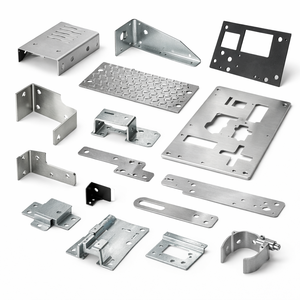
From micro-aperture wire weaving to 400-ton hydraulic deep-drawing presses and fiber laser cutting stations, our unified plant eliminates subcontracting delays, maintaining exact geometric tolerances of ±0.05mm.
We supply custom-built, vacuum-sealed seaworthy wooden cases engineered specifically to withstand transoceanic humidity variations. Seamless container drop-shipping is routed straight into Balboa, Colón, or direct bonded free zones.
Our veteran design department cross-examines client hydraulic datasheets, vibration loads, and mesh turndown ratios, delivering detailed CAD/BIM shop drawings to ensure first-time install fit inside active columns.
Real-world engineering and trade logistics considerations for industrial buyers across Central America.
For custom woven wire cloth rolls and standard perforated plates, our manufacturing timeframe typically spans 10 to 18 working days depending on total metric volume and weaving setup requirements. Direct marine container transit from our international export terminal to Panamanian hubs (Puerto de Balboa on the Pacific or Manzanillo / Colón Container Terminal on the Caribbean side) averages 24 to 32 ocean days. Expedited air freight for emergency maintenance shutdown parts (such as deep drawn filtration elements or replacement tray hardware) arrives at Tocumen International Airport (PTY) in under 6 days.
Because shipments traverse high-humidity maritime zones across equatorial waters, we implement multi-layer barrier packaging. Precision wire mesh rolls are first enveloped in vapor-corrosion-inhibiting (VCI) active film, followed by thermal-sealed polyethylene moisture barriers. Each roll is supported on structural internal cardboard or steel mandrels to prevent mechanical flattening and encased in IPPC-certified ISPM-15 treated plywood shipping crates loaded with silica desiccant pouches.
For abrasive aggregate screening and heavy mineral tailings dewatering, we suggest a double-crimped or intermediate crimped plain weave using heavy wire gauges (diameter 1.5mm to 6.0mm), or our monolithic formed perforated screen plates. Conversely, for maritime fuel filtration and precision hydraulic separation, we recommend Dutch Weave (Plain Dutch or Twilled Dutch), where warp wires are spaced widely and weft wires are driven tight against one another, creating robust, tortuous micro-openings ranging from 5 to 150 microns that withstand high backwash pressures.
Yes. Over 60% of our export output involves reverse engineering or custom fabrication according to customer-supplied 2D/3D CAD, DXF, or STEP models. Whether you operate American machinery requiring imperial fractional dimensions or European extraction columns built to DIN/ISO metric standards, our tooling center builds the required punch dies, deep draw progressive tooling, and weaving setups to hold tolerances under ±0.05 mm, corroborated by coordinate measuring machine (CMM) inspection reports.
We supply a comprehensive export document dossier tailored to Central American customs and free-zone logistics. This includes certified Commercial Invoices with HS code designations, detailed Packing Lists with individual package gross/net weights and dimensions, Clean on Board Bills of Lading (BL), Certificate of Origin (COO), and factory EN 10204 3.1 Material Test Reports certifying the physical and chemical metallurgy.
Connect immediately with our technical engineering desk. Forward your dimensional drawings, mesh counts, process datasheets, or alloy specifications for an expedited engineering quotation.
Inquire Now