- +91-9930498858Call / WhatsApp
- [email protected]Email Us
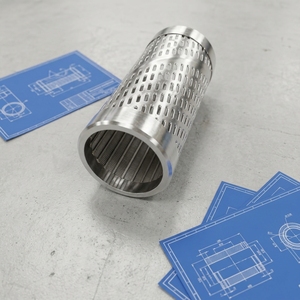
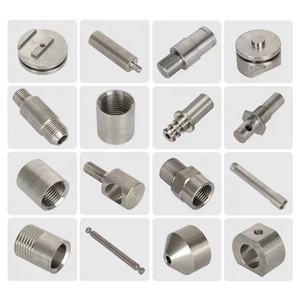
Precision-perforated sieve plates, random tower packings, filtration media, and high-tolerance deep-drawn metallic housings engineered for petrochemical, refinery, cryogenic, and high-purity process systems.
A rigorous examination of vapor-liquid hydraulic equilibrium, orifice discharge coefficients, and fouling mitigation in multi-component fractional distillation.
In continuous fractional distillation towers, the sieve plate (or perforated tray) represents the quintessential cross-flow mass transfer component. Operating without moving mechanical elements, its performance relies entirely on the dynamic equilibrium between rising vapor kinetic energy and descending liquid gravitational head. As a preeminent Chinese manufacturer and global exporter, our engineering facilities integrate hydrodynamic modeling with precision manufacturing to deliver sieve plates that eliminate bypass weeping, minimize pressure drop ($\Delta P$), and prevent premature entrainment jet flooding across chemical processing industries (CPI).
The fundamental separation mechanism on a sieve tray occurs within the active aerated two-phase dispersion zone. When vapor emerges through clean-punched or laser-cut perforations—typically sized between 3.0 mm and 12.7 mm—it shears the cross-flowing liquid stream into either a froth, spray, or cellular foam regime. Achieving a high Murphree tray efficiency ($E_M$) requires the continuous maintenance of an isotropic emulsion regime across 100% of the active tray decking area ($A_a$), avoiding dead stagnant zones near the column shell walls.
Standard sieve trays historically exhibit limited operating flexibility (~2:1 turndown). Through computational fluid dynamics (CFD) and proprietary variable-pitch hole spacing, our sieve trays achieve operational turndown ratios exceeding 3:1 without encountering the weeping boundary.
Micro-burrs on hole exit perimeters initiate liquid weeping and accelerate localized pitting corrosion. Our high-speed progressive mechanical punch tooling ensures uniform clean-break orifices with zero downstream vapor deflection distortion.
Every batch of raw stainless steel (SS304, SS316L, 410S), nickel alloys (Hastelloy C276, Monel 400, Inconel 625), and titanium is mill-certified with 100% positive material identification (PMI) and intergranular corrosion test verification.
A critical failure mode in large-diameter columns (exceeding 2500 mm ID) is tray floor weeping caused by hydraulic gradient across the active deck. As liquid traverses long distances, frictional drag creates a higher liquid head near the inlet downcomer than at the outlet weir. Consequently, vapor preferentially channels through the thinner liquid layer near the outlet, while the excessive liquid head near the inlet forces uncontacted reflux to weep down to the tray below. Our engineering practice resolves this by implementing stepped tray deck elevations, sloped downcomer designs, and directional vapor push slots that mechanically assist liquid momentum, ensuring isobaric vapor distribution across ultra-wide diameters.
Hydraulic efficiency, fouling tolerance, and financial trade-offs across conventional and advanced vapor-liquid contacting technologies.
| Internals Architecture | Operating Principle | Turndown Ratio | $\Delta P$ per Stage | Fouling Propensity | Relative Capex |
|---|---|---|---|---|---|
| Standard Sieve Plate | Perforated plate without valves; vapor velocity prevents liquid weeping. | 2.0:1 – 2.5:1 | 3.5 – 6.5 mbar | Moderate (Clean services) | Lowest (Base 1.0) |
| Fixed Valve Tray | Integral pressed extruded vapor valves directed parallel to flow. | 3.0:1 – 3.5:1 | 4.0 – 7.0 mbar | High Resistance | Moderate (1.2x) |
| Floating Valve Tray | Free-floating metal caps lifting dynamically based on vapor flow rate. | 4.5:1 – 5.5:1 | 4.5 – 8.0 mbar | Low (Prone to sticking) | Higher (1.4x) |
| Bubble Cap Tray | Fixed risers and slotted caps with liquid seal under all load conditions. | > 8.0:1 | 7.0 – 12.0 mbar | High (Polymerization risk) | Substantial (2.2x) |
| Corrugated Structured Packing | Woven wire gauze or embossed sheet metal bundles providing wetted area. | > 10:1 | 0.3 – 1.0 mbar | Severe (Fouls easily) | Premium (2.5x – 4.0x) |
How automation, decarbonization mandates, and material science are revolutionizing sieve plate fabrication.
Integration of hybrid micro-slits alongside round sieve holes to reduce liquid stagnant eddy recirculation by 38%, preventing bottom-tray coke and polymer deposition.
Nanosecond pulsed laser texturing modifies stainless steel wettability, facilitating uniform liquid film spread even at micro-liquid loadings down to 0.1 m³/m²·h.
Moving beyond standard duplex stainless steels, next-gen sieve plates utilize refractory high-entropy alloys for extreme corrosive sour crudes containing H2S, CO2, and chlorides.
Photogrammetric 3D optical scanning verifies bolt-hole alignment, downcomer clearance, and support ring tolerances in the factory before overseas wooden crate containerization.
Combining 25+ years of mechanical stamping pedigree with ISO 9001 certified quality control and worldwide sea freight logistics.
Distillation column revamps and Greenfield installations operate under severe shutdown schedules. Unplanned downtime costs refinery operators hundreds of thousands of dollars per day. Understanding this operational reality, our manufacturing infrastructure is built around predictable execution, metallurgical transparency, and uncompromising structural tolerance.
Every sieve plate order undergoes comprehensive fabrication control. We maintain a raw material inventory of over 5,000 metric tons of mill-annealed stainless steels (AISI 304/304L, 316/316L, 410, 904L, 2205 Duplex) and nickel base alloys, supplied with complete EN 10204 Type 3.1 inspection certification. Our automated hydraulic multi-punch presses fabricate entire tray decking segments with repetitive spacing tolerance within ±0.05 mm, ensuring that design open hole area percentages ($A_h / A_a$) match chemical engineering process simulations precisely.
Furthermore, our engineering team does not simply stamp holes on metal: we optimize the entire mechanical assembly. Trays are segmented to pass through standard vessel manways (450 mm to 600 mm inner diameter), fitted with quick-release tray clamps, adjustable downcomer clearance bars, and anti-vibration beam trusses capable of withstanding operational upsets and vapor surge pulses without structural sagging.
Key risk management criteria for international procurement directors and EPC mechanical category heads.
The global mass transfer equipment market is transitioning from transactional commoditized purchasing to strategic life-cycle value evaluation. Plant owners are increasingly focused on Total Cost of Ownership (TCO), which factors in energy consumption per separated ton of product, maintenance turnaround schedules, and installation cycle speed.
1. Decarbonization & Low-Pressure-Drop Revamps: With escalating industrial carbon taxes, refinery reboilers consume immense thermal duty. Upgrading archaic bubble cap or poorly designed trays to high-capacity sieve plates or hybrid tray-packing designs allows operators to lower column base pressure, reducing steam demand by 12% to 22%.
2. Supply Chain Diversification with Direct-to-Factory Procurement: International engineering firms are bypassing intermediate trading agents to collaborate directly with vertically integrated Chinese manufacturers capable of handling precision deep drawing, CNC perforation, and structural fabrication under one roof. This guarantees direct accountability, reduces lead times by 30-45 days, and allows custom design adaptations during turnaround emergency windows.
3. Standardized Pre-Assembly and Tagged Packaging: Overseas logistics requires meticulous cargo handling. Sieve plate sections are delivered with laser-etched part numbers corresponding to tray layout drawings (P&ID matching), packaged in hermetically desiccated, ISPM 15-compliant fumigated steel-frame crates to prevent sea-freight atmospheric corrosion.
Detailed engineering responses to critical questions regarding sieve plate design, metallurgical validation, and international shipping.
Have an upcoming column revamp, debottlenecking study, or Greenfield separation project? Consult with our senior mass transfer engineering team for rapid hydraulic sizing, material selection, and competitive factory-direct pricing.
Send an Inquiry