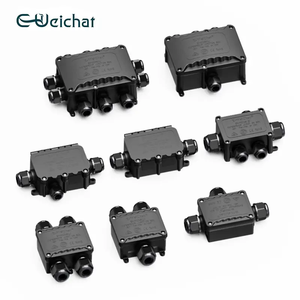
Custom Electronic Enclosure IP68 Waterproof Junction Box Enclosure
Engineered flame-retardant power enclosures offering robust environmental sealing, EMI attenuation, and outdoor ingress protection.

Sintered porous metal filtration elements provide critical operational resilience across ultra-high-temperature, high-differential-pressure, and aggressive chemical processing environments. From cross-flow gas-solid separation in refinery fluid catalytic cracking (FCC) slurry loops to sterile steam validation in pharmaceutical API plants, selecting the optimal manufacturing partner demands technical verification of vacuum sintering profiles, raw spherical powder grain morphology, and diffusion-bonded tensile cohesion.
Engineered flame-retardant power enclosures offering robust environmental sealing, EMI attenuation, and outdoor ingress protection.
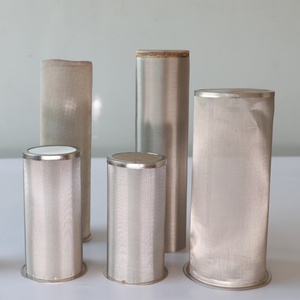
Vacuum diffusion-bonded porous filtration elements providing calibrated pore apertures, backflush durability, and hydraulic stability.
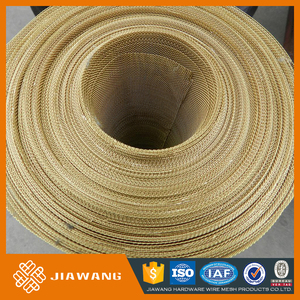
High-tensile SS304 and SS316 wire mesh featuring chemical passivity, precise aperture distribution, and wear-resistant woven geometry.
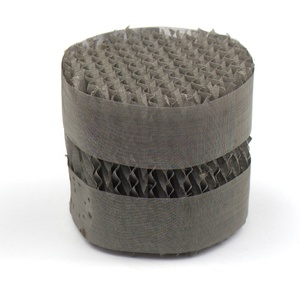
Engineered mass-transfer tower internals delivering high specific surface area, ultra-low delta-P, and optimal vapor-liquid distribution.
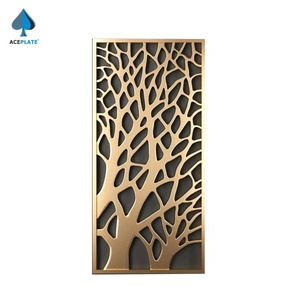
Precision-perforated structural sheets fabricated with customizable aperture patterns for industrial ventilation and acoustic shielding.
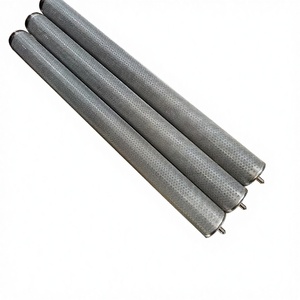
Composite porous filtration cartridges featuring perforated structural backing cores for heavy-duty industrial liquid-solid separations.
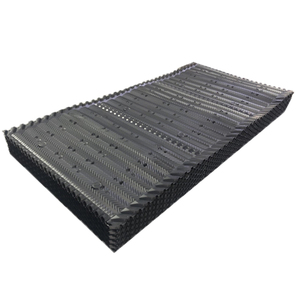
High-thermal-efficiency engineered packing grids maximizing fluid retention, biological resistance, and industrial heat rejection.
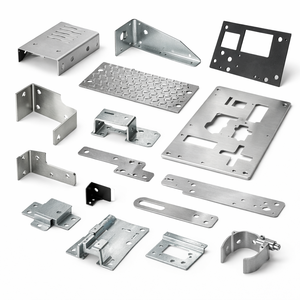
CNC laser-machined, deep-drawn, and progressive-stamped components produced under tight tolerance constraints for mechanical systems.
Comparative technical analysis detailing manufacturing capabilities, proprietary metallurgical powder formulations, export compliance, and core operational applications.
Renowned for ultra-precise porous metal technology, Mott delivers sub-micron sintered titanium and Hastelloy filters designed for the semiconductor, aerospace, and high-purity petrochemical industries. Their focus centers on extreme boundary conditions and micro-sparging assemblies.
Global leader in sintered powder metallurgy and additive manufacturing of porous matrices. GKN specializes in automotive safety systems, high-volume sintered bronze bushings, and high-porosity sintered stainless steel gas diffusion layers (GDLs) for hydrogen fuel cell stacks.
A premier global exporter operating since 1998, supplying integrated mass-transfer column internals, woven wire mesh, and custom multi-layer diffusion-bonded sintered filter cartridges. Holding full mill test traceability (MTCs), they supply major EPCs across North America, the UAE, and Australia.
Internationally recognized for PSS® sintered powder and Rigimesh® sintered woven wire mesh filtration elements. Pall delivers mission-critical fluid clarification systems for commercial aviation hydraulic systems, biopharmaceutical clarification, and nuclear effluent filtration.
The global authority in metal fiber fleece technology. Bekaert’s Bekipor® porous media uses randomly dispersed ultra-fine stainless steel and alloy fibers, delivering an exceptional void volume up to 85%, which drastically reduces initial clean differential pressure drop in polymer melt filtration.
Specialists in Sinterflo® sintered metal mesh, powder, and fiber laminate elements. Porvair serves nuclear power generation, gasification syngas clean-up, and chemical processing with certified ASME boiler and pressure vessel code welding protocols.
Japanese engineering pioneer known for the Fujibon® and Fujiplate® series. They excel in composite multi-layer laminate diffusion bonding, providing robust pore stability and mechanical rigidity for BOPP film extrusion and high-molecular polymer processing.
A key brand under Filtration Group, providing Poroplate® wire mesh laminates for demanding fluidization, aerospace turbine fuel metering, and oilfield sand control screens with custom flow distribution engineering.
German precision weaving authority providing optimized Dutch weaves and diffusion-bonded Poromesh® filter elements. They deliver tight filtration thresholds down to 3 microns with certified bubble-point integrity testing across all lots.
Specialized European manufacturer of sintered metallic powder filters in spherical bronze and austenitic stainless steel. AmesPore is a high-volume supplier for pneumatic mufflers, solenoid valve protection, and hydraulic sensor filtration with stringent ISO 9001 and IATF 16949 automotive certification.
Compare mechanical strength, operating temperature thresholds, and chemical compatibility parameters across common sintered porous media grades.
| Material Grade | Pore Range (μm) | Max Temp (°C) | Tensile Strength (MPa) | Corrosion Resistance | Primary Industrial Use Case |
|---|---|---|---|---|---|
| SS 316L (Sintered Powder) | 0.2 – 100 | 450 (Oxidizing) / 600 (Inert) | 120 – 180 | Excellent in organics, nitric acid; moderate in chlorides | Pharmaceutical API filtration, steam sterilization, catalyst retention |
| SS 316L (5-Layer Wire Mesh) | 1.0 – 200 | 480 (Continuous) | 220 – 350 | High resistance to general corrosion and intergranular attack | Polymer melt, fluid catalytic cracking, high-pressure backwash |
| Hastelloy C-276 | 0.5 – 50 | 650 | 250 – 400 | Exceptional in wet chlorine, hydrochloric acid, hypochlorite | Specialty chemicals, flaring scrubbers, sour gas purification |
| Inconel 600 / 625 | 1.0 – 80 | 850 | 280 – 450 | Immune to chloride stress corrosion cracking, high oxidation limit | Nuclear reactor cooling loops, furnace exhaust filtration |
| Pure Titanium (Grade 1/2) | 0.5 – 40 | 350 | 150 – 260 | Superior in sea water, wet chlorides, oxidizing acids | Electrolyzer gas diffusion, seawater desalination, bio-implants |
| Sintered Bronze (CuSn10) | 3.0 – 150 | 200 | 80 – 130 | Resistant to water, hydrocarbons; attacked by ammonia | Pneumatic silencers, instrumentation filters, refrigeration lines |
How green hydrogen infrastructure, additive manufacturing, and closed-loop sustainability are transforming global supply chains.
The acceleration of Proton Exchange Membrane (PEM) and Anion Exchange Membrane (AEM) water electrolyzers has triggered an unprecedented surge in demand for sub-millimeter titanium sintered porous transport layers (PTL). Global procurement is shifting toward automated roll-to-roll sintered porous foils with platinum group metal (PGM) coatings to prevent high-overpotential passivation.
Laser Powder Bed Fusion (LPBF) enables continuous gradient porosity in complex geometries that cannot be achieved by conventional axial pressing or furnace gravity sintering. Plant design engineers now procure monoblock filter elements that combine solid non-porous structural flanges with precisely graded micro-porous filtering sectors, eliminating failure-prone weld seams.
ESG mandates and industrial decarbonization are pushing operators away from disposable polymeric and glass-fiber cartridges toward cleanable, reusable sintered metallic media. Ultrasonic remediation, controlled chemical stripping, and high-velocity reverse-pulse jet backflushing allow modern sintered cartridges to exceed 5 to 8 years of operational lifespan, reducing annualized operating expenses (OPEX) by up to 65%.
Examining breakthroughs in diffusion bonding technology, surface functionalization, and particle retention modeling.
Conventional sintering methods often yield wide pore size distribution (PSD), leading to localized preferential channeling and accelerated cake fouling. Modern manufacturers integrate vacuum horizontal sintering furnaces with computer-controlled partial pressures of hydrogen and argon, resulting in Gaussian pore distributions with standard deviations under ±5% across the entire element surface area.
Sintered stainless steel naturally exhibits high surface energy, making it hydrophilic. Emerging gas-liquid coalescing applications utilize chemical vapor deposition (CVD) and fluoropolymer plasma grafting to alter surface wetting angles. This allows sintered porous filters to achieve instantaneous phase separation in natural gas dehydration and aviation fuel polishing.
Combining 25+ years of Indian metallurgical craftsmanship with rigorous global quality assurance for worldwide export.
Every batch of wire mesh, powder, and sheet is procured from certified mills (e.g., Jindal Stainless) and accompanied by EN 10204 3.1 chemical and mechanical inspection certificates.
Equipped with progressive stamping presses, laser cutting, automated multi-axis seam welders, and deep-drawing stations to eliminate sub-tier subcontractor markups and delays.
Elements undergo ASTM E128 maximum pore size bubble point verification, air permeability measurement, and hydrostatic pressure testing before final shipping crates are sealed.
Exporting to 20+ countries including the USA, UAE, Saudi Arabia, Canada, and Australia with custom ISPM-15 heat-treated seaworthy timber packing and rapid documentation clearance.
Detailed engineering answers to essential questions regarding pore ratings, cleaning cycles, differential pressures, and procurement specifications.
A nominal rating indicates an efficiency percentage (typically 60%–85%) of particles captured above a specified micrometer dimension based on gravimetric retention. An absolute rating, measured via ASTM F316 bubble point verification, guarantees 99.9% to 100% interception of spherical particles larger than the specified diameter, preventing bypass under rated process pressures.
Sintered wire mesh laminates offer superior surface filtration, cleanability, mechanical ductility, and resistance to cyclic reverse pulse shock. Sintered metal powder elements offer superior depth filtration, high tortuosity, and exceptional capture efficiency for fine sub-micron colloidal suspensions, though they require more rigorous backwash and chemical CIP protocols.
Standard unreinforced sintered stainless steel filter tubes withstand differential pressures between 5 bar and 15 bar (70 to 215 psi). When manufactured with an internal perforated stainless steel support core or heavy woven mesh support substrate, custom assemblies can achieve collapse ratings exceeding 50 bar to 100 bar (725 to 1,450 psi).
Regeneration protocols depend on the contaminant. Organic particulate fouling is eliminated using hot caustic (NaOH) soaks followed by demineralized water flushes; mineral scaling is resolved via dilute acid baths (citric or nitric acid passivation). Ultrasonic bath sonication dislodges deep mechanical particles, followed by bubble point re-verification to confirm structural integrity.
Yes. We regularly supply standard and customized retrofits for all universal industrial housings, including DOE (Double Open End with flat gaskets), SOE Code 7 (226 O-ring with locking bayonet tabs), Code 8 (222 O-ring fin), Code 3, NPT / BSP threaded fittings, and ASME / DIN flanged connections in SS304, SS316L, and Hastelloy.
Please provide: operating fluid/gas chemistry, process temperature and operating/design pressure, target absolute filtration rating (μm), allowable clean differential pressure drop, flow rate (m³/h or GPM), cartridge physical dimensions (OD, ID, length), and end-fitting configuration.
Speak directly with our porous metal metallurgical engineers. From standard replacement cartridges to custom diffusion-bonded mass-transfer internals, get technical sizing assistance and rapid worldwide export quotations today.
Inquire Now