
- +91-9930498858Call / WhatsApp
- [email protected]Email Us
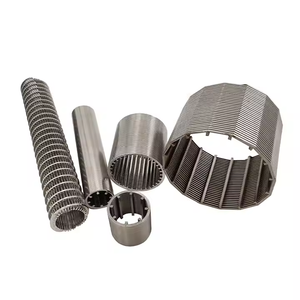
Explore our certified range of woven filter tubes, structured packings, outdoor industrial cabinets, and specialty alloy screening solutions manufactured for demanding global operations.
A comprehensive white paper examining alloy chemistry, electrical conductivity, EMI attenuation mechanisms, and physical criteria governing copper wire mesh selection in mission-critical applications.
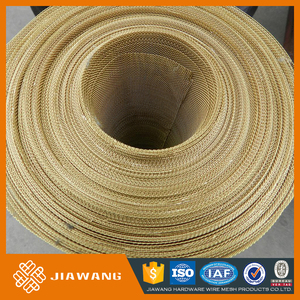
When selecting a qualified copper wire mesh supplier, procurement engineers and process designers must evaluate the material far beyond rudimentary superficial checks. Pure copper wire cloth (specifically woven from alloy grades C11000 Electrolytic Tough Pitch - ETP and C10200 Oxygen-Free - OF) presents a unique balance of physical, metallurgical, and electrochemical properties that make it indispensable in modern technology. With an electrical conductivity reaching 100% IACS (International Annealed Copper Standard) and thermal conductivity of approximately 390 W/(m·K), high-purity copper mesh provides instantaneous current distribution and rapid thermal dissipation that cannot be duplicated by stainless steel or synthetic polymeric screens.
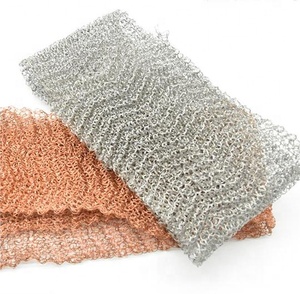
Beyond electronics, pure copper demonstrates natural oligodynamic properties—the broad-spectrum biocidal capability to neutralize harmful bacteria, molds, and aquatic biofilm on contact. This metallurgical attribute has accelerated the adoption of copper gauze and knitted copper meshes in marine intake screening, HVAC air purification modules, and closed-loop process scrubbers where biofouling directly causes costly thermal resistance and hydraulic head losses.
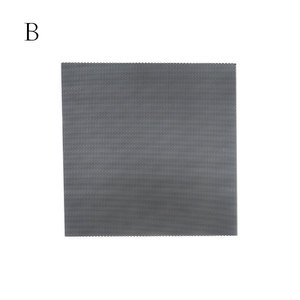
Engineered with plain or twill weave matrices down to 200 mesh, our copper wire screens deliver superior signal attenuation across radar, 5G microwave, and MRI radio frequency bands with zero harmonic distortion.
Retains exceptional tensile flexibility and impact resilience without transitioning to brittle behavior at cryogenic temperatures, making it the preferred choice for cryogenic distillation and LNG heat exchangers.
The release of cuprous ions inhibits microbial adherence and marine organism colonization, significantly extending cleaning cycles in offshore gas washers and maritime sea-chest intake strainers.
For chemical and separation operations requiring higher mechanical tensile limits or resistance to specific acid condensates, allied copper alloys are systematically deployed. Brass wire cloth (approx. 65% copper, 35% zinc) improves abrasion resilience and stiffens filter cylinders, while Phosphor Bronze (approx. 94% copper, 5% tin, 0.2% phosphorus) introduces superior fatigue endurance and resistance to corrosive industrial atmospheres, widely specified for vibrating sieves and pulp processing drums.
Reference parameters for standard woven copper wire cloth manufactured according to ASTM E2016-20 and ISO 9044 industrial wire cloth standards.
| Mesh Count (Linear Inch) | Wire Diameter (mm / Inch) | Nominal Aperture (mm) | Open Area (%) | Weave Pattern | Primary Industrial Use Case |
|---|---|---|---|---|---|
| 10 x 10 Mesh | 0.50 mm / 0.020" | 2.040 mm | 64.5% | Plain Square Weave | Faraday Cage Grounding, Heavy Particle Pre-filtration |
| 20 x 20 Mesh | 0.40 mm / 0.016" | 0.870 mm | 46.9% | Plain Square Weave | RFI Architectural Shielding, Catalyst Support Beds |
| 40 x 40 Mesh | 0.25 mm / 0.010" | 0.385 mm | 36.8% | Plain Square Weave | Vapor-Liquid Demister Pads, Knitted Tube Filters |
| 60 x 60 Mesh | 0.18 mm / 0.007" | 0.243 mm | 33.1% | Plain Square Weave | High-Performance Gas-Liquid Separation, Screen Filters |
| 100 x 100 Mesh | 0.11 mm / 0.0043" | 0.144 mm | 32.2% | Plain Square Weave | Electrochemical Battery Anode Mesh, Fine Sieving |
| 200 x 200 Mesh | 0.05 mm / 0.0020" | 0.077 mm | 36.8% | Twill Weave | Precision Optical Enclosures, Aerospace EMP Hardening |
Market dynamics, supply chain nearshoring, and metallurgical advancements shaping how engineering EPCs and manufacturing OEMs acquire precision separation media.
As the international manufacturing landscape navigates global decarbonization and high-frequency communication deployments, the purchasing strategy for copper wire mesh has undergone profound systemic changes. EPC contractors, chemical plant operators, and high-tech defense manufacturers have shifted from traditional spot-market buying to strategic supplier alliances characterized by three transformative procurement trends:
The rapid scale-up of lithium-ion battery manufacturing, sodium-ion secondary cells, and high-efficiency electrolyzers for green hydrogen has sparked an unprecedented demand for ultra-thin, continuous-length copper woven mesh. Serving as both a current collector and a structural substrate for active slurries, micro-mesh copper materials require zero camber, pristine oil-free degreased surfaces, and tightly bounded dimensional tolerances. Advanced manufacturing partners now supply spooled rolls with automated laser-guided edge slitting that eliminate edge burrs, preventing internal separator punctures in energy storage cells.
With London Metal Exchange (LME) copper prices experiencing heightened volatility due to clean energy demand, sophisticated buyers require structured procurement mechanisms. Leading manufacturers mitigate risk by combining transparent LME-indexed pricing schedules with certified, batch-tracked wire rod supplies. Modern contracts mandate comprehensive Material Test Reports (MTR EN 10204 3.1) verifying pure electrolytic composition (Cu ≥ 99.9%), impurity thresholds (oxygen, lead, sulfur), and precise elongation percentages before weaving initiates.
Rather than purchasing raw roll goods and attempting field modification, major engineering organizations favor complete assembled units. Knitted copper wire mesh rolled into coalescing cylinders, layered corrugated copper gauze packings for laboratory distillation, and diffusion-bonded multi-layer copper filter laminates arrive at industrial sites pre-machined, ultrasonic cleaned, and verified for plug-and-play installation inside process columns and outdoor shelter enclosures.
Over 25 years of metallurgical excellence delivering mass transfer internals, precision sheet metal fabrication, and certified alloy wire cloth across 20+ countries worldwide.
Every roll of wire mesh, column tray plate, and drawn shell is accompanied by comprehensive MTR 3.1 certificates, ensuring complete metallurgical provenance from primary smelter to finished hardware.
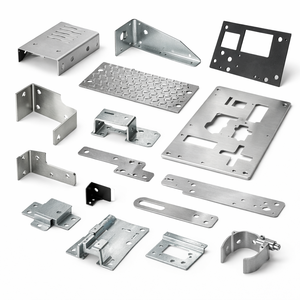
Equipped with high-precision CNC multi-punch presses, deep-drawing presses, laser profiling, and shuttleless rapier looms capable of producing custom parts and intricate mesh geometries in-house.
Digital optical micrometer verification, bubble-point pore size testing, electrical conductivity evaluation, and full readiness for third-party inspections (SGS, TÜV, Bureau Veritas) at our plant.
Proven logistics dispatching seaworthy vacuum-sealed crates, anti-corrosive VCI desiccant wrap, and ruggedized crating to buyers across North America, the UAE, Australia, and Western Europe.
A strategic comparison matrix aiding chemical process designers and filtration engineers in choosing between structured packing, tray architectures, and specialty woven wire cloths.
Whether revamping an existing distillation tower or engineering a grassroots gas processing skid, selecting the appropriate phase-contacting internal dictates thermodynamic efficiency, throughput velocity, and energy consumption. Copper and specialty wire gauzes offer an ultra-high specific surface area (ranging from 500 m²/m³ up to 1000 m²/m³), generating negligible pressure drop per theoretical stage (HETP) under vacuum distillation regimes.
| Contacting Media | Specific Surface Area | Pressure Drop (ΔP) | Turndown Ratio | Ideal Application Environment |
|---|---|---|---|---|
| Corrugated Copper Wire Gauze | 500 – 900 m²/m³ | Extremely Low (< 0.3 mbar/stage) | High (~4:1) | Vacuum distillation, heat-sensitive pharma APIs, flavor separations |
| Structured Sheet Metal Packing | 250 – 500 m²/m³ | Low (< 1.0 mbar/stage) | Moderate (~3:1) | Crude petrochemical fractionation, capacity revamp projects |
| Sieve / Valve Distillation Trays | Standard Active Deck | Moderate to High (3 – 8 mbar/tray) | High (~4:1 to 5:1) | High fouling liquids, heavy hydrocarbon stripping, severe foaming loads |
| Knitted Wire Mesh Tubes & Pads | High Free Volume (98%) | Very Low | Very High | Liquid entrainment knockout, droplet coalescing, compressor inlet demisting |
Straightforward answers addressing metallurgy, atmospheric oxidation, EMI shielding standards, and international commercial terms.