- +91-9930498858Call / WhatsApp
- [email protected]Email Us
Direct-mill engineering solutions custom-fabricated for Bangkok refinery contractors, Eastern Economic Corridor (EEC) plants, and HVAC/water infrastructure projects.
In industrial fluid mechanics, chemical separation, and heavy infrastructure drainage, perforated metal tubes function as mechanical load-bearing cores, primary particulate screen barriers, and flow-distribution manifolds. For engineering procurement officers and plant managers operating throughout Bangkok and the industrial hubs of Samut Prakan, Chonburi, and Rayong, selecting the optimal perforation geometry, seam integrity, and alloy metallurgy is paramount to eliminating operational failure under high hydrostatic, thermal, and chemical loads.
Our manufacturing facilities specialize in CNC precision-punched perforated tubular products fabricated from high-grade austenitic stainless steels (AISI 304, 304L, 316, 316L), duplex alloys (2205 Duplex), super nickel alloys (Hastelloy C-276, Inconel 625, Monel 400), and structural carbon steel grades. We operate advanced continuous spiral-lock, spiral submerged arc welding (SAW), and longitudinal high-frequency TIG/plasma seam-welding lines. Every welded tube undergoes internal burr conditioning, bead rolling, and precision sizing to guarantee strict roundness tolerances (within ±0.25mm) and strict perpendicularity essential for column internals and automated filtration assemblies.
Engineered using continuous automated helical coiling and fusion welding. Helical seam geometry evenly distributes internal burst and external collapse pressures across the entire pipe axis, increasing radial compressive strength by up to 35% compared to longitudinal seams of equivalent wall thickness. Ideal for high-depth boreholes and refinery core filters.
Fabricated on high-tonnage CNC press brakes and roll benders, then auto-welded via multi-pass plasma or tungsten inert gas (TIG) without excessive heat-affected zone (HAZ) carbide precipitation. Delivers smooth bore interiors, zero inner flash, and uniform hydraulic flow rates crucial for chemical distributors and acoustics.
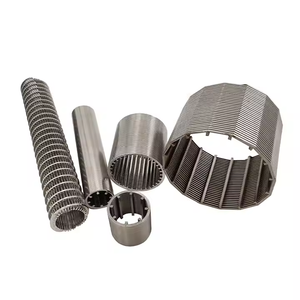
Precision laser-cut or punch-formed with staggered bridges and precision slots (0.15mm to 3.0mm). Prevents sand intrusion while sustaining elevated open flow areas up to 30%. Specifically suited for agricultural irrigation along the Chao Phraya basin, water intake stations, and deep aquifer dewatering wells.
| Parameter | Standard Range | Custom / Heavy-Duty Specification | Applicable Engineering Standards |
|---|---|---|---|
| Outer Diameter (OD) | 12.7 mm to 219 mm (0.5" - 8.62") | Up to 1,220 mm (48") Large-Bore Casing | ASTM A554, ASTM A312, DIN 2462 |
| Wall Thickness (WT) | 0.5 mm to 4.0 mm | 4.5 mm to 12.7 mm (Heavy-Wall Structural) | ASME Section VIII, ISO 1127 |
| Perforation Geometry | Round (60° staggered, 45°, inline) | Slotted, bridge-slot, oblong, embossed, louvers | Industrial Perforators Assoc. (IPA) |
| Hole Diameter / Pitch | Φ0.8 mm to Φ25 mm / 1.5mm - 35mm pitch | Micro-perforation (Φ0.4mm) via Fiber Laser | ISO 7806 / DIN 24041 |
| Open Area Percentage | 12% to 48% open surface ratio | Calibrated to exact acoustic or fluidic drop | Hydraulic calculation per Darcy-Weisbach |
| Standard Alloys | SS 304, 304L, 316, 316L, Carbon Steel Q235B | Duplex 2205, Hastelloy C-276, Monel 400, Ti Gr.2 | ASTM A240, ASTM B622, EN 10088-2 |
| Surface Finishing | Mill finish, pickling & passivation, deburred | Electropolishing (Ra < 0.4μm), PTFE coating, epoxy | ASTM A380, ASTM A967 (Chemical Passivation) |
Bangkok's unique geographic setting—a high-density delta metropolis situated along the tidal Chao Phraya River, coupled with its role as the administrative gateway to Thailand's Eastern Economic Corridor (EEC)—generates specialized engineering demands for high-durability perforated tubular products.
Procurement engineers in Thailand confront distinct operational hurdles: high relative humidity averaging over 75%, persistent ambient temperatures above 35°C, saline groundwater intrusion from the Gulf of Thailand, and stringent municipal environmental effluent guidelines imposed by the Department of Industrial Works (DIW). Below are the prominent local sectors where our perforated piping systems operate continuously:
Bangkok's ongoing land subsidence and monsoon downpours require high-capacity subterranean pump stations managed by the Bangkok Metropolitan Administration (BMA). Heavy-gauge SS304/SS316 perforated suction strainers prevent municipal debris, silt, and aquatic plants from damaging high-flow submersible pump impellers in floodways such as Khlong Saen Saep and Rama IX retaining basins.
Positioned 140km southeast of Bangkok, Map Ta Phut and Laem Chabang house world-scale oil refineries and olefin plants. Our perforated pipes serve as catalyst support grids, gas-distribution spargers, and structured packing core mandrels in distillation towers where hydrodesulfurization and sour crude require resistant Hastelloy and 316L metallurgy.
Known as the "Detroit of Asia," Thailand's automotive assembly ecosystem relies on precise perforated steel tubes for exhaust silencer resonators, catalytic converter cores, and diesel particulate filters (DPF). Our high-speed longitudinal seam lines supply Tier-1 suppliers with burr-free, thermally stabilized ferritic (409/439) and austenitic tubes.
In provinces surrounding Bangkok like Nakhon Pathom and Samut Sakhon, seafood processing, sugar cane refining, and bio-ethanol distilleries demand continuous fine screening. Our slotted wedge wire and perforated tubes separate organic solids from process effluent, safeguarding membrane filtration and anaerobic digestion bioreactors.
Under the framework of the Thai Government's "Thailand 4.0" economic initiative and the sustained expansion of the Eastern Economic Corridor (EEC), industrial infrastructure across Bangkok is undergoing a structural transition toward resource efficiency, reduced carbon emissions, and climate-resilient civil engineering.
This macroeconomic shift directly impacts the technical specifications required for perforated piping and filtration products:
Drawing upon more than 25 years of engineering manufacturing since 1998, Ambani Metals has built an international reputation across 20+ countries as an integrated manufacturer and exporter of column trays, column internals, structured/random packing, wire mesh, and precision perforated metal components.
When procurement teams in Thailand import mission-critical metallic piping and mass-transfer systems, they require verified mill pedigree, predictable production windows, and documentation that clears Thai Customs without delay. We deliver these core competitive advantages:
We source prime stainless coils and plates directly from tier-1 primary producers (including Jindal Stainless, POSCO, and Outokumpu). Every batch is dispatched with complete EN 10204 3.1 Material Test Certificates (MTC) detailing spectroscopic chemical composition, yield strength, tensile elongation, and intergranular corrosion test results (ASTM A262 Practice E).
Unlike trading houses, our full manufacturing cycle—turret punch pressing, rotary laser tube cutting, slip-rolling, plasma/TIG auto seam-welding, and hydraulic sizing—is managed in-house. We maintain over 300 interchangeable perforation punch dies, enabling custom staggered hole pitches (±0.05mm accuracy) with minimal tooling lead times.
Perforated pipes and column internals are delicate tubular geometries vulnerable to denting or maritime salt corrosion. All exports destined for Bangkok's Klong Toey or Laem Chabang Ports are packed inside ISPM-15 heat-treated fumigated timber crates, wrapped with vapor corrosion inhibitor (VCI) film, and bolstered with internal bracing.
Essential questions answered regarding tariff structures, engineering calculations, metallurgy selection, and shipping logistics for industrial buyers in Thailand.
Submit your fabrication drawings, process data sheets, or borehole filtration specifications. Our senior engineering estimators evaluate hydraulic loading, material compatibility, and shipping economics to return a comprehensive quotation within 24 hours.